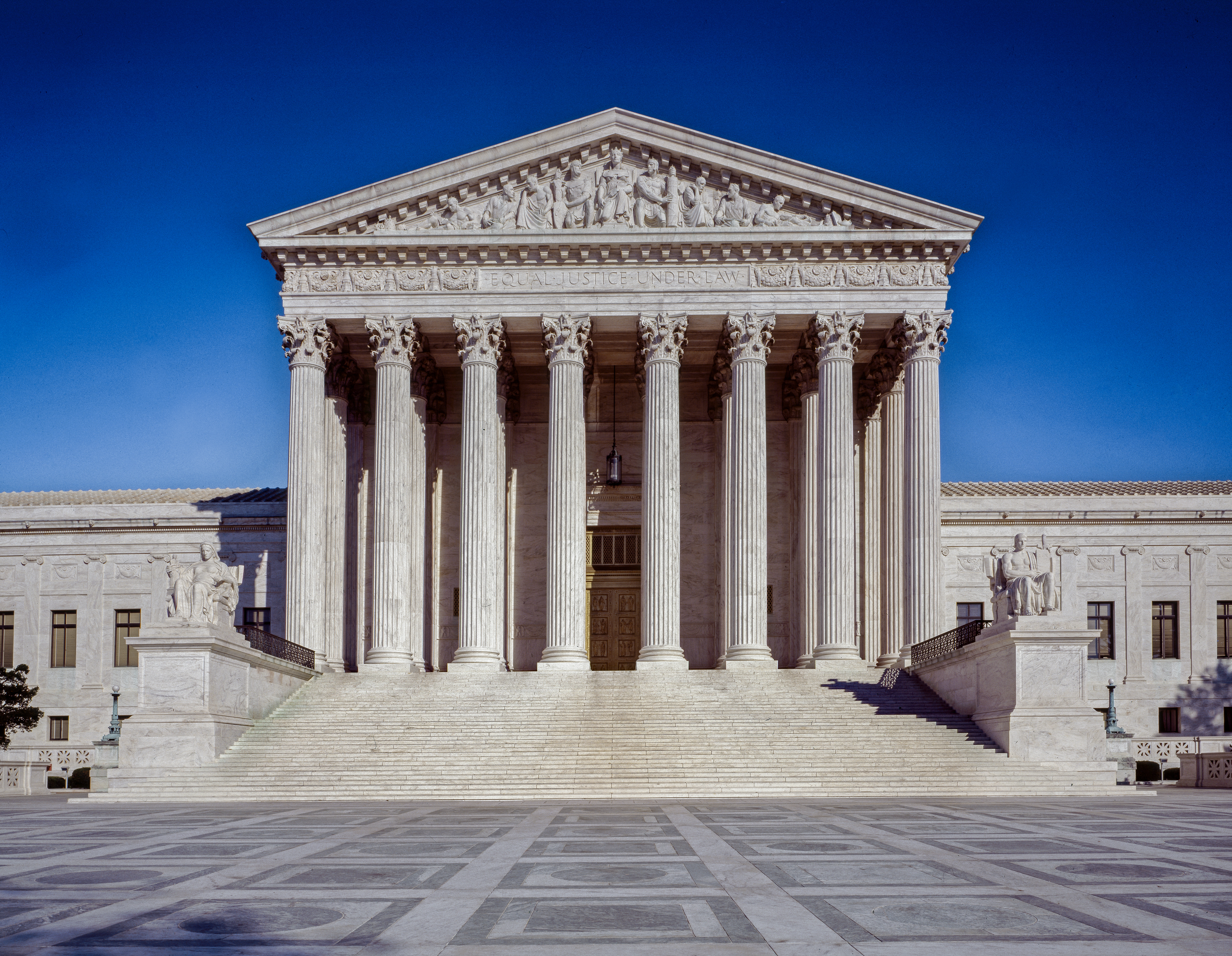
The marble temple across from the Capitol
Stand on the west plaza of the United States Capitol and look east, down the slope of Capitol Hill, and the view resolves into one of Washington's great architectural dialogues. On one side, the Capitol dome. On the other, a white marble building of almost temple-like calm: a long staircase, eight towering columns, and a pediment carved with figures representing the majesty of the law. This is the Supreme Court Building, the seat of the Supreme Court of the United States, at 1 First Street NE — and for any first-time visitor to Washington, it is one of the city's essential sights, not only because of what happens inside, but because of what the building itself declares about the American idea of justice.
The building is deliberately, even theatrically, classical. It was designed to look timeless, and it succeeds: visitors arriving today see essentially what visitors saw when the Court first sat here in 1935. The west facade, the one facing the Capitol, carries the inscription "Equal Justice Under Law" above its eight Ionic columns. The east facade, facing away from the Capitol, reads "Justice the Guardian of Liberty." Between them lies one of the most dignified interiors in Washington — a Great Hall of marble and oak, and a courtroom where the nine justices hear the cases that shape American law. You do not need a law degree to appreciate any of this. You only need to walk up the steps, pass through the bronze doors, and look up.
The Supreme Court Building is also one of the most approachable of Washington's great institutions. Unlike the White House, you can walk inside as a member of the public, see the exhibits, attend a courtroom lecture when the Court is not in session, and — when the Court is hearing arguments — join the public line for a seat in the courtroom itself. That openness is part of the point. The building was designed as a symbol of justice in the highest sphere of activity, but it was also designed to be visited, and a visit here pairs naturally with the Capitol across the street and the Library of Congress next door, forming a Capitol Hill trio that anchors any first trip to Washington.
1789 to 1935: a court without a home of its own
The Supreme Court is older than its building by nearly a century and a half. The Court was established in 1789, under the Judiciary Act passed by the first Congress, as the highest court in the federal system. But for the first decades of its existence it had no building at all. In the early republic the Court followed the government, meeting in borrowed rooms in New York and then Philadelphia, before the federal government moved to Washington. Even after that move, the Court had no permanent meeting location of its own until 1810, when it took up residence in what is now known as the Old Supreme Court Chamber in the Capitol.
The Capitol years lasted a long time. The Court sat in the Old Supreme Court Chamber from 1810 through 1860, and then, as the Senate expanded and outgrew its quarters, moved into the Old Senate Chamber, where it remained until 1935. There was one interruption: during the War of 1812, when British forces invaded Washington and burned the Capitol, the Court was absent from the city from 1812 to 1819. For the rest of that long stretch, the nation's highest court worked in rooms borrowed from the legislative branch — a physical arrangement that said something, quietly, about the judiciary's junior status in the early republic. The Court had authority, but it had no address.
That changed in the 1920s, when Chief Justice William Howard Taft — himself a former president, and the only person to have served as both president and chief justice — argued successfully that the Court should have its own headquarters, separate from Congress, as befits an independent branch of government. Congress authorized the project, and the Court finally got a building designed to express, in stone, the dignity and independence of the judiciary as a coequal branch of government. The wait had been 146 years. The result was worth it.
Cass Gilbert's design: Equal Justice Under Law
The architect chosen for the building was Cass Gilbert, already famous for the Woolworth Building in New York and the Minnesota State Capitol. It was his last major project: Gilbert died in 1934, before the building was completed, and his son, Cass Gilbert Jr., oversaw the final stages. The cornerstone was laid on October 13, 1932, construction was completed in 1935, and the Court convened in its new chamber for the first time on October 7, 1935. The project came in under budget — about $94,000 under the $9.74 million authorized by Congress — a fact the building's admirers have always enjoyed repeating.
Gilbert's design is neoclassical in the grand manner, but it is not a copy of any single ancient temple. The building rises four stories, about 92 feet, above ground, its white marble facades arranged around a central block with wings. The west portico, the building's public face, is carried by eight Ionic columns, and its pediment sculpture, by Robert Aitken, depicts Liberty enthroned, flanked by figures representing order and authority. The inscription above — "Equal Justice Under Law" — has become one of the most quoted phrases in American civic life, and it is worth pausing under it. It is not a description of a perfect record; it is an aspiration, carved in stone, at the entrance to the institution charged with pursuing it.
The marble itself is part of the story. The building's facades and interiors use marble quarried in the United States and abroad, in tones ranging from brilliant white to deep red and warm gold, and the effect inside is one of richness without gaudiness — a building that impresses by proportion and material rather than by ornament alone. On May 4, 1987, the Supreme Court Building was designated a National Historic Landmark, formal recognition of what visitors had long understood: this is not merely an office building for judges, but one of the great civic monuments of the United States.
Inside: the Great Hall and the courtroom
Enter through the bronze doors on the west side and you step into the Great Hall, a long, high space of marble columns and oak that runs the length of the building's central block. Busts of former chief justices line the hall, and the space itself does much of the building's rhetorical work: it is quiet, ordered, and monumental, a place that slows you down and lowers your voice without anyone asking you to. Exhibits along the ground floor tell the story of the Court and its history, and the hall is the route to the courtroom itself.
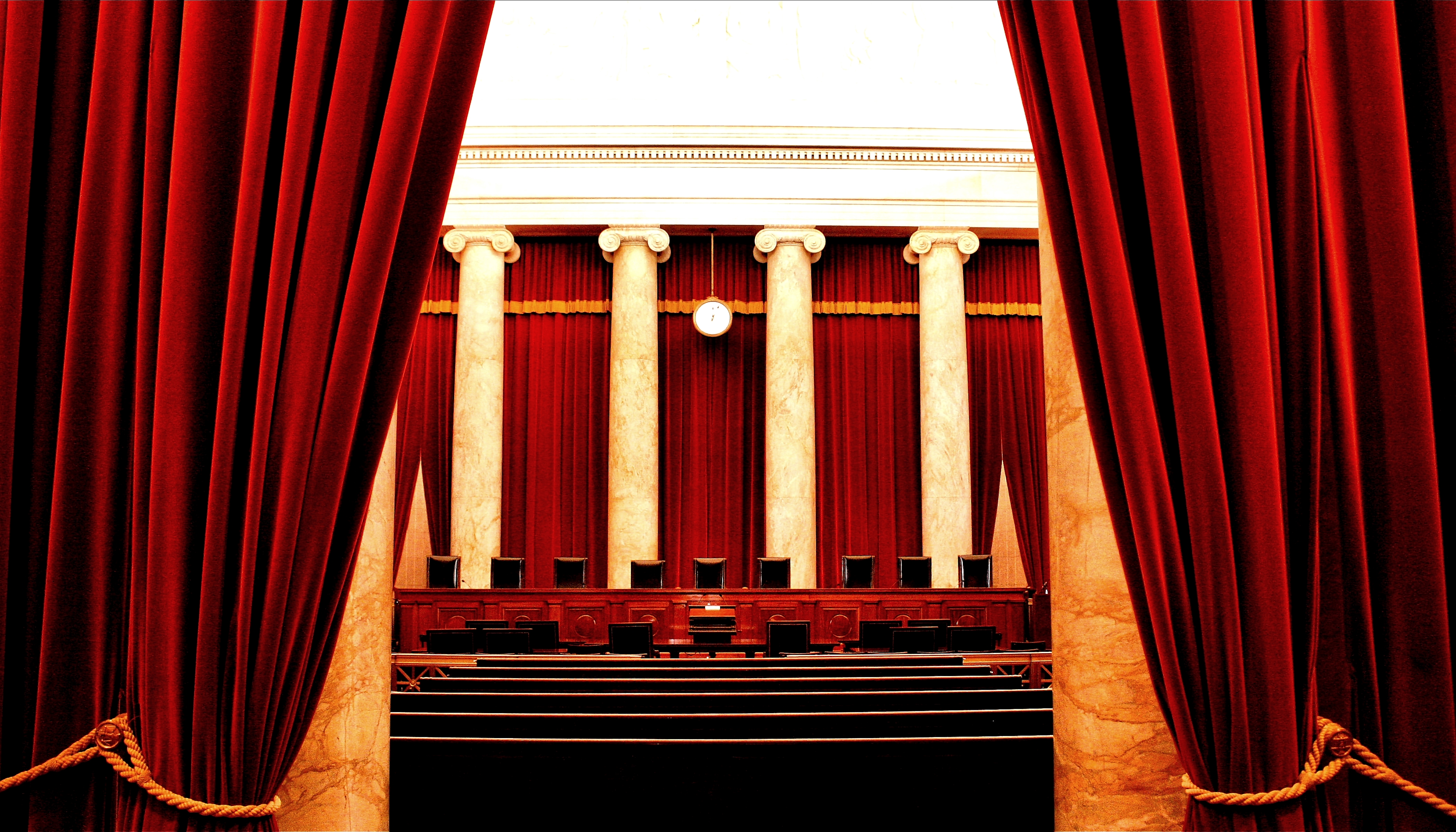
The courtroom, on the second floor, is smaller than many visitors expect and more beautiful than most imagine. It is lined with 24 marble columns and paneled in oak, with a raised bench where the nine justices sit — the Chief Justice in the center, flanked by the eight associate justices — and a frieze running around the upper walls depicting great lawgivers and legal figures from history, from Moses and Solomon to Confucius, Charlemagne, and John Marshall, the chief justice whose 1803 opinion in Marbury v. Madison established the Court's power of judicial review. The ceiling is coffered and gilded, and the overall effect is intimate rather than cavernous: this is a room designed for argument, for listening, and for decision, not for spectacle.
It is worth knowing what you can and cannot see inside. The courtroom is open to visitors on days when the Court is not in session, when public lectures about the Court and the building are offered. When the Court is hearing oral arguments, members of the public may attend, seated on a first-come, first-served basis, subject to the Court's schedule and security procedures. Photography is not permitted inside the courtroom, so the interior photographs you see of it were taken under special arrangement. That restriction is part of why the building's public spaces — the Great Hall, the exhibits, the plaza outside — matter so much: they are where most visitors will actually spend their time, and they reward it.
The plaza, the steps, and the statues
Much of the Supreme Court's appeal is outdoors, and it costs nothing. The west plaza, approached up a broad flight of marble steps from First Street, is one of Washington's great public stages. Two marble statues by James Earle Fraser flank the steps: on one side, Contemplation of Justice, a female figure holding a small blindfolded figure of Justice; on the other, Authority of Law (also known as the Guardian of Law), a male figure holding a tablet of laws. They are, like the building itself, allegories made stone — justice as something to contemplate, and law as something that guards — and they are among the most photographed sculptures in the city.
The plaza is also a place of living civic life. Demonstrations, vigils, and gatherings of every stripe assemble here, as they have for decades, because the Court's steps are where Americans come to be heard by, or about, the institution inside. That is not a bug in the building's design; it is the design working as intended. A courthouse that can only be admired from a distance would fail its purpose. This one invites approach — up the steps, across the plaza, to the bronze doors — and the crowds on the plaza, on any given day, are as much a part of the sight as the columns.
From the top of the steps, turn around before you go in. The view west, across First Street to the Capitol, is the reason the building sits where it does: the judiciary facing the legislature across the street, coequal and independent, in a conversation conducted in architecture. It is one of the best-composed views in Washington, and it is free, open, and almost always uncrowded compared with the Capitol's own terraces. Come at golden hour, when the marble warms and the Capitol dome catches the light, and you will understand why photographers return here again and again.
Visiting: lectures, arguments, and exhibits
A visit to the Supreme Court rewards a little planning, and the first rule is to check the official source before you go. The Court's public hours, courtroom lecture schedule, and oral argument calendar all follow the Court's own schedule, which changes with the term: lectures are offered when the Court is not in session, and argument seating is available only on argument days, on a first-come basis. Do not assume fixed hours from a guidebook or a travel article — check supremecourt.gov for the current schedule before your visit, and arrive early on argument days, when the public line forms well in advance.
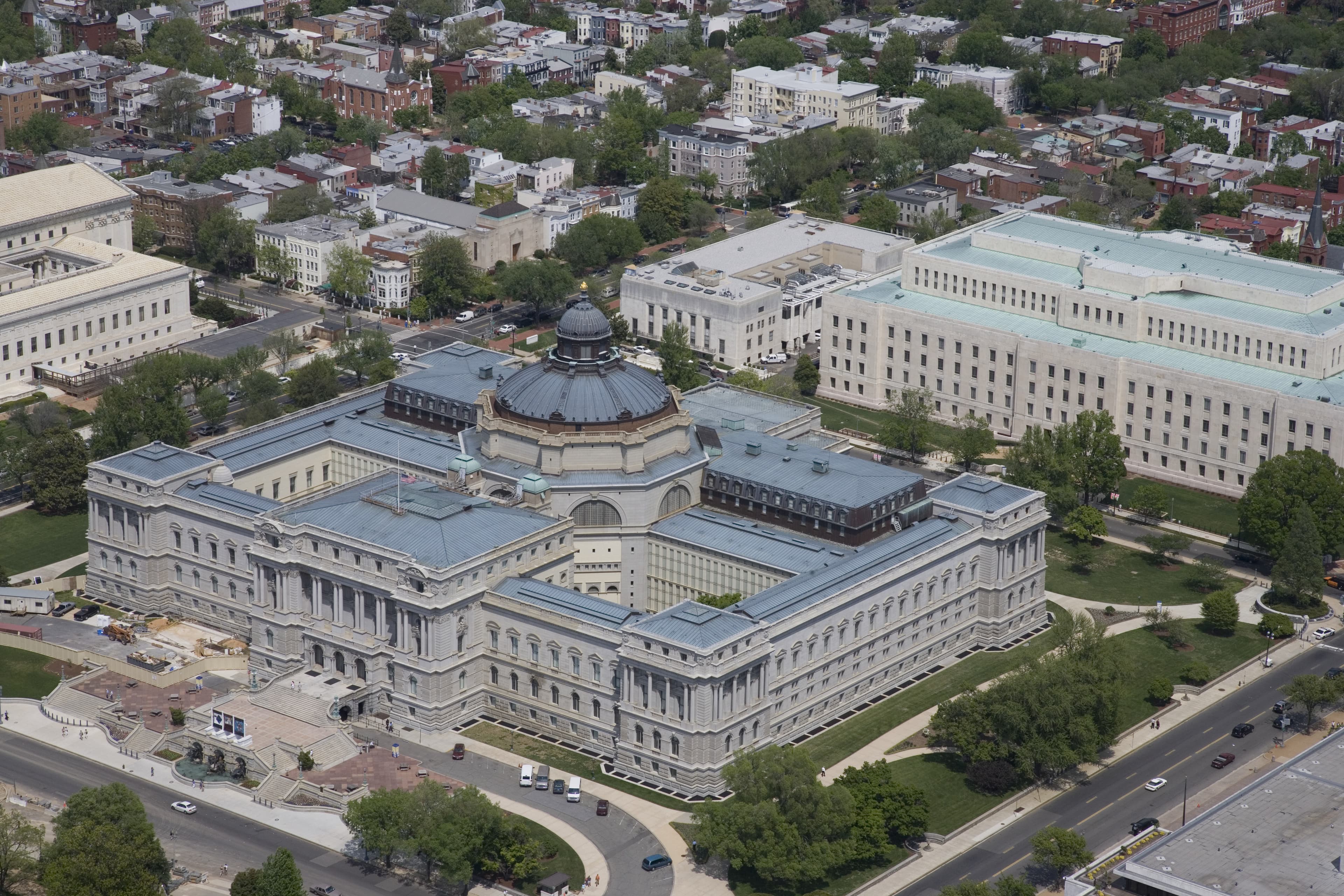
What you can reliably expect: the building is open to the public on weekdays, with exhibits on the ground floor covering the Court's history, its justices, and landmark cases, and a gift shop and cafeteria on site. Security screening is required at the entrance, as at other federal buildings, and bags are checked. The building is fully accessible, and the surrounding Capitol Hill neighborhood makes it easy to combine with other sights: the Library of Congress stands immediately to the east, the Capitol to the west, and the National Mall a short walk to the south. A morning on Capitol Hill — Capitol, Library of Congress, Supreme Court — is one of the most satisfying half-days in Washington.
One practical note for photographers: the exterior is endlessly photogenic, and the west facade in morning light is the classic shot. Inside, remember the courtroom photography restriction, and enjoy the Great Hall and exhibits instead. And if your visit coincides with a day the Court is in session, do not be disappointed by a closed courtroom — the plaza, the Great Hall, and the exhibits are the heart of the public visit, and they are open on the days most visitors come.
Why the Supreme Court belongs on a first visit
Washington has grander museums and older monuments, but few places that explain the American system as directly as this building does. The Capitol explains the legislature; the White House, the executive. The Supreme Court Building explains the third branch — the one that interprets the law, checks the other two, and does so, by design, at a remove from politics, in a marble building that was meant to look like it would outlast every passing controversy. You do not need to agree with any particular decision to feel the weight of that idea, standing under "Equal Justice Under Law."
For a first-time visitor, the building is also a lesson in how Washington works as a city. Its monuments are not fenced-off relics; they are working buildings, open to the public, embedded in neighborhoods where people live and work. The Supreme Court sits on a residential Capitol Hill street, next to a library, across from the Capitol, surrounded by rowhouses and cafes. Walk here from Union Station in about fifteen minutes, or from the Capitol South Metro station in about five, and you will pass through the Washington that residents know — tree-lined streets, corner shops, and then, suddenly, a marble temple. That suddenness is the city's signature effect, and nowhere is it more striking than here.
Come for the architecture, stay for the idea. Walk the plaza, climb the steps, look up at the eight columns and the inscription above them, and then go inside and sit quietly in the Great Hall for a few minutes. You will leave understanding something essential about the United States — not from a textbook, but from a building that was designed, quite deliberately, to teach it.
Key Facts
The Supreme Court of the United States was established in 1789 under the Judiciary Act; it is the highest court in the federal system.
The Court had no permanent home until 1810, when it moved into the Old Supreme Court Chamber in the Capitol; it sat there through 1860, then in the Old Senate Chamber until 1935, except for its absence from Washington during the British invasion and burning of the Capitol in the War of 1812 (1812–1819).
Chief Justice William Howard Taft, the only person to serve as both president and chief justice, argued successfully in the 1920s for the Court to have its own headquarters, separate from Congress.
The Supreme Court Building at 1 First Street NE was designed by Cass Gilbert; the cornerstone was laid October 13, 1932, construction was completed in 1935, and the Court first sat in its new chamber on October 7, 1935. Gilbert died in 1934 and his son Cass Gilbert Jr. oversaw completion.
The building cost about $94,000 less than the $9.74 million authorized by Congress, and rises four stories (about 92 feet) above ground.
The west facade, facing the Capitol, is inscribed "Equal Justice Under Law" and carried by eight Ionic columns; the east facade reads "Justice the Guardian of Liberty."
The courtroom is lined with 24 marble columns, and its upper frieze depicts lawgivers from history, including John Marshall, whose 1803 opinion in Marbury v. Madison established judicial review.
Two marble statues by James Earle Fraser flank the west steps: Contemplation of Justice and Authority of Law (the Guardian of Law).
The building was designated a National Historic Landmark on May 4, 1987, and is under the jurisdiction of the Architect of the Capitol.
The building stands across First Street from the United States Capitol, with the Library of Congress immediately to the east, on Capitol Hill.
Visitor Details
Address: Supreme Court of the United States, 1 First St NE, Washington, DC 20543 (Capitol Hill)
Transit: Capitol South station (Blue, Orange, Silver Lines) is about a five-minute walk; Union Station (Red Line, Amtrak) is about a fifteen-minute walk. Several bus routes serve First Street and Capitol Hill.
Hours/Admission: Public hours, courtroom lecture schedules, and oral argument dates follow the Court's own schedule and change with the term — lectures are offered when the Court is not in session, and argument seating is first-come, first-served on argument days. Check supremecourt.gov before visiting to confirm current hours, lecture times, and argument dates; do not rely on fixed hours from other sources. Admission to the building and exhibits is free. Security screening is required at the entrance.
Best timing: Weekday mornings for a quieter visit; morning light is best for photographing the west facade. Pair with the Capitol across the street and the Library of Congress next door for a Capitol Hill half-day. Remember photography is not permitted inside the courtroom.
Location Photography