A Museum of Living Sculpture
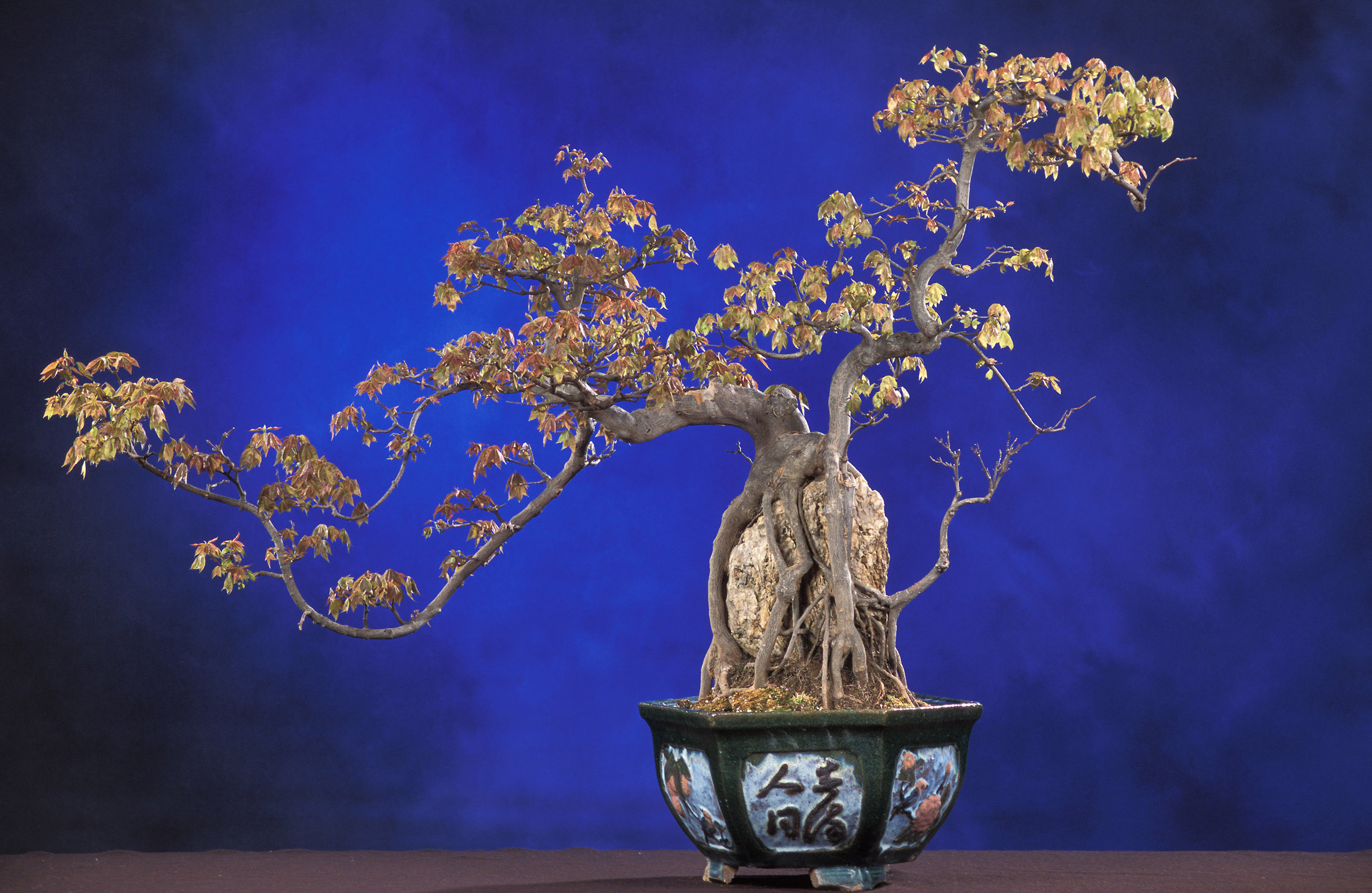
Every other museum in Washington displays objects that are finished. This one displays objects that are still growing. The National Bonsai & Penjing Museum, set in gardens near the center of the U.S. National Arboretum in Northeast Washington, is a collection of miniature trees — pines, maples, junipers, elms — each shaped over decades or centuries by pruning, wiring, and repotting into the suggestion of an ancient tree or a forest in a tray. The Arboretum calls them miniature masterpieces of horticultural art, and the description is exact: bonsai is the Japanese art, and penjing its older Chinese predecessor, of using woody plants in containers to portray the natural growth of trees in a landscape. The sculptures are alive, which means they change with the seasons, need water every day, and can die. A visit here is closer to visiting animals than paintings — these are works of art with keepers.
The scale of the place is intimate. More than 300 specimens now rotate through the display tables and pedestals of three pavilions and a special exhibits gallery, intermixed with companion arts: viewing stones, herbaceous companion plants called kusamono, and ikebana flower arrangements. The museum is generally described as the first in the world dedicated to the public display of bonsai, and it holds one of the largest collections in North America — all of it begun, improbably, as a birthday present between nations.
A Bicentennial Gift From Japan
The museum's founding idea belonged to Dr. John Creech, director of the National Arboretum, who conceived an international bonsai collection in the early 1970s. The occasion arrived with the American Bicentennial. In 1975, the people of Japan, through the Nippon Bonsai Association, presented 53 bonsai and a set of viewing stones to the people of the United States for the upcoming Bicentennial — a gesture the National Bonsai Foundation calls a Green Mission for Peace. The trees spent a year in quarantine after arrival, and on July 9, 1976 (some accounts give July 19 for the formal dedication ceremony), the Japanese Pavilion and Japanese Stroll Garden were dedicated before dignitaries from both countries, with Secretary of State Henry Kissinger accepting the gift for the American government.
A gift of living trees is a commitment disguised as a ceremony. Bonsai cannot be shelved; each of the 53 trees arrived with decades of training behind it and a requirement for skilled daily care ahead of it, indefinitely. The Arboretum's first bonsai curator, Robert Drechsler, took charge of the collection, and in 1982 the National Bonsai Foundation was founded as the nonprofit partner that sustains the museum today. What Japan had given was not just trees but an institution: the collection had to become a museum, with pavilions, curators, and endowment, or the gift itself would die. It became a museum — and then it began to grow.
The Yamaki Pine: The Tree That Survived Hiroshima
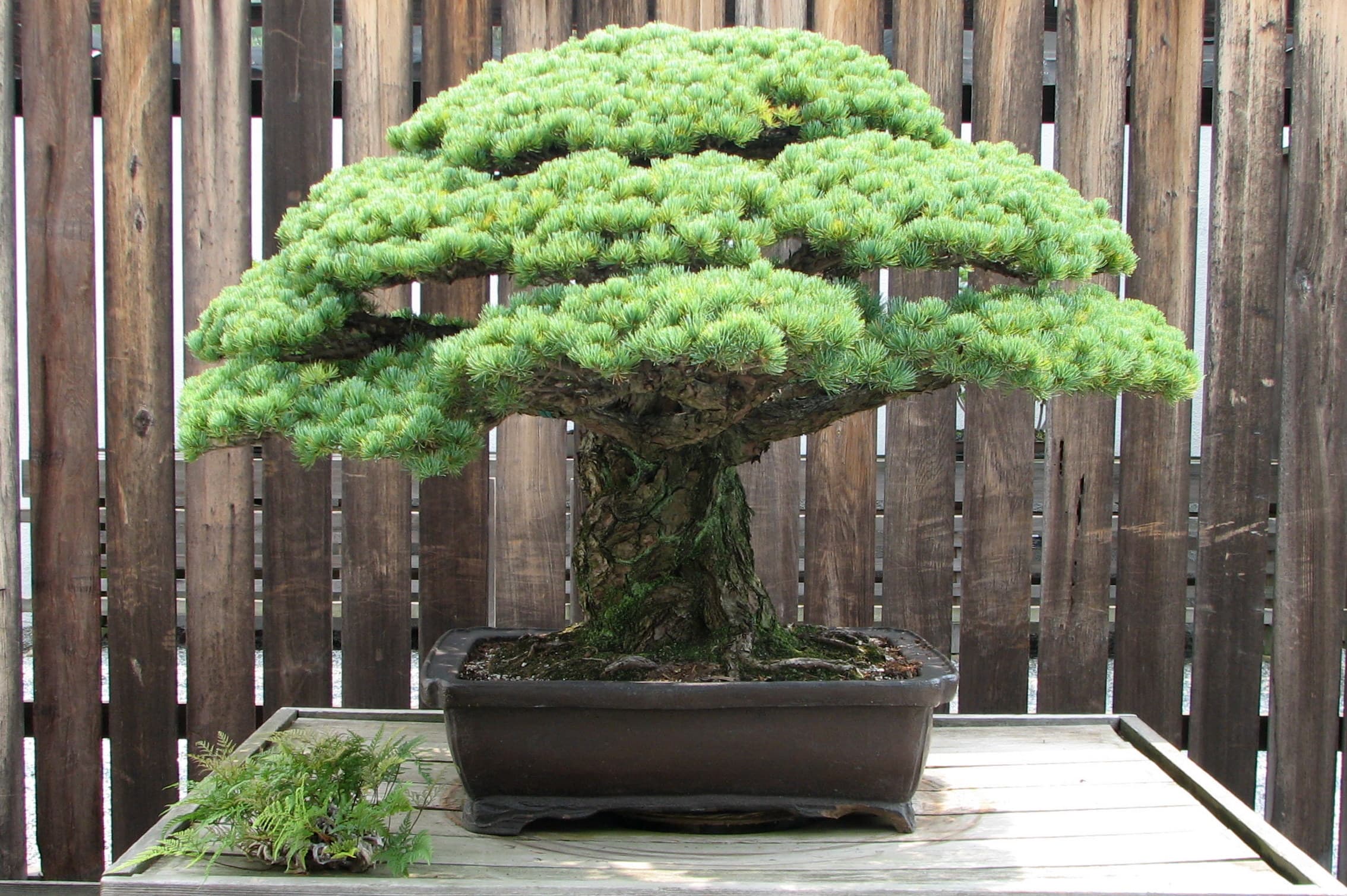
One tree in the Japanese collection carries a story no placard originally told. The Yamaki pine is a Japanese white pine, Pinus parviflora 'Miyajima', in training since 1625 — a tree begun when the Pilgrims had been at Plymouth for five years, tended across generations by the Yamaki family, who ran a bonsai nursery in Hiroshima. On August 6, 1945, the atomic bomb exploded less than two miles from the Yamaki home and nursery. The blast blew out the house's windows and cut family members with flying glass, but none was permanently injured — and the bonsai on benches in the garden, sheltered by a tall wall, came through unharmed, the great white pine among them.
In 1976, bonsai master Masaru Yamaki donated that pine as part of Japan's Bicentennial gift. He said nothing about Hiroshima. For twenty-five years the tree stood in Washington simply as a masterpiece, its history unknown to its keepers, until 2001, when Yamaki's grandsons visited, found their grandfather's tree, and told the curator what it had survived. The revelation reframed the gift entirely: a man whose family had lived through the atomic bombing had given one of his most prized possessions — a tree older than the United States, that had survived the bomb with him — to the country that dropped it, as an act of friendship, without a word of reproach. The museum now honors the pine, often called the Hiroshima Survivor or Peace Tree, as the emblem of the whole collection.
Three Pavilions, Three Traditions
The founding gift was only the first collection. The Japanese Pavilion still houses the Bicentennial trees and their successors — now 63 trees — displayed there from spring through fall; in winter the hardy trees move under cover in the Chinese Pavilion, a seasonal rotation practiced for decades. The Chinese collection arrived through Dr. Yee-sun Wu, the Hong Kong penjing master who, beginning in the 1980s, funded a pavilion and donated many penjing of his own school. The Yee-sun Wu Chinese Garden Pavilion was completed in 1996, and the museum had taken its present name — National Bonsai & Penjing Museum — in 1988, acknowledging that the Chinese art is the ancestor of the Japanese one. Penjing tends toward whole scenes in a tray: rocks, water, tiny figures — a landscape rather than a single ideal tree. Look for the trident maple trained into the shape of a Chinese dragon, a historical style rarely seen outside China.
The third pavilion asserts that the art had become American. The John Y. Naka North American Pavilion, dedicated in 1990, displays bonsai made entirely by North American masters, with tropical species in the Haruo Kaneshiro Tropical Conservatory, completed in 1993. At its entrance stands the most famous bonsai in the world: Goshin, "protector of the spirit," a forest planting of eleven Foemina junipers created by John Naka, the Japanese-American grand master of American bonsai, one tree for each of his eleven grandchildren. Naka donated Goshin in 1984. Between the Yamaki pine and Goshin, a single courtyard holds the art's whole modern history: survival, migration, and a new tradition planted in American soil.
Care, Seasons, and a Collection That Moves
A bonsai museum is never finished because its exhibits are never finished. Trees are pruned and wired to hold their designs, repotted every few years as soil compacts and roots fill their containers — the Yamaki pine's repotting, a careful operation by curators and Arboretum staff, is treated as the event it is — and rotated on and off display as their condition and the season dictate. That is why more than 300 specimens can belong to a museum that shows far fewer at any one moment, and why it looks different in May from in October, and different again in February, when the temperate trees crowd into the Chinese Pavilion for winter protection and the tropical trees hold the conservatory.
Plan around the museum's own rhythm rather than the Arboretum's. The museum keeps shorter hours than the grounds — 10:00 am to 4:00 pm — and closes for federal holidays in the winter months, November through February, as the Arboretum states in its visitor tips. Displays also shift seasonally, so a specific tree, even the Yamaki pine, may be resting off view; the gardens around the pavilions — sculpted pines, the Cryptomeria Walk, the Japanese Stroll Garden — are part of the design, priming you to slow down. Bonsai rewards the second look: deadwood carved like driftwood, roots gripping a rock, Goshin's eleven junipers resolving, at a step back, into a forest. This is the rare Washington museum where the masterpieces are older than the republic, and still growing.
Key Facts
- The museum began in 1976 with a gift of 53 bonsai trees (and viewing stones) from Japan, through the Nippon Bonsai Association, to the people of the United States for the Bicentennial; more than 300 specimens now rotate through three pavilions and a special exhibits gallery.
- The Yamaki pine, a Japanese white pine (Pinus parviflora 'Miyajima') in training since 1625, survived the August 6, 1945 atomic bombing of Hiroshima — less than two miles from the Yamaki nursery, sheltered by a garden wall — and was donated by master Masaru Yamaki as part of the 1976 gift; its Hiroshima history only became known when Yamaki's grandsons visited in 2001.
- Three traditions, three pavilions: Japanese (the Bicentennial collection, now 63 trees), Chinese penjing in the Yee-sun Wu Chinese Garden Pavilion (completed 1996; the museum took its present name in 1988), and North American in the John Y. Naka North American Pavilion (dedicated 1990), with tropical trees in the Haruo Kaneshiro Tropical Conservatory (1993).
- Goshin, John Naka's forest planting of 11 Foemina junipers — one for each of his grandchildren — was donated in 1984 and stands at the entrance to the North American Pavilion.
- Supporting institutions: the National Bonsai Foundation, founded 1982, is the nonprofit partner sustaining the museum on the grounds of the U.S. National Arboretum (est. 1927).
- The collection is alive and seasonal: trees rotate on and off display, hardy trees move into the Chinese Pavilion for winter, and specimens are repotted every few years.
Visitor Details
Address: U.S. National Arboretum, 3501 New York Avenue NE, Washington, DC 20002 (main entrance; a second entrance is at 24th and R Streets NE). The museum's pavilions and gardens sit inside the Arboretum grounds.
Transit: The Arboretum has no Metro station at its gates; most visitors drive (free parking on site) or combine a bus/cab from Stadium-Armory or other nearby stations. Check the Arboretum's official site for current directions and entrance hours.
Hours/Admission: Admission is free. The museum's hours are shorter than the Arboretum grounds: open 10:00 am to 4:00 pm, and closed for federal holidays during November through February. (Per the U.S. National Arboretum's official museum page, usna.usda.gov, verified in this session — confirm before a special trip, and note that from mid-August into early October 2026 areas of the museum are undergoing minor renovations while all trees remain on display, per the same page.)
Best timing: Spring or fall, when the seasonal rotations put the full range of pavilions on display and deciduous trees show new leaf or color; go on a weekday for quiet courtyards, and allow time to pair the museum with the National Capitol Columns in the same grounds.
National Bonsai & Penjing Museum — Context Photography