Two Houses at the End of Old Cutler Road
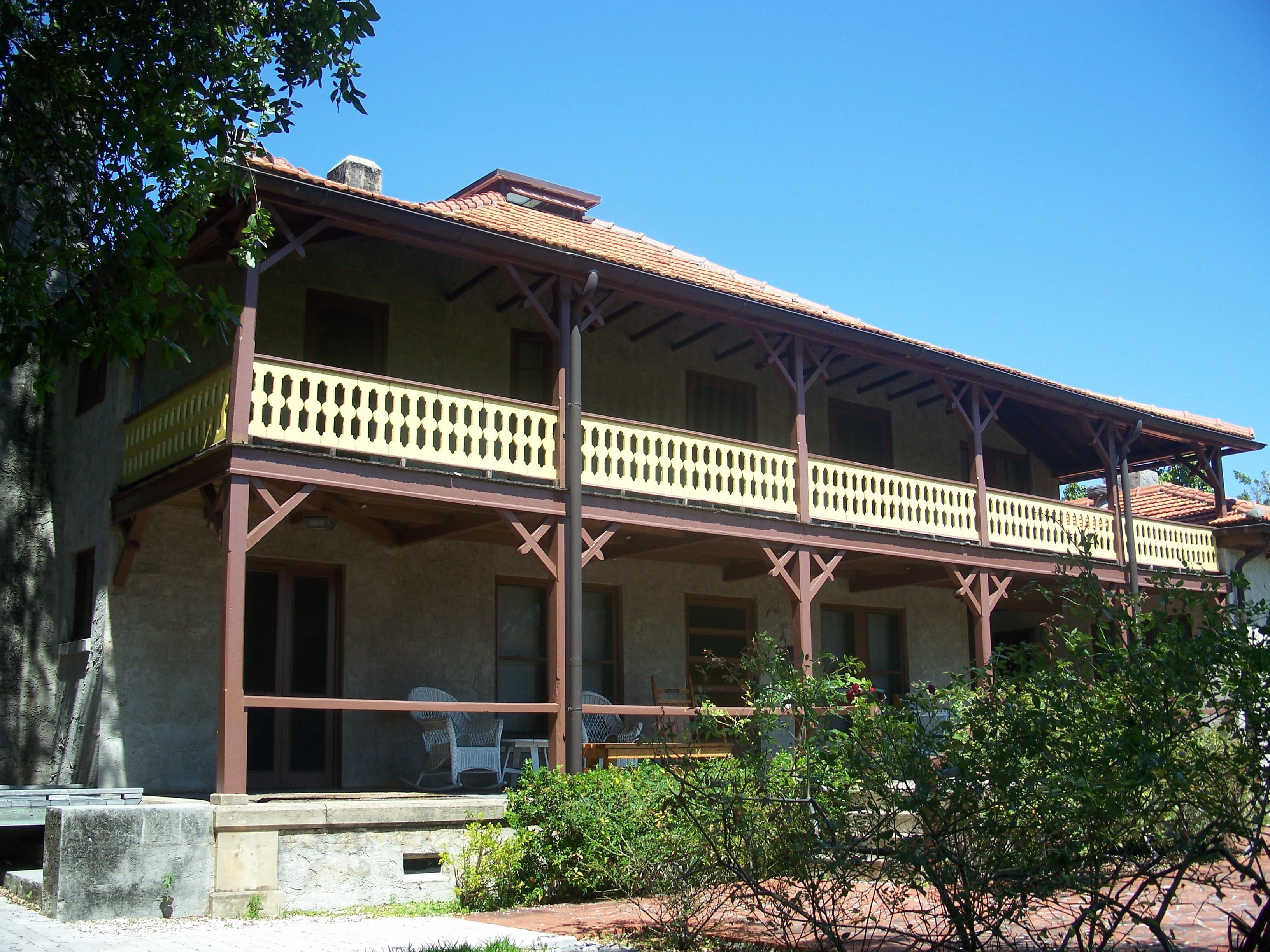
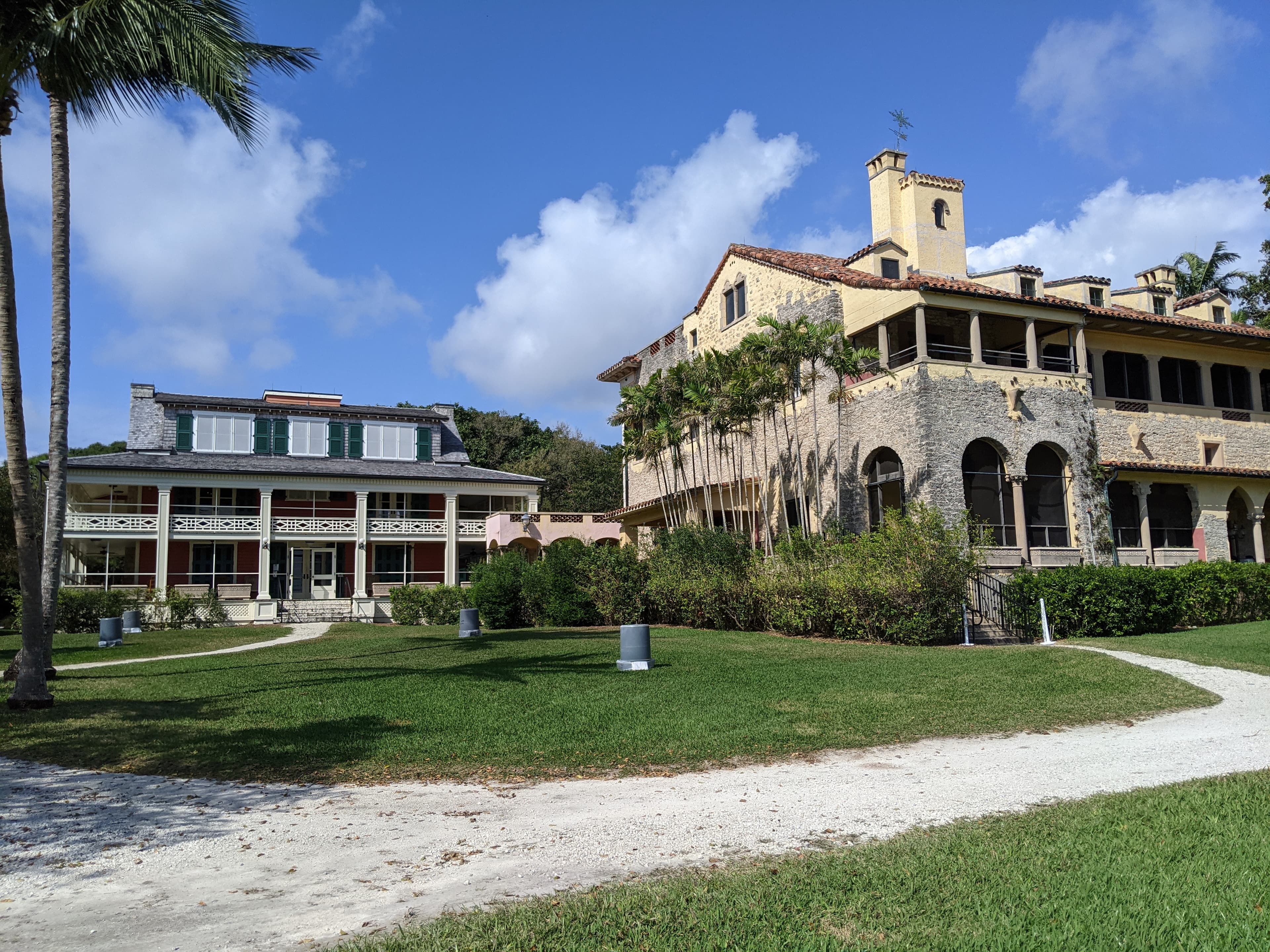
Turn off Old Cutler Road in Palmetto Bay, pass the gate on Southwest 72nd Avenue, and the modern suburb falls away. Ahead, on a lawn that slopes down to Biscayne Bay, stand two houses that between them tell most of South Florida's short written history. The first is the Richmond Cottage, a three-story wooden house built around the pioneer town of Cutler — part family home, part, after a major addition in 1900, a 22-room inn billed as the most southerly hotel on the mainland of the United States. The second, completed in 1922, is the Stone House: a three-story stone mansion designed by Phineas Paist, with 18-inch poured-concrete walls, oolitic limestone, coffered ceilings, and copper-clad and brass doors. Together they were the winter — and final — home of Charles Deering, an industrialist, art collector, and conservationist who lived here only from 1922 until his death in 1927. The houses are now historic house museums, filled with paintings, books, artifacts, and antique furnishings. But the buildings are almost the youngest things on the property. The Deering Estate covers 444 acres, and its ground holds archaeology measured not in centuries but in millennia.
The Innkeeper's Cottage and the Town of Cutler
Before there was an estate there was Cutler, a small farming settlement at the end of the road south from Coconut Grove, and at its heart stood the home of S. Howard Richmond, an agent for the Perrine Land Grant Company. Richmond's family house, raised at the end of the 19th century, was expanded in 1900 into the Richmond Cottage hotel, managed by his wife Edith and serving travelers in an era when this stretch of bayfront was genuinely remote. Charles Deering — born in Paris, Maine in 1852, son of William Deering, founder of the Deering Harvester Company — bought the Richmond Cottage in 1916. Deering had graduated from the United States Naval Academy in 1873, served as a naval officer until 1881, then become secretary of his father's firm; when it merged with the McCormick Harvesting Machine Company in 1902 to form International Harvester, he became the new company's first chairman of the board. His half-brother James built Vizcaya, the famous Italianate villa up the bay. Charles wanted something quieter and wilder. Between 1916 and 1922 he added a carriage house, pump house, and power house, enclosed the grounds in a limestone and concrete wall, and dredged a boat turning basin in the bay in front of the houses.
A Fireproof House for a Lifetime of Art
Deering was, by every account, terrified of fire — a fear often traced to the Great Chicago Fire of 1871 — and he was also one of America's great private art collectors, an amateur painter himself who filled his homes with Old Masters, books, and antiques. The Stone House was his answer to both facts: a vault you could live in. Its 18-inch poured-concrete walls and metal-clad doors were specified so the collection inside would survive a blaze; pointedly, the house was built without a stove — its ground floor held refrigeration cabinets and storage, while the actual cooking stayed in the Richmond Cottage next door. Deering added an elevator, remarkably forward-thinking for 1922, and intended the mansion as a showcase for his art and library. He also built himself a secret. A large wine cellar — this was the Prohibition era — was hidden behind built-in cabinetry on the first floor, so well concealed that it was not discovered until after Hurricane Andrew, more than six decades after Deering's death. Deering died at the estate on February 5, 1927, aged 75, having enjoyed his stone house for just five years.
The Older Estate: Tequesta, Burial Mound, Fossil Sinkhole
The archaeology under the lawns is the estate's deepest distinction. The Cutler site complex was inhabited by the Tequesta from at least about AD 500 to 1500, and the estate preserves one of the few surviving prehistoric mounds in Miami-Dade County: the Cutler Burial Mound, roughly 38 feet by 20 feet at its base and about five feet high, believed to contain between 12 and 18 Native American burials from the Glades periods. The mound's history is also a record of disturbance — Henry Perrine Jr. dug into it in the 1860s hunting for the pirate Black Caesar's treasure, Commodore Ralph Munroe dug in the 1890s, and neighborhood children later removed bones and artifacts, some of which have since been returned and reburied; today a boardwalk lets visitors view it without walking on it. Deeper still is the Cutler Fossil Site, a sinkhole excavated in 1985–86 under archaeologist Robert S. Carr after amateur fossil collectors found it on the estate. It yielded a late Pleistocene deposit — dire wolves, a saber-toothed cat, mammoths, mastodons, horses, camels — alongside human remains, burned limestone, and tools, with one radiocarbon date of about 9,670 years before present. It remains the key evidence for the earliest human occupation of southeastern Florida.
Hurricane, Restoration, and the Public's Estate
After Deering's death his family maintained the property for more than half a century. When his daughter died in 1982 the estate came up for sale; Finley Matheson bought it in 1984 and campaigned to make it a park, and in 1985 the State of Florida purchased the land for $22.5 million. It joined the National Register of Historic Places in 1986 — said to have qualified under all categories — and is owned by the state and managed by Miami-Dade County's parks department. Then, on August 24, 1992, Hurricane Andrew came ashore nearby as a Category 5 storm. Surge water rose more than 16 feet, reaching the second floor; the Richmond Cottage was knocked off its foundation and splintered, and the Stone House was flooded — the disaster that, in cleanup, finally revealed Deering's hidden wine cellar. Restoration took seven years and $7.2 million; the estate reopened to the public in 1999 and officially in 2000. The grounds it protects are as rare as the archaeology: what is thought to be the largest virgin coastal tropical hardwood hammock in the continental United States, globally endangered pine rockland, mangrove forest, salt marsh, and Chicken Key, a restored bird rookery offshore. Through a partnership with Florida International University, the estate also works as an environmental and archaeological field station.
A Museum That Is Also a Forest
Today the Deering Estate operates in the spirit its founder, unusually for a Gilded Age collector, would probably have approved: the houses are museums, but the estate around them is a working preserve and cultural center. Guided tours walk visitors through the Stone House and Richmond Cottage, while trails and boardwalks lead into the hammock and out to the burial mound, natural-area tours run in season, and canoe trips reach Chicken Key. Since 2006 an artist-in-residence program — housed in the old carriage and power houses Deering built between 1916 and 1920 — has hosted scores of residencies, exhibitions, and performances, a direct continuation of the art collecting that shaped the Stone House itself. School programs, night hikes, bird walks, and ghost tours fill the calendar. Vizcaya, up the bay, gets the crowds and the wedding spreads; Deering is the connoisseur's estate — less polished, stranger, and layered over a past that runs from Ice Age sinkholes to Prohibition wine cellars. In a county that has paved almost everything, 444 acres of it were saved essentially intact, because one rich man liked it wild, and because the state bought it before anyone could build on it.
Key Facts
- The Deering Estate is 444 acres in the Cutler neighborhood of Palmetto Bay, owned by the State of Florida and managed by Miami-Dade County Parks; it was added to the National Register of Historic Places on March 11, 1986 (reference no. 86000325).
- Richmond Cottage: built as the Richmond family home in the late 1890s and expanded in 1900 into a 22-room inn, described as the most southerly hotel on the US mainland; bought by Charles Deering in 1916.
- Stone House: completed 1922 to designs by Phineas Paist, with 18-inch poured-concrete walls, brass and copper-clad doors, and an elevator; built without a stove because of Deering's fear of fire, with cooking done in the Richmond Cottage. Its hidden wine cellar was discovered only after Hurricane Andrew.
- Charles Deering (1852–1927), first chairman of International Harvester after the 1902 merger of Deering Harvester and McCormick, lived at the estate 1922–1927 and died there on February 5, 1927. Florida bought the estate in 1985 for $22.5 million.
- Archaeology: a Tequesta village site (about AD 500–1500), the Cutler Burial Mound (believed to hold 12–18 burials), and the Cutler Fossil Site, excavated 1985–86, with extinct Pleistocene animals and human evidence radiocarbon-dated to about 9,670 years BP.
- Hurricane Andrew (August 24, 1992) pushed more than 16 feet of water across the property and tore the Richmond Cottage from its foundation; restoration took seven years and $7.2 million, reopening in 1999–2000.
Visitor Details
Address: 16701 SW 72nd Avenue, Palmetto Bay, FL 33157
Transit: No rail station is nearby; most visitors drive via US-1 (South Dixie Highway) or Old Cutler Road, and parking is on site. Per deeringestate.org, transit riders can take Metrorail to Dadeland South, continue by MetroBus, and finish with Palmetto Bay's free Freebee on-demand service (Monday–Saturday) to the main gate; the Old Cutler bike path also passes the estate.
Hours/Admission: Per the official site, normal operating hours are 10 AM – 5 PM daily (no admission after 4 PM), open every day except Thanksgiving and Christmas, with guided museum tours on Fridays, Saturdays, and Sundays and natural-area tours in season — museums may close for special events, so check deeringestate.org for current hours, tour times, and admission fees before you go.
Best timing: Go on a Friday–Sunday morning to combine a guided house tour with the grounds before the heat builds; allow at least half a day if you plan to walk the hammock trails and the burial mound boardwalk. October–May is the season for natural-area tours.
Location Photography