A Garden That Grows on Water
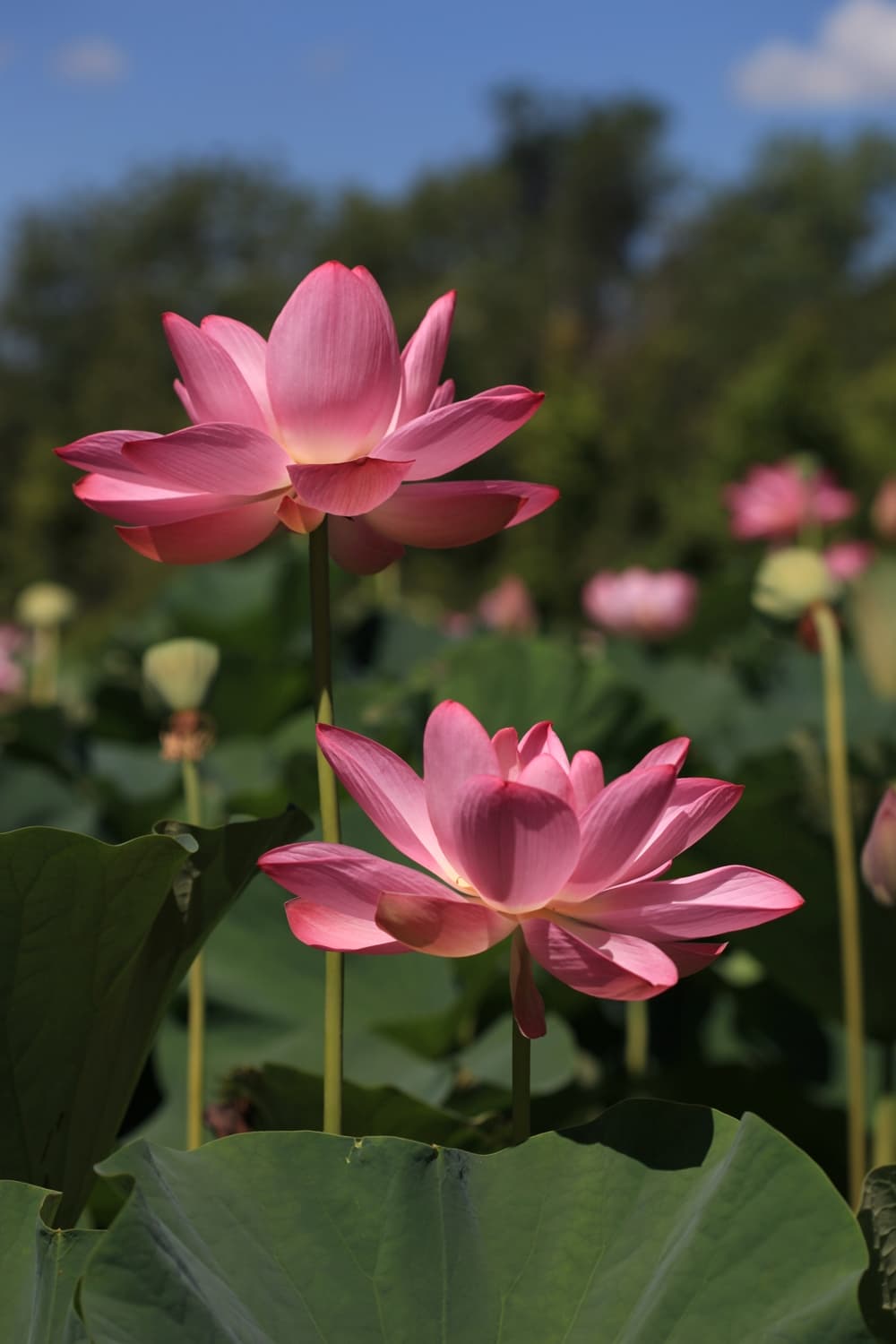
Most Washington gardens are planted in soil. Kenilworth begins in water. In the far northeast corner of the District, where Anacostia Avenue bends along the east bank of the Anacostia River near the Maryland line, a grid of still ponds spreads across the marsh. Grassy paths run along low earthen dikes between the water, and in summer pond after pond carries the same improbable cargo: hardy and tropical water lilies lying flat on the water, and lotus rising above it on tall stems, their pink flowers opening over leaves held like umbrellas. It is, by the Park Service's own account, the only National Park Service site devoted to the propagation and display of aquatic plants.
The cultivated gardens cover about eight and a half acres, with more than forty ponds — forty-five by the Park Service's cultural landscape count — separated by dikes fitted with underground pipes that let rangers raise and lower the water in each pond. Behind the ponds, the scene changes key. A boardwalk carries you out of the flower farm and into Kenilworth Marsh, the largest remaining tidal marsh in Washington, D.C., where wild rice and cattails replace cultivars and the Anacostia moves with the tide. The whole composition — part nursery, part wetland — exists because one homesick man wanted the flowers of his childhood back.
Walter Shaw and the Maine Lilies
Walter B. Shaw was a Civil War veteran from Maine who had lost his right arm in the war, taught himself to write with his left hand, and built a working life as a clerk at the U.S. Treasury. In 1879 he and his wife, Luciana, bought land at the edge of the marsh on the Anacostia's eastern shore — about thirty acres in most accounts. By 1882 he had planted his first water lilies, hardy stock brought from his native Maine, in a single pond on the property, an old ice pond adapted to a new purpose. The lilies thrived in Washington's heat and slow water in a way that turned a hobby into an obsession, and then into a business.
Shaw dug more ponds, traveled for new varieties, and experimented with hybridization, riding a transatlantic fashion for aquatic gardening that had spread from English greenhouses. Willows shaded the winding paths, the pond count climbed, and in 1912 the enterprise took a formal name: the W. B. Shaw Lily Ponds. What had begun as nostalgia was now a nationally known aquatic nursery, shipping plants and drawing visitors — including presidents and other dignitaries — out to the marsh at the edge of the city to see flowers most Americans had never seen growing. Shaw, who had arrived in Washington as a wounded veteran with a clerk's job, had built one of the first great water gardens in the United States on what his neighbors considered swamp.
Helen Shaw Fowler and the Fight for the Ponds
Walter Shaw died in 1921, and the gardens passed to his daughter, L. Helen Shaw Fowler, who had worked in the business and now ran it herself. Under Fowler the gardens kept growing — by 1935 there were forty-two ponds — and kept their national reputation. But the river that fed them was becoming a problem. The Anacostia had silted up badly enough that the U.S. Army Corps of Engineers was called in to dredge it, and the dredging and marsh-filling plans of the 1920s and 1930s put the lily ponds directly in the path of destruction. The cultivated marsh Helen Fowler had inherited was, to the engineers, exactly the kind of wetland the project was meant to eliminate.
Fowler fought the threat for years, and she won. In 1938 Congress authorized the purchase of the gardens — about eight acres bought for $15,000 — and the ponds passed to the National Park Service and were annexed to Anacostia Park. Large-scale commercial cultivation ended, but the garden itself, its pond system, and its plant collections survived intact, which is more than can be said for most of the Anacostia's original marshes. The site, renamed for the surrounding Kenilworth neighborhood, was listed on the National Register of Historic Places in 1978, with a period of significance that runs from Shaw's first plantings in 1882 to the federal purchase in 1938. Fowler stayed connected to the place she had saved; the gardens Washington visits today are substantially the landscape she and her father made.
Ponds, Marsh, and the Wild Edge
A Kenilworth visit works in two movements. The first is the cultivated grid near the visitor center: pond after pond of lilies sorted by kind, the hardy varieties with smooth-edged leaves that stay in the water year-round, and the tropicals with scalloped, sometimes blotched leaves, lifted and stored in the park's greenhouses for the winter and returned to the ponds when the weather warms. Lotus dominate their own ponds in midsummer, leaves rising three to six feet above the water in some plantings, followed by the famous shower-head seed pods after the petals fall. Dragonflies patrol the paths, turtles surface between the pads, and ducks and Canada geese treat the dikes as their own walkways.
The second movement is the marsh. The boardwalk at the back of the gardens leads into Kenilworth Marsh, a tidal wetland that the Park Service chose, beginning in the 1960s, to preserve and restore rather than alter; in 1992–93, restoration added about thirty-two acres of tidal marsh out of what had become mud flats. This is the wilder Washington: herons and shorebirds in the shallows, beavers and muskrats in the banks, wild rice and cattails moving with the wind off the river, and more than 250 bird species recorded at the park across the seasons. The Anacostia Riverwalk Trail also connects here, so a flower visit can stretch into a riverside walk. Few places in the capital put the cultivated and the wild this close together, or make the debt the first owes the second so visible.
A Bloom With a Season
Honesty about timing matters at Kenilworth, because the famous version of this garden exists for only part of the year. Hardy water lilies begin in late spring, and the great display — lilies and lotus together — builds through June and peaks in July, when the Park Service hosts the annual Lotus and Water Lily Festival among the ponds. Lotus bloom runs from roughly late June into August, tropical lilies carry color later into the summer, and then the show thins. A winter visit is not a wasted one — the marsh, the birds, and the structure of the dikes and ponds are all still there, and the park is far quieter — but there will be no sea of flowers, and visitors who come in January expecting July will leave disappointed.
Whenever you come in bloom season, come in the morning. The flowers open early and many close up as the afternoon heat builds, a habit the park's own literature warns about, and the light on the ponds before midday is the best of the day. Go pond to pond slowly rather than trying to see all forty-some: each holds a different variety, and the pleasure is cumulative — water, leaf, and flower repeated until Washington's monuments feel very far away. Then finish on the boardwalk, out in the marsh the Shaws' lilies depended on, where the garden gives its ground back to the river.
Key Facts
- The only National Park Service site devoted to the propagation and display of aquatic plants; the cultivated gardens cover about 8.5 acres with more than 40 ponds (45 in the NPS cultural landscape count) divided by earthen dikes with underground drainage pipes.
- Founded by Walter B. Shaw, a Civil War veteran from Maine who lost his right arm in the war and worked as a Treasury clerk: he bought the land in 1879, planted his first Maine water lilies by 1882, and formalized the business as the W. B. Shaw Lily Ponds in 1912.
- Shaw's daughter, L. Helen Shaw Fowler, ran the gardens after his death in 1921, expanded them to 42 ponds by 1935, and fought the Army Corps dredging plans that threatened them.
- Congress authorized the federal purchase in 1938 ($15,000 for about 8 acres); the gardens became part of Anacostia Park under the National Park Service and were listed on the National Register of Historic Places on August 25, 1978.
- Kenilworth Marsh, adjoining the ponds, is the largest remaining tidal marsh in Washington, D.C.; about 32 acres of tidal marsh were restored in 1992–93, and a boardwalk crosses from the gardens into the marsh.
- Bloom is seasonal: hardy lilies from late spring, lotus peaking in July during the annual Lotus and Water Lily Festival; more than 250 bird species have been recorded at the park.
Visitor Details
Address: Kenilworth Park & Aquatic Gardens, 1550 Anacostia Avenue NE, Washington, DC 20019 (gardens entrance; visitor center on the main path from the entrance).
Transit: Deanwood station (Orange Line) is the nearest Metro stop, roughly a 10-minute walk via the pedestrian overpass to Douglas Street and Anacostia Avenue, or by bus toward Kenilworth Avenue — check WMATA for the current route. The Anacostia Riverwalk Trail also reaches the park for cyclists and walkers. Free parking on site.
Hours/Admission: No entrance fee. Per the National Park Service's operating-hours information, the visitor center and grounds are open daily except January 1, Thanksgiving, and December 25, with seasonal hours — April through October 9:00 am to 5:00 pm, November through April 8:00 am to 4:00 pm. Hours change with season and weather, so check the official NPS site (nps.gov/keaq) before a special trip.
Best timing: A weekday morning in July for peak lotus and lily bloom before the flowers close in the afternoon heat; arrive early during the Lotus and Water Lily Festival, which is the park's busiest moment of the year.
Kenilworth Aquatic Gardens — Ponds and Marsh