An Oasis Suspended Above the Water
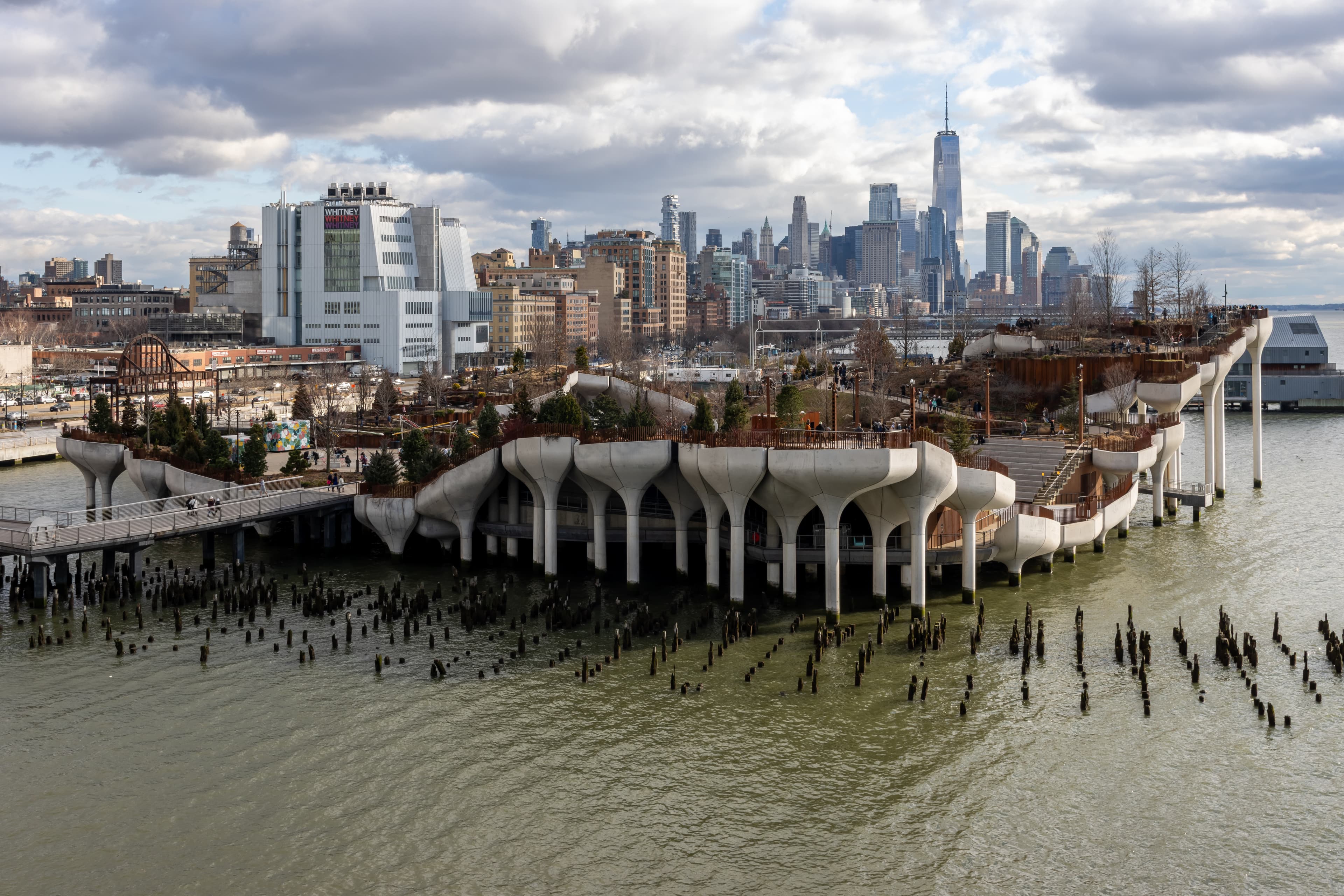
Perched in the Hudson River off West 13th Street, Little Island is unlike any traditional city park. Located at Pier 55 and built on the footprint of historic Pier 54—the dock where the RMS Carpathia brought survivors of the Titanic in 1912—the park emerges from the water on dramatic concrete pot structures.
The Pier Where the Survivors Came Ashore
The ground beneath Little Island holds one of the heaviest stories in maritime history. The park sits on the footprint of Pier 54, and directly beside it, the Titanic was supposed to dock at Pier 59, a White Star Line pier. When the White Star liner struck an iceberg on the night of April 14, 1912, the ship that answered its distress call was the Cunard Line's RMS Carpathia, racing through the same ice field to reach the sinking ship. After pulling more than 700 survivors from the lifeboats, Captain Arthur Rostron decided against diverting to Halifax and steamed for New York, the Titanic's intended destination. The Carpathia arrived in the city on the evening of April 18, 1912, in heavy rain. She stopped first at Pier 59 to offload the Titanic's thirteen surviving lifeboats — all that remained of the ship — then proceeded to Pier 54 to disembark the survivors, who were met by thousands of onlookers. Three years later, the same pier served as the departure point for the RMS Lusitania, sunk by a German U-boat off the coast of Ireland five days into its voyage. In 1934, Cunard and White Star merged, and the pier's steel arch still carries the fading letters of the combined company: "Cunard White Star." The pier building itself was destroyed in 1991, but the arch was preserved as the entryway to the park. Walk through it and you are passing beneath the name of the two companies whose ships — one lost, one that raced to the rescue — define this stretch of the waterfront.
The Park That Was Nearly Scrapped
The idea of replacing the decaying Pier 54 with something new first surfaced with Diana Taylor, chairwoman of the Hudson River Park Trust, and in November 2014 the plan went public: a floating park designed by Heatherwick Studio, funded largely by billionaire Barry Diller and his wife, fashion designer Diane von Furstenberg, through their family foundation, with additional money from the city and state. The first estimate put the cost at $35 million. It would end up at $250 million. The project, originally called Pier 55, almost died twice. The City Club of New York filed a string of lawsuits arguing that the structure sat in a protected estuary without a proper environmental review, that the Hudson River Park Trust should have held a competitive bidding process before accepting a donation of more than $100 million from Diller, and that ticketed events on the island would exclude the public. Diller accused developer Douglas Durst of secretly bankrolling the suits. In September 2017, with costs ballooning and litigation mounting, Diller pulled the plug. A month later, after Governor Andrew Cuomo agreed to commit state funding, the proposal was revived. Construction began in April 2018, a symbolic cornerstone was laid that December, and in 2019 the project was renamed Little Island. It opened to the public on May 21, 2021 — one of the first new parks to debut in the city since the pandemic began.
Building a Park on 132 Tulips
Little Island covers 2.4 acres, and none of it touches the ground in the usual way. The entire park rests on 132 pot-shaped concrete structures — the "tulips" — which stand on 280 concrete pilings driven into the riverbed. Each pot is unique in shape and elevation, and each is engineered to carry a different weight load, so the deck undulates: the tops of the pots range from 15 to 62 feet above the waterline, creating the park's rolling hills and sheltered hollows. Engineer Arup oversaw the installation, using 3D design and prefabrication techniques to realize Heatherwick's geometries, and the pots themselves were manufactured upstate by the Fort Miller Company. The approach solved a problem beyond aesthetics. A flat deck on uniform pilings would have been simpler, but the varying heights give the park its topography — and its views, which open outward to Lower Manhattan and New Jersey as you climb.
A Landscape That Rewrites Itself Each Season
The planting plan came from Signe Nielsen of Mathews Nielsen Landscape Architects, working with Arup and Heatherwick Studio, and it was designed as a sequence of surprises. More than 350 species of flowers, trees, and shrubs went into the park, starting with over 66,000 bulbs and 114 trees, some of which will reach sixty feet at maturity. Four different landscape typologies anchor the four corners of the island, and the plantings were engineered to resist erosion as well as to look good — soil, roots, and drainage were designed together for a structure that moves with the wind and the tide. The seasons do the rest. Spring brings the bulb displays, summer fills the rolling lawns — including the lawn space known as The Glade — and autumn sets the foliage off against the river. The 687-seat amphitheater, The Amph, hosts the park's performance programming, while a smaller stage and an intimate lawn offer quieter corners, and food and beverage vendors line a central plaza with seating. The park connects to the rest of Hudson River Park by footbridges at 13th and 14th Streets, and the 540 meters of pathways keep folding back on themselves, so the island never quite reveals everything at once. Admission is free, with year-round arts and education programming filling the calendar.
Architectural & Location Highlights
- The park was designed by British designer Thomas Heatherwick in collaboration with landscape architecture firm MNLA.
- The park is supported by 132 concrete "tulip" pots, each with a unique shape and elevation.
- Little Island is located at Pier 55, built on the footprint of historic Pier 54, whose surviving Cunard arch remains preserved at the park entrance.
- The park features an outdoor amphitheater ("The Amph") seating roughly 680 spectators overlooking the river.
Landscape and Topography
The landscape is deliberately sculpted into varying microclimates, featuring rolling lawns, viewpoints pointing towards Lower Manhattan and New Jersey, and hundreds of species of trees and seasonal perennials.
Editorial Note on Visiting
Timed reservation entry is occasionally required during peak summer weekends and major performance events, though general daytime admission on weekdays is typically walk-in.
Hero photo: Mike Peel, CC BY-SA 4.0, via Wikimedia Commons.
Location Photography



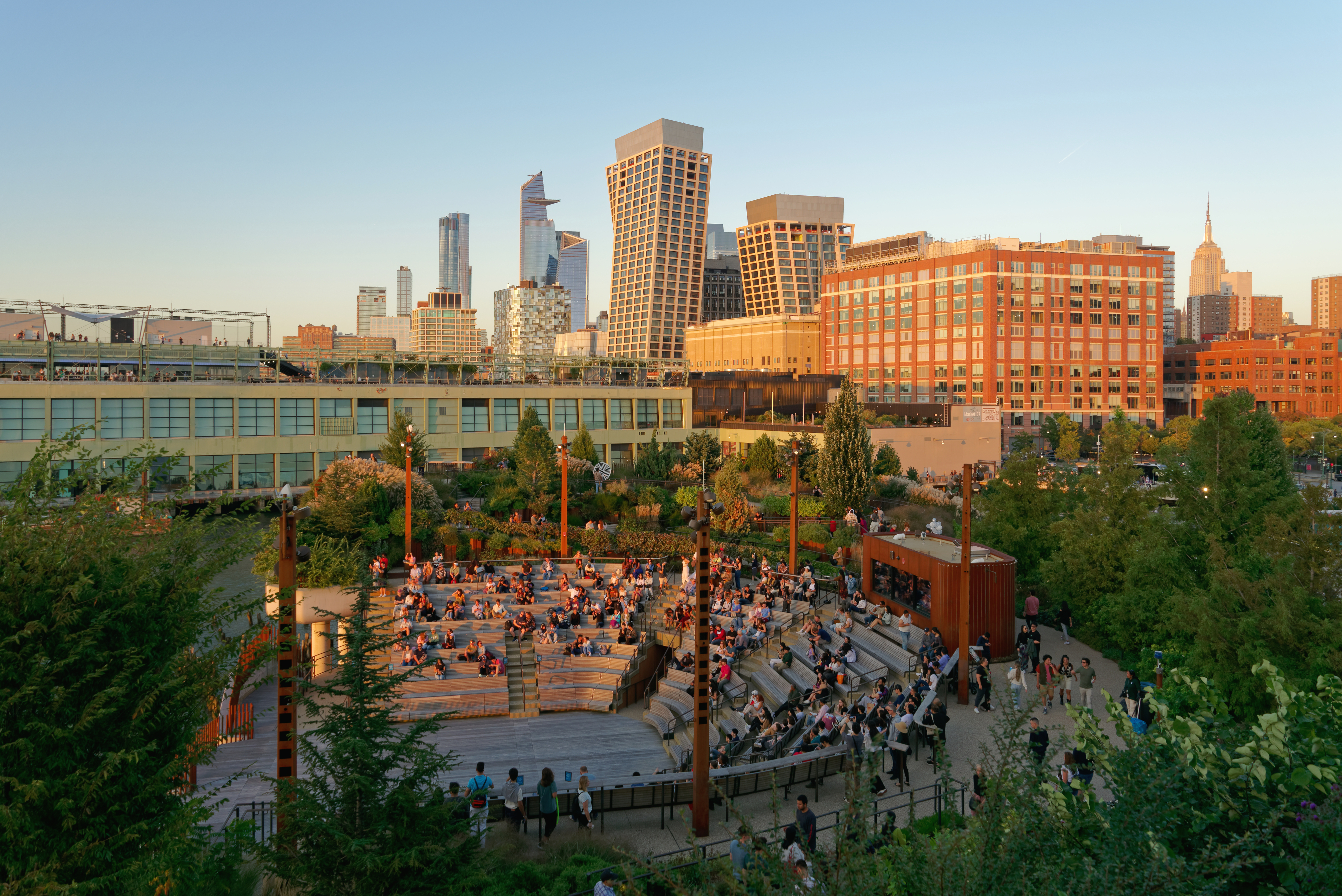
Gallery photos: Jakub Hałun (CC BY-SA 4.0), Jim.henderson (CC BY-SA 4.0), Eden, Janine and Jim (CC BY 2.0), Jakub Hałun (CC BY-SA 4.0) via Wikimedia Commons.