
The palace of play in Fairmount Park
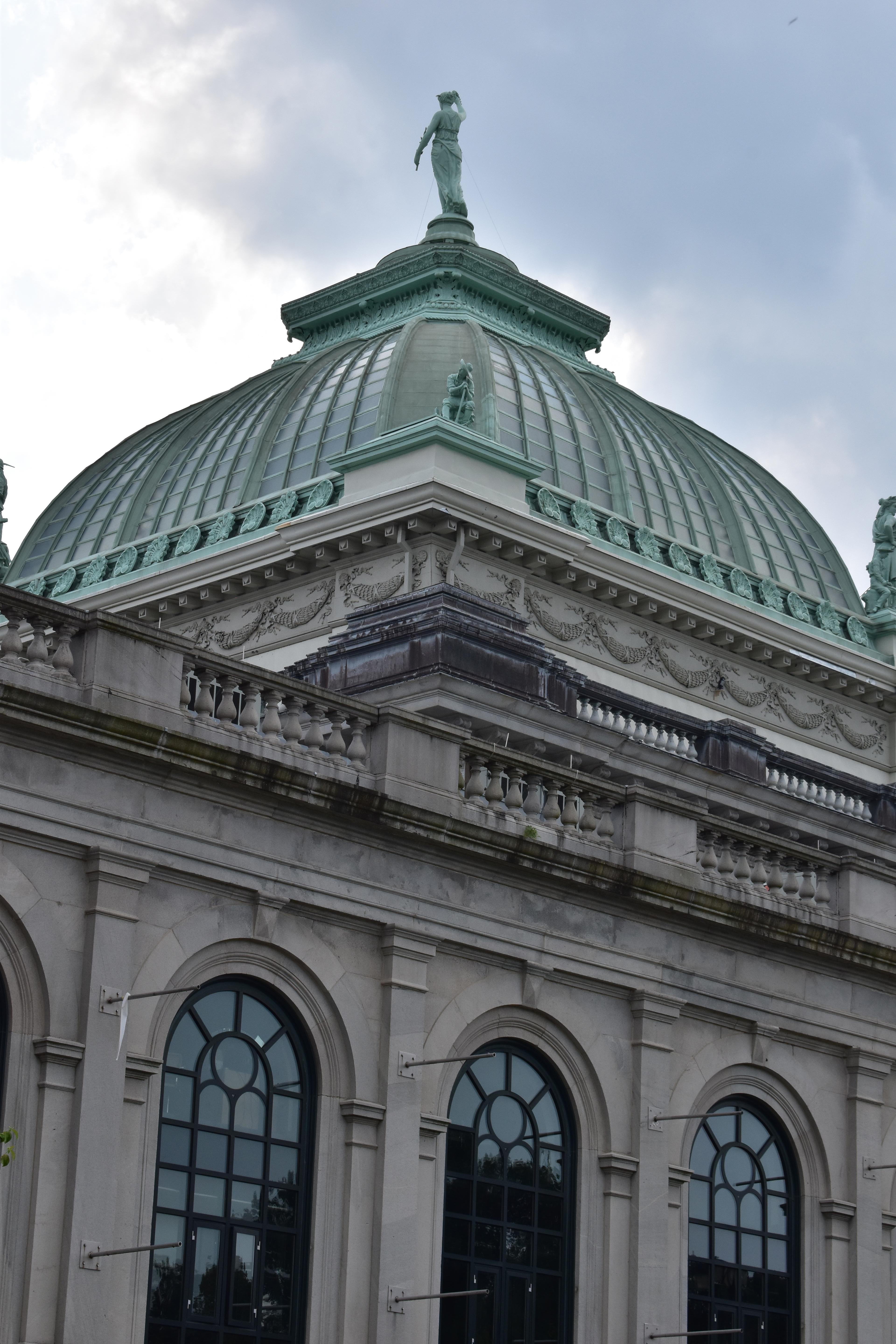
Memorial Hall does not look like a children's museum from the outside. It looks like a palace. The great domed building rises over the Centennial District of West Fairmount Park in granite, glass, and iron, 365 feet long and 210 feet wide, its dome visible from across the park — a monument built for the 1876 Centennial Exposition, the fair that celebrated the hundredth anniversary of the signing of the Declaration of Independence and the first World's Fair ever held in the United States. For more than a century it was an art gallery, then a museum, then a recreation center, then a near-ruin used for storage. Today it is the loudest building in Fairmount Park.
Step through the doors and the palace changes character entirely. The grand halls that once displayed the art of the world now hold a supermarket run by five-year-olds, a river full of rubber ducks, a hedge maze out of Alice in Wonderland, a rocket waiting for its crew, and a carousel whose hand-carved horses have been spinning since 1908. The Please Touch Museum is the nation's first museum built entirely around children seven years old and younger, and it has operated on a single premise since the day it opened in 1976: children learn by touching, by doing, and by playing — and a museum that forbids touching is a museum that has misunderstood its audience.
That premise was radical when the museum opened, and it has never really stopped being radical. Most museums are built around the idea that the precious thing must be kept behind glass. Please Touch was built around the opposite idea: that the precious thing is the child's curiosity, and that the museum's job is to get out of its way. The building makes the point twice over. Memorial Hall is itself one of the great survivals of American architecture — a National Historic Landmark that was nearly lost — and the museum inside it is the reason the building was saved at all.
A museum founded on a simple frustration
The Please Touch Museum began with a field trip that did not happen. In the 1970s, Portia Sperr, a Montessori educator in Philadelphia, kept running into the same wall: there was nowhere in the city willing to host her five-year-old students for hands-on learning outside the classroom. The museums of Philadelphia were built for adults, and children were expected to look, not touch. Sperr gathered a group of idealistic families — parents, educators, and artists — and decided to build the museum she could not find.
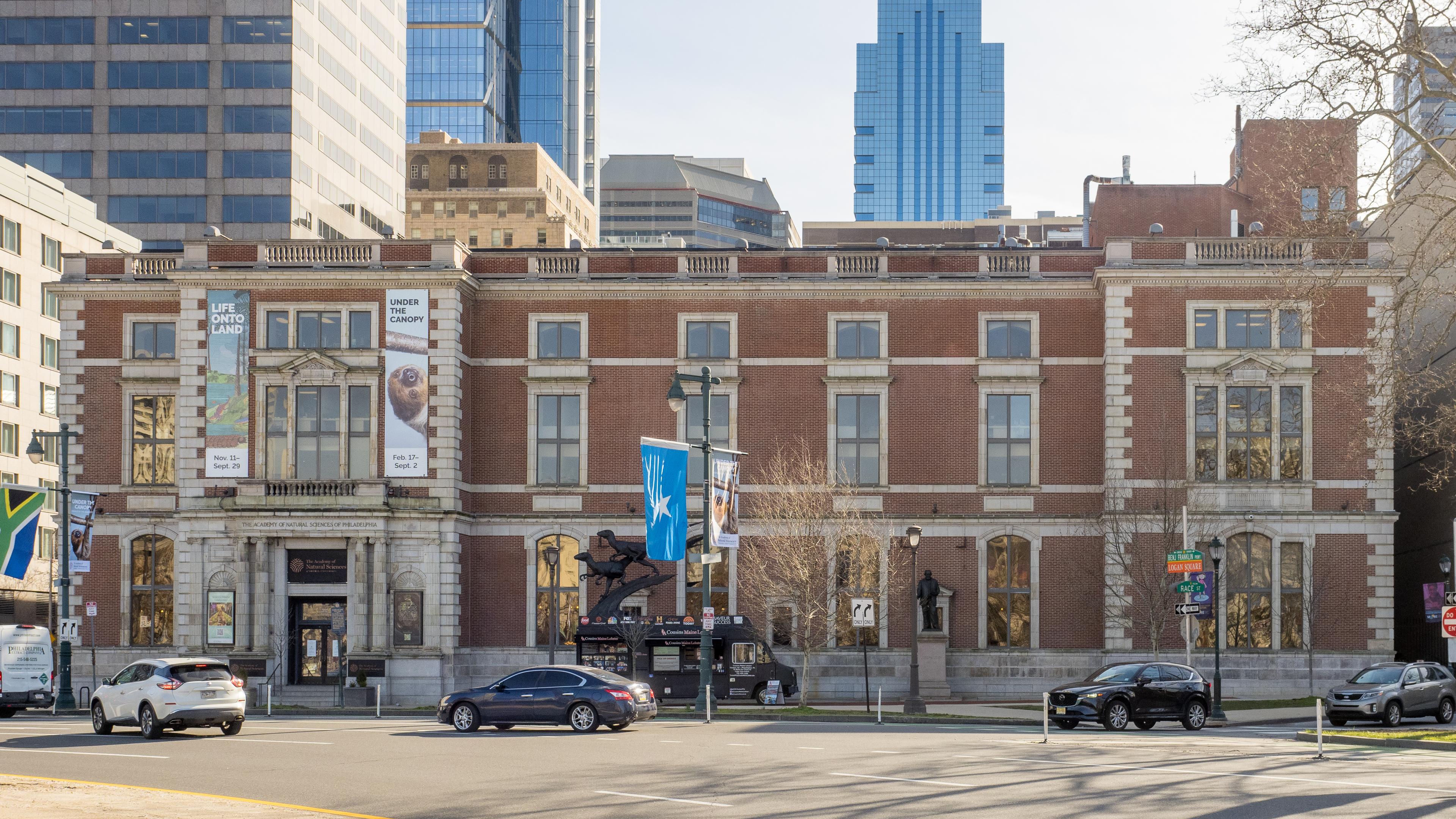
On October 2, 1976, the same year the United States celebrated its Bicentennial, the Please Touch Museum opened as a pilot program in 2,200 square feet tucked among the dinosaur skeletons and woolly mammoths in the Academy of Natural Sciences on the Benjamin Franklin Parkway. The space accommodated only 25 children at a time. More than 400 visitors waited in line on the first day. The museum was the first in the country dedicated entirely to serving children ages seven and under, and its founding premise — create a place where children could explore the world through self-directed curiosity and "learn through play" — has been its mission statement ever since.
The pilot worked too well. Within two years the museum had outgrown its corner of the Academy and moved, in 1978, to a larger space on Cherry Street with expanded hours. Five years later, in 1983, it bought and renovated a three-story, 30,000-square-foot building at 210 North 21st Street, in the heart of Philadelphia's museum district on the Parkway. The lines of children waiting to play never really shortened. In 1988, after twelve years of leadership, Sperr passed the directorship to Nancy Kolb. By the late 1990s, the museum was looking for a permanent home again — a search that would eventually take it to a building almost nobody had thought of as a children's museum at all.
Memorial Hall: the last great building of 1876
Memorial Hall was built to be permanent, and then nearly was not. It was designed by Herman J. Schwarzmann, a German-born engineer who had never designed a building before he was put in charge of the Centennial Exposition's grounds, and who was only thirty years old when the fair opened. Schwarzmann called the style "modern Renaissance" — what we now call Beaux-Arts — and he built the hall the way the fair's organizers intended it to last: granite, glass, and iron throughout, with no wood anywhere in the construction, so that the building was thoroughly fireproof. Construction began on July 6, 1874, and the hall opened with the exposition on May 10, 1876, as the fair's main art gallery.
The Centennial Exposition sprawled across Fairmount Park with more than 200 buildings. Memorial Hall is the only major structure from that exhibition still standing — the National Park Service's nomination form for the National Register of Historic Places says so plainly, and the building was designated a National Historic Landmark on December 8, 1976, the same year the Please Touch Museum opened its first small room across town. The hall cost $1,564,398.56 to build, little more than the sums appropriated in advance by the Commonwealth of Pennsylvania and the City of Philadelphia, and it was, by the Park Service's account, the first American art museum in the Beaux-Arts manner.
After the fair closed, the hall became, as planned, the first home of the Pennsylvania Museum of Industrial Art — the institution that would become the Philadelphia Museum of Art. The new museum opened in the building on May 10, 1877, the first anniversary of the Centennial. It stayed until the museum's much larger Grecian building on the Benjamin Franklin Parkway opened in 1928, and Memorial Hall continued to house the less important collections until 1954. Then the Fairmount Park Commission took the building over, converted it into a recreation center — an indoor swimming pool in the east gallery, a basketball court in the west — and made it the commission's headquarters. By 2000 the hall had fallen into great disrepair and was used mainly for art storage. The dome leaked. The marble floors were buried under decades of paint and neglect. The building that had been built to be fireproof and permanent was, quietly, dying.
An $85 million rescue
The rescue began with a suggestion. In 2002, the president of the Philadelphia Zoo recommended that the Please Touch Museum's leadership consider Memorial Hall, which had fallen into disrepair. The museum's team toured the ailing building and saw what it could be: a palace of play, three times the size of their Center City home, in the middle of the largest urban park in the country. On February 14, 2005, the museum signed an eighty-year lease for Memorial Hall, and on December 15, 2005, it broke ground on an extensive renovation and expansion.
The work took three years and, by Wikipedia's account, $85 million — the project was reported elsewhere at $88 million — and it was a restoration as much as a renovation. The architects, Kise Straw & Kolodner of Philadelphia, stripped and gutted the building, installed new electrical and mechanical systems, a new roof, marble and plaster work, wheelchair access, landscaping, and parking for up to 280 cars. Layers of paint were peeled back to uncover gold-leaf detailing and sculptural moldings that had been hidden for decades. The original marble floors were brought back to life — and in the winter of 2024, ahead of the hall's 150th anniversary and the United States' 250th in 2026, they were renovated again, one 200-square-foot section at a time, with tiles sourced from French, Spanish, and Italian quarries to match the originals.
The renovation also turned up a surprise: a below-grade theater space, excavated and restored, which is now the Please Touch Playhouse — the museum's theater, where in-house performers stage original, interactive shows of music, movement, folklore, and puppetry every day, introducing young children to live performance. The museum closed its 21st Street location on September 1, 2008. On October 18, 2008, it opened its doors in Memorial Hall, at 150,000 square feet triple its previous size, and an eleven-year dream — the search for a permanent home had begun in the late 1990s — was finally realized. Since the move, the museum has welcomed more than three million visitors.
The carousel comes home
The most beloved object in the museum is also the one that traveled farthest to get there. The Woodside Park Dentzel Carousel was built in Philadelphia by the Dentzel Carousel Company of Germantown — carved in 1902–1907, when Salvatore Cernigliaro was the company's master carver, with some figures by Daniel Muller, one of the foremost carousel carvers of his time — and purchased by Woodside Park in 1908. Woodside was an amusement park at Ford Road and Monument Road, just outside Fairmount Park, that operated from 1897 to 1955. The carousel was its most beloved ride: 52 hand-carved wooden animals in the Philadelphia style, sculpted in vibrant, lifelike detail — 40 horses (24 jumpers that rise and fall in a slow gallop, 16 standers on the outer ring), plus a menagerie of four cats, two pigs, two goats, and four rabbits — with two chariots and 1,296 lights.
When Woodside Park closed after the 1955 season, the carousel left Philadelphia. It ran at Rockaway Beach in New York, was bought by the carousel historian Frederick Fried, appeared at the Music Circus in Lambertville, New Jersey, and was sold to the Smithsonian Institution in 1965. The Smithsonian put it into storage in an old textile mill in Gilbertville, Massachusetts, where it remained, dismantled and mostly forgotten, for the next forty years. It was, by then, a museum piece that no museum was showing.
The move to Memorial Hall changed that. The museum had long wanted a carousel, and when the Pennsylvania Historical and Museum Commission — to which the Smithsonian had donated the carousel in 2002 — offered the Dentzel as a long-term loan, the museum accepted. Restoring it was a cross-country effort: craftsmen from Carousels & Carvings in Marion, Ohio, led by Todd Goings, worked with studios in California and North Carolina, and the drum panels were painted by Philadelphia resident and Please Touch senior exhibit designer Lorna Kent, with scenes of Woodside Park in a pastel palette to match the original pieces. In August 2008, the animals began going back on the ride — a pair of pink pigs scampering after two horned goats, a chestnut horse lying on its side awaiting placement — in a new 9,000-square-foot glass Carousel House on the east side of Memorial Hall. The carousel that had run ten blocks from Memorial Hall, at a park that no longer exists, was home. It is now the only surviving attraction of Woodside Park.
The Statue of Liberty's arm, rebuilt from toys
The carousel is not the only piece of 1876 inside the building. In the museum's great Hamilton Hall stands a 40-foot replica of the Statue of Liberty's arm and torch — a "monument to play" built by the Philadelphia artist Leo Sewell entirely from discarded toys and hundreds of common objects: skis, license plates, children's toys, and other found things. It is a fitting tribute, because the original arm and torch were themselves an exhibit at the 1876 Centennial Exposition in this very building, displayed to raise money for the pedestal that now holds the statue in New York Harbor. Sewell also created "Artie the Elephant," another of the museum's signature pieces.
The arm is the museum in miniature: a piece of American history rebuilt out of the stuff of childhood, at a scale that makes adults feel small and children feel that the world was built for them. It is also a reminder that Memorial Hall's history and the museum's mission are not two stories but one. The hall was built to show Americans what their country could make. The museum uses it to show children what they can make of the world.
Inside: a city built for small hands
The museum's two floors of exhibit zones read like a map of a child's imagination, and almost every zone is built around doing rather than looking. In Wonderland, children tumble down the rabbit hole into a world inspired by Lewis Carroll's Alice's Adventures in Wonderland — a circular hedge maze, a hall of funny mirrors, a tea party with the Mad Hatter, and croquet with the Queen — with oversized props bringing Maurice Sendak's classics to life nearby. In the Supermarket, part of the Food & Family zone, children stock the shelves, load a cart with realistic-looking groceries, and ring up the order at a working checkout. In River Adventures, they put on provided smocks and spend as long as they like at the water tables, building dams, floating boats, racing miniature sailboats, and learning cause and effect with pumps, channels, and a rubber-ducky wave zone that has become a favorite of repeat visitors.
Roadside Attractions lets children get behind the wheel of heavy machinery, fill up cars at a petrol station, and ride the Monorail Rocket Express into the future. City Capers is a miniature neighborhood where budding architects, doctors, and construction workers try on professions — including the museum's real SEPTA bus, which children can climb into and drive. The Space Station, also called Flight Fantasy, lets aspiring astronauts climb into a model rocket, pilot a mission from a command center full of buttons and screens, and try on space helmets. Nature's Pond, for the youngest visitors aged three and under, hides animals in high grass around a lily pond, and the Fairytale Garden offers stories and nursery rhymes. Centennial Innovations whisks visitors back to 1876 to meet the new inventions first displayed at the exposition — the telephone, the typewriter, and root beer — beside a scale model of the Centennial Exhibition itself. And the Please Touch Playhouse, the theater excavated during the renovation, stages original performances daily, making the museum many children's first experience of live theater.
The exhibits change — the museum's own list has included Adventure Camp, Cents and Sensibility, Happy Camper, Imagination Playground, the Please Touch Garden, and the Storytime Cabin — but the principle does not. Everything is at a child's height, everything is meant to be handled, and the noise is the point. A quiet room in this museum would be a failure.
Learning through play
The museum's mission, in its own words, is to enrich the lives of children by creating learning opportunities through play — to "change a child's life as they discover the power of learning through play," and, in the slogan on its website, to "build brains." That is Montessori thinking, and it is Portia Sperr's thinking: children do not learn by being told, they learn by doing, and the museum's job is to build the world at their scale and let them loose in it.
It is also, quietly, a civic story. The Please Touch Museum saved Memorial Hall. Without the museum's eighty-year lease and its $85 million renovation, the last great building of the Centennial Exposition might have followed Horticultural Hall — the exposition's other great surviving structure, badly damaged by Hurricane Hazel in 1954 and demolished — into memory. Instead, the hall is full of children again, which is what a building built to celebrate a country's future ought to be. The museum that started in 2,200 square feet among the dinosaurs now fills a palace, and the palace, after 130 years, finally has the audience it was waiting for.
How to visit
The Please Touch Museum is in Memorial Hall at 4231 Avenue of the Republic, in the Centennial District of West Fairmount Park — reach it by car via the park roads, or by public transit on SEPTA bus routes 38 and 40 and the Philly PHLASH bus, which stops at the museum. The museum is designed for children seven and under, but older children and adults will find plenty to look at — the building alone is worth the trip. Plan on two to three hours, more if your children find the water tables or the supermarket. Start with the carousel in its glass pavilion on the east side of the hall, then work through Wonderland and River Adventures, and save the Statue of Liberty arm in Hamilton Hall for the moment when you want the room to go quiet. Check the museum's daily schedule on arrival for Playhouse performance times. No fixed admission price or opening hours are stated in this article, since none was verified against the museum's official site in this run: check pleasetouchmuseum.org before visiting for current admission, carousel pricing, and hours.
Memorial Hall and the Dentzel Carousel


Key Facts
- The Please Touch Museum is a children's museum in Memorial Hall, 4231 Avenue of the Republic, in the Centennial District of West Fairmount Park, Philadelphia, PA 19131. Coordinates: 39.9794, -75.2103.
- Founded by Montessori educator Portia Sperr, the museum opened its pilot program on October 2, 1976, in 2,200 square feet in the Academy of Natural Sciences on the Benjamin Franklin Parkway, among the dinosaur skeletons and woolly mammoths. More than 400 visitors waited in line on the first day. It was the first museum in the United States dedicated entirely to children ages seven and under, founded on the premise of "learning through play."
- The museum moved to Cherry Street in 1978, and in 1983 bought and renovated a three-story, 30,000-square-foot building at 210 North 21st Street. In 1988, founding director Portia Sperr passed leadership to Nancy Kolb.
- In 2002, the president of the Philadelphia Zoo suggested the museum consider Memorial Hall, which had fallen into disrepair. On February 14, 2005, the museum signed an eighty-year lease for the hall; renovation began December 15, 2005. The museum closed its 21st Street location on September 1, 2008, and opened in Memorial Hall on October 18, 2008.
- Memorial Hall was built as the art gallery for the 1876 Centennial Exposition, America's first World's Fair, celebrating the hundredth anniversary of the Declaration of Independence. Designed by Herman J. Schwarzmann, then thirty years old, in the Beaux-Arts ("modern Renaissance") style, it was built of granite, glass, and iron with no wood, to be fireproof. Construction began July 6, 1874; the hall opened May 10, 1876. It measures 365 feet long, 210 feet wide, and 59 feet high, surmounted by a dome, and cost $1,564,398.56.
- Memorial Hall is the only major structure from the 1876 Centennial Exposition still standing, according to the National Park Service nomination form, and was designated a National Historic Landmark on December 8, 1976.
- After the exposition, Memorial Hall became the first home of the Pennsylvania Museum of Industrial Art (now the Philadelphia Museum of Art), opening May 10, 1877. The museum moved to its Benjamin Franklin Parkway building in 1928; the hall housed lesser collections until 1954. The Fairmount Park Commission took it over in 1958, converted it into a recreation center with a swimming pool in the east gallery and a basketball court in the west, and made it the commission's headquarters. By 2000 the hall had fallen into great disrepair and was used mainly for art storage.
- The 2005–2008 renovation cost $85 million by Wikipedia's account (the project was reported elsewhere at $88 million), carried out by architects Kise Straw & Kolodner. The museum grew to 150,000 square feet — triple its previous size — with parking for up to 280 cars. The renovation uncovered gold-leaf detailing and sculptural moldings hidden under paint for decades, and excavated a below-grade theater that became the Please Touch Playhouse. In winter 2024 the hall's original marble floors were renovated section by section ahead of the 150th anniversary of the hall and the United States' 250th anniversary in 2026.
- The museum's 40-foot replica of the Statue of Liberty's arm and torch, in Hamilton Hall, was built by Philadelphia artist Leo Sewell entirely from discarded toys and common objects including skis and license plates. The original arm and torch were exhibited at the 1876 Centennial Exposition in Memorial Hall to raise money for the statue's pedestal in New York Harbor. Sewell also created the museum's "Artie the Elephant."
- The Woodside Park Dentzel Carousel was carved in 1902–1907 by the Dentzel Carousel Company of Germantown, Philadelphia, when Salvatore Cernigliaro was master carver, with some figures by Daniel Muller, and was purchased by Woodside Park in 1908. Woodside Park, an amusement park at Ford Road and Monument Road, operated from 1897 to 1955. The carousel has 52 hand-carved wooden animals — 40 horses (24 jumpers, 16 standers) and a menagerie of four cats, two pigs, two goats, and four rabbits — plus two chariots and 1,296 lights, in the Philadelphia style.
- After Woodside Park closed in 1955, the carousel ran at Rockaway Beach in New York, was bought by carousel historian Frederick Fried, appeared at the Music Circus in Lambertville, New Jersey, and was sold to the Smithsonian Institution in 1965, which stored it dismantled in a textile mill in Gilbertville, Massachusetts, for about forty years. The Smithsonian donated it to the Pennsylvania Historical and Museum Commission in 2002, which offered it to the museum as a long-term loan. It was restored by Carousels & Carvings of Marion, Ohio, and studios in California and North Carolina, with drum panels painted by Please Touch senior exhibit designer Lorna Kent depicting Woodside Park, and installed in a new 9,000-square-foot glass Carousel House on the east side of Memorial Hall in August 2008. It is the only surviving attraction of Woodside Park.
- Signature exhibits include Wonderland (Alice in Wonderland hedge maze, Mad Hatter's tea party, hall of mirrors), the Supermarket in the Food & Family zone, River Adventures water play, Roadside Attractions, City Capers (including a real SEPTA bus children can drive), the Space Station / Flight Fantasy rocket, Nature's Pond for ages three and under, Centennial Innovations (telephone, typewriter, root beer, and a scale model of the 1876 Centennial Exhibition), and the Please Touch Playhouse, which stages original interactive performances daily. The museum's own exhibit list has also included Adventure Camp, Cents and Sensibility, Happy Camper, Imagination Playground, the Please Touch Garden, and the Storytime Cabin.
- The museum's mission is to enrich the lives of children by creating learning opportunities through play. Since the 2008 move to Memorial Hall, the museum has welcomed more than three million visitors.
- Public transit: SEPTA bus routes 38 and 40, and the Philly PHLASH bus, which stops at the museum.
Visitor Details
Address: Please Touch Museum, Memorial Hall, 4231 Avenue of the Republic, Philadelphia, PA 19131 (Centennial District, West Fairmount Park).
Transit: SEPTA bus 38 and 40; Philly PHLASH bus stops at the museum. Driving via the park roads; parking on site.
Hours/Admission: No fixed admission price, carousel price, or opening hours are stated in this article, since none was verified against the museum's official site (pleasetouchmuseum.org) in this run. Check pleasetouchmuseum.org before visiting for current admission, carousel pricing, and hours.
Best timing: Allow two to three hours. The museum is designed for children seven and under; expect crowds on weekends and school holidays. Check the daily schedule on arrival for Please Touch Playhouse performance times. Start at the carousel pavilion on the east side of the hall, then Wonderland and River Adventures; save the Statue of Liberty arm in Hamilton Hall for last.