A Temple Built for the Ages
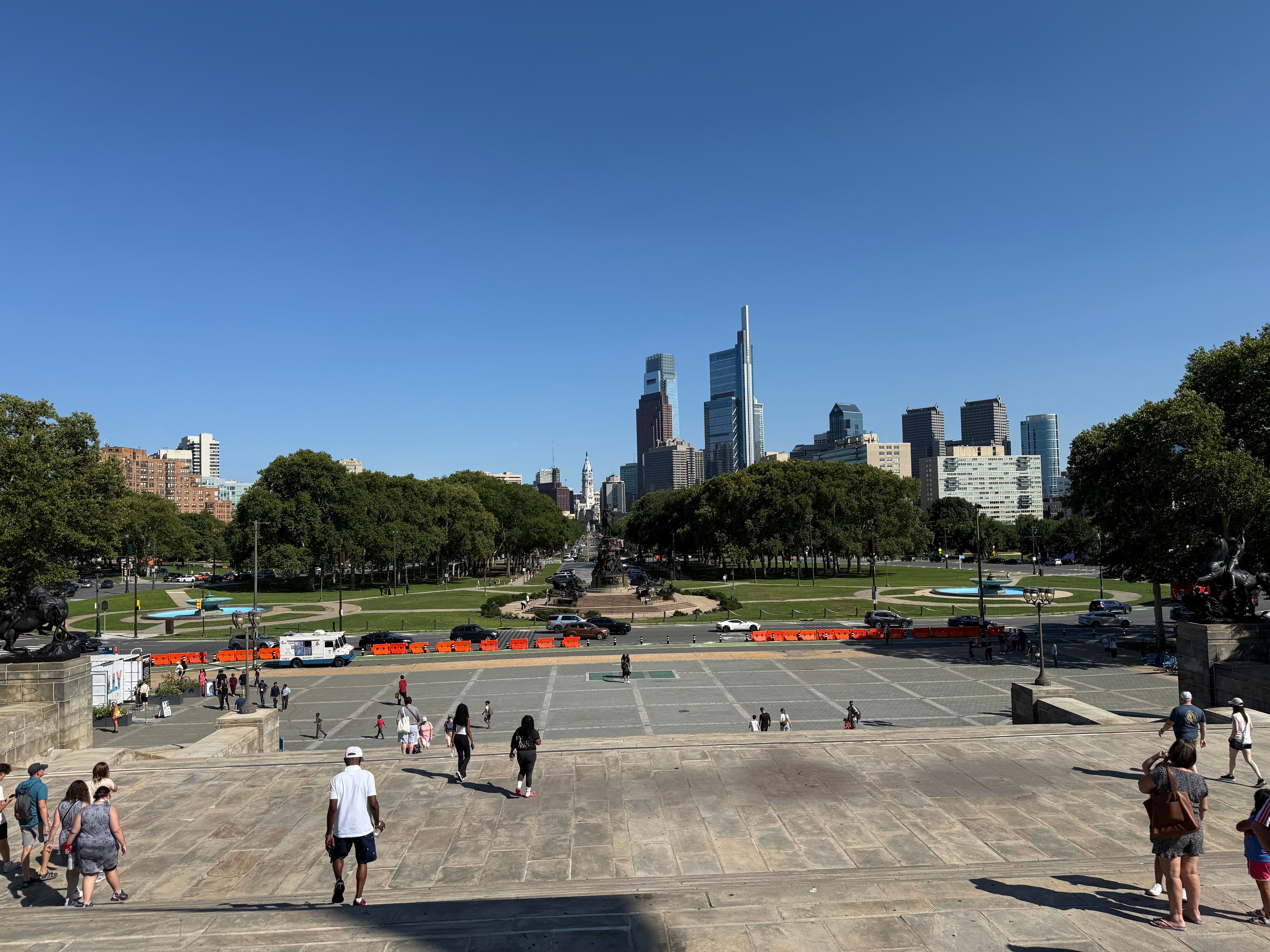
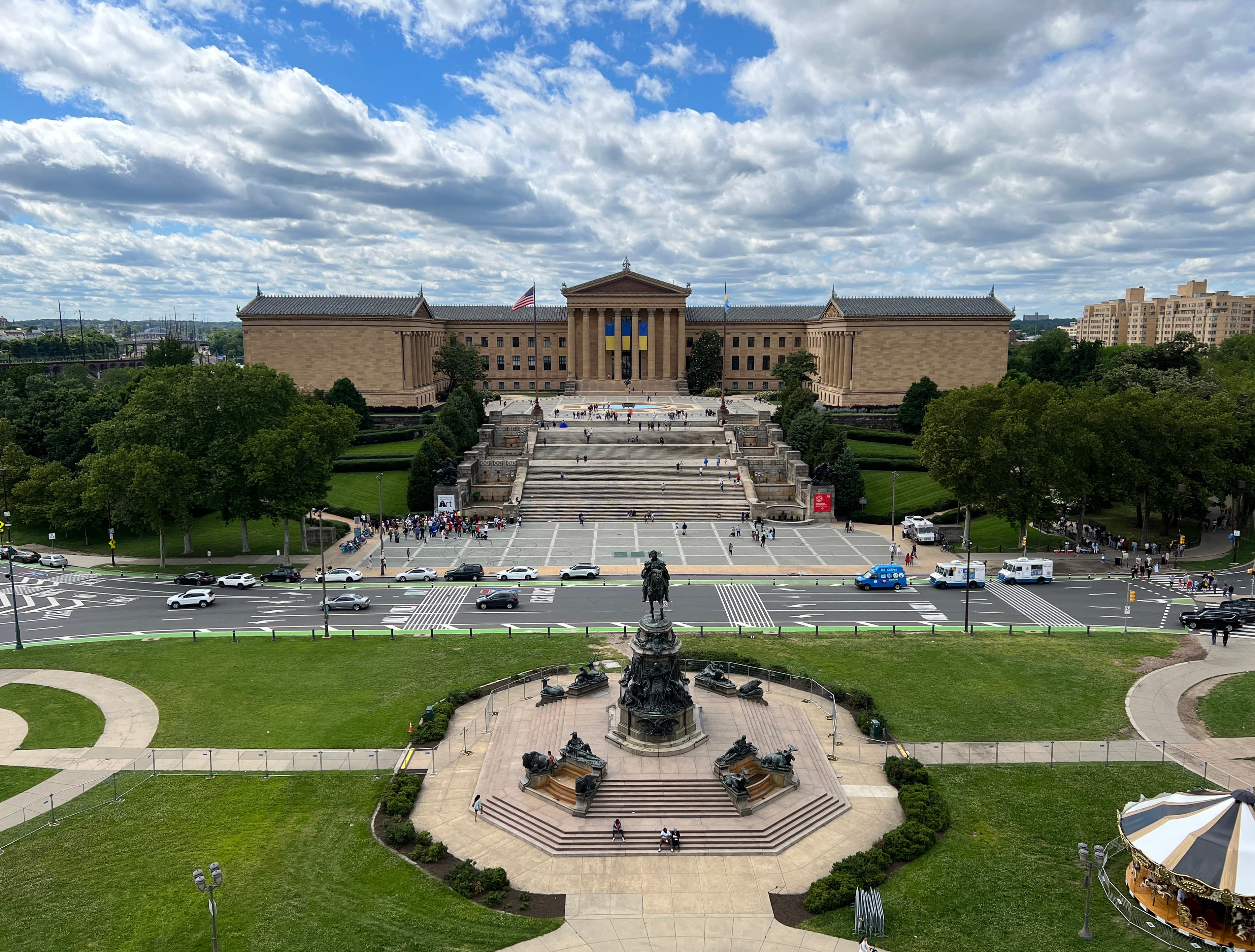
Stand at the foot of the Benjamin Franklin Parkway and look northwest: at the far end, on the crest of Fairmount, rises a limestone colonnade against the sky. That is the Philadelphia Museum of Art — a Greek Revival temple of such conviction that it ends the vista of the entire city axis, the way a cathedral terminates a baroque boulevard. It is one of the largest and most important art museums in the United States, and it is the single most climbed-to sight in Philadelphia.
The museum was born in 1876, founded for the Centennial Exposition and first housed in Memorial Hall in Fairmount Park — the building the city erected for the fair's art exhibition. By the early 1900s, the collection had outgrown its quarters, and Philadelphia made a grand decision: to cap the new Benjamin Franklin Parkway, the mile-long diagonal boulevard then being cut through the city in imitation of Paris's Champs-Élysées, with a museum worthy of being its terminus. Ground was broken in 1919, and the building took nine years to rise. It opened to the public on March 26, 1928.
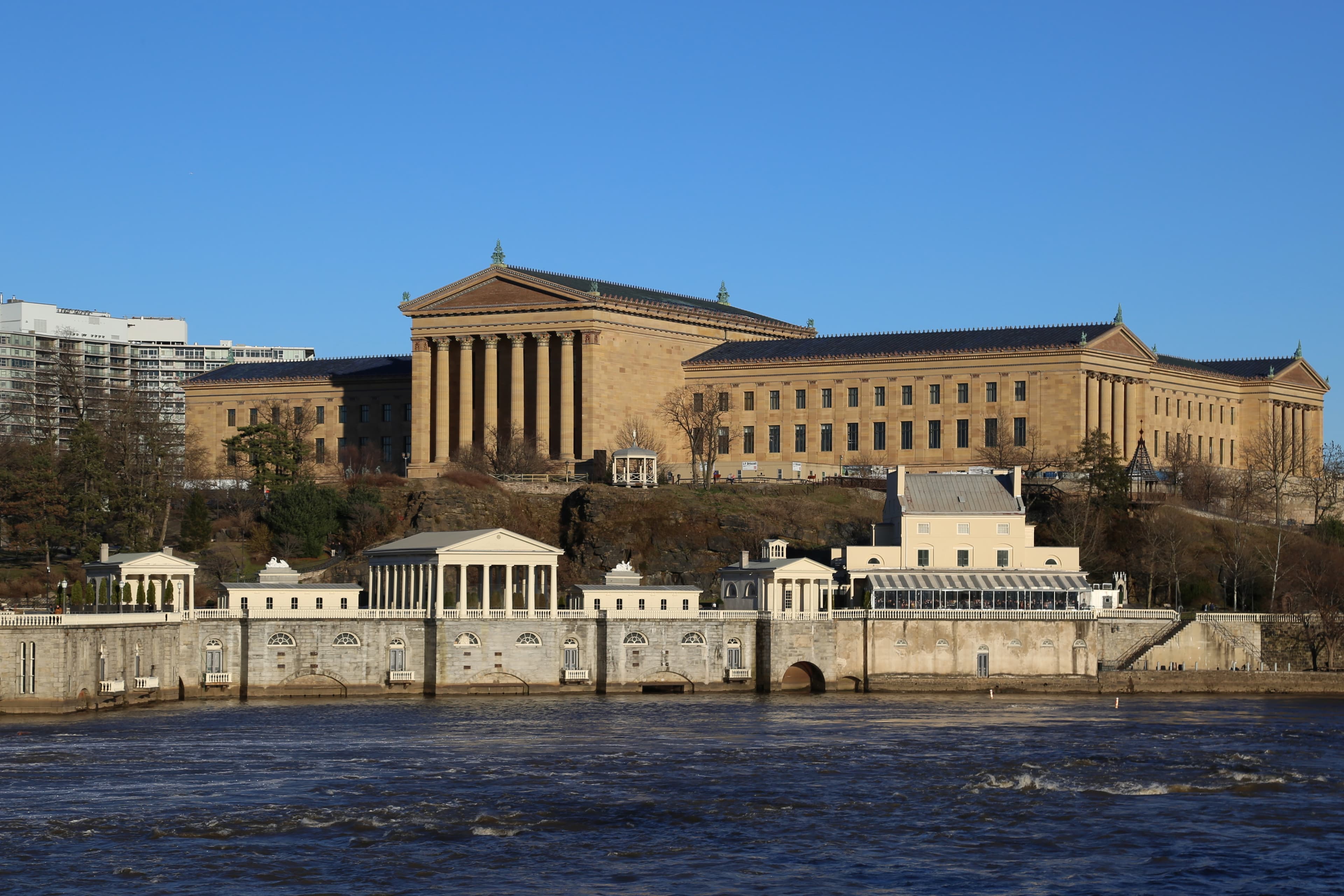
The design came from the office of Horace Trumbauer, with principal credit shared between Howell Lewis Shay and Julian Abele. Abele's role deserves remembering: he was the first African American graduate of the University of Pennsylvania's architecture program, and as Trumbauer's chief designer he drew the museum's essential forms — though in his lifetime he received almost no public credit for it. The architectural style is Greek Revival filtered through Beaux-Arts planning: a vast rectangle in Minnesota dolomite, ringed by a Corinthian colonnade, crowned with polychrome terra-cotta figures that gleam in color against the pale stone. The pediments and porticoes carry sculpture, and the whole composition was deliberately staged as the climactic view down the Parkway.
The 72 Steps and the Boxer
Long before most visitors meet the art, they meet the stairs. The grand east front of the museum is approached by 72 stone steps — and since 1976 they have been the Rocky Steps. In "Rocky," Sylvester Stallone's underdog boxer trains by sprinting up those steps at dawn, raising his arms in triumph at the top with the city skyline behind him. The scene became the most famous movie montage in American cinema, and generations of visitors have recreated it: the run, the arms-up pose, the photograph.
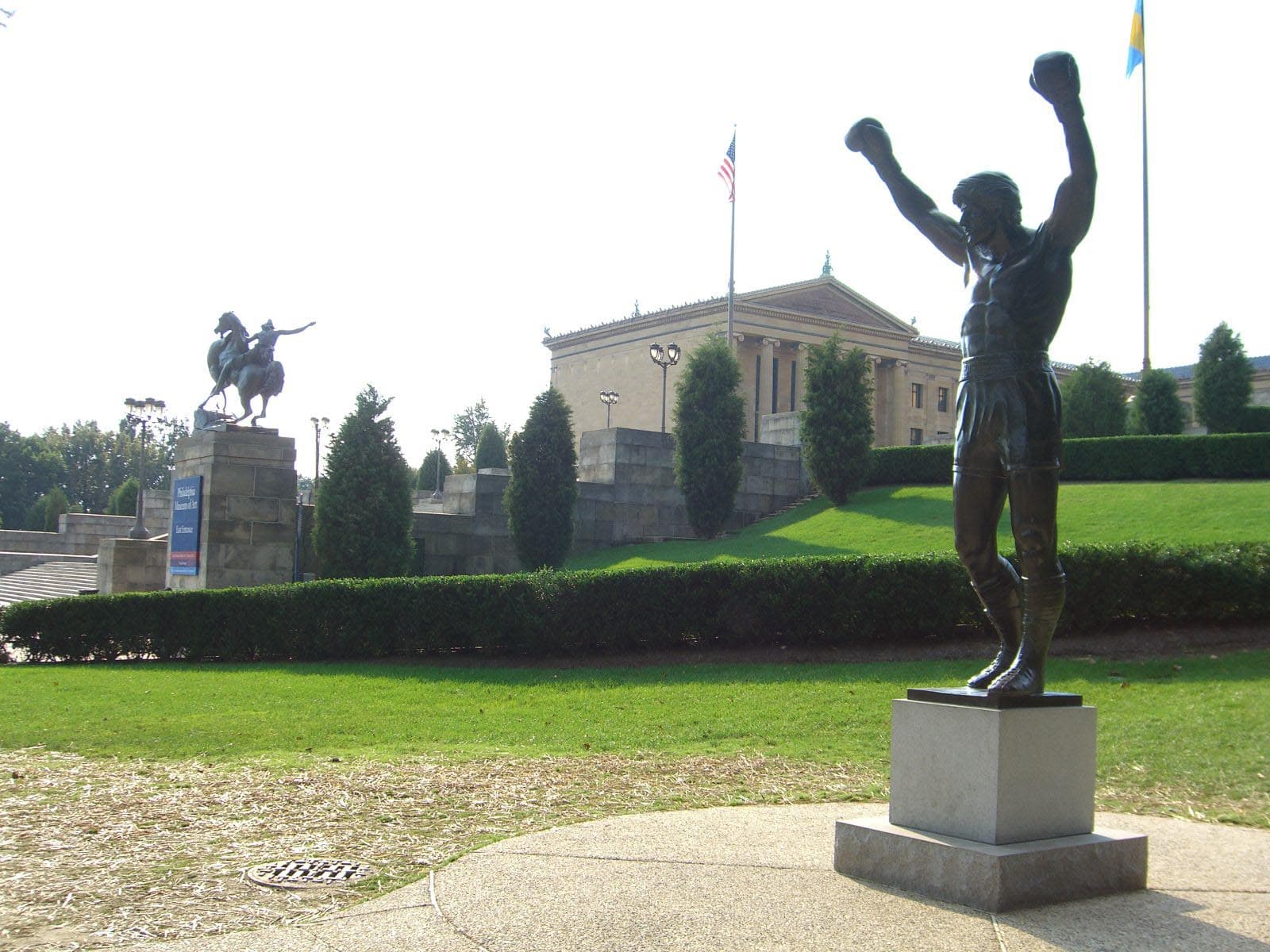
At the base of the steps on the museum's east side stands the Rocky statue — a 10-foot bronze of the boxer with raised fists, sculpted by A. Thomas Schomberg for the 1982 film "Rocky III." It was moved to its current spot in 2006 and is now one of the most photographed sculptures in Philadelphia. A note of housekeeping: the museum's art begins at the top of the steps; the statue is at street level, just outside the museum proper. Both are free to visit — the steps and the statue require no ticket, which is why thousands of people make the pilgrimage daily without ever entering the galleries. Their loss, entirely.
A Collection of World Rank
Step inside and the scale shifts from civic to encyclopedic. The museum holds more than 240,000 works of art spanning over 4,000 years, from ancient armor to contemporary installation. A handful of highlights make the case for why this collection ranks with any in the country.
The Arms and Armor collection is one of the great ones: the Kienbusch collection of medieval and Renaissance armor, including equestrian armor that seems to have ridden straight out of a tournament, displayed in the soaring Great Stair Hall. The period rooms are another signature — entire interiors transported and reassembled, including a reconstructed Ming dynasty Chinese palace hall, a medieval cloister from southern France, and Sunkaraku, a 1917 Japanese teahouse rebuilt within the museum in 1929.
Then there is the American art, anchored by Thomas Eakins — Philadelphia's own — including "The Gross Clinic" (1875), one of the most famous American paintings ever made, jointly owned with the Pennsylvania Academy of the Fine Arts and displayed here. The Impressionist and Post-Impressionist galleries hold Van Gogh's "Sunflowers," Cézanne's "The Large Bathers," and works by Monet, Renoir, and Manet. And there is the Duchamp secret: the museum holds the world's largest public collection of works by Marcel Duchamp, capped by "Étant donnés," the artist's final major work, installed in a windowless room behind a wooden door — a peephole construction the museum guards like the mystery it is. Finding it feels like being let in on something.
The View From the Terrace
Walk around to the museum's west terraces and Philadelphia opens out below you: the Schuylkill River, the white pavilions of the Fairmount Water Works, and the city skyline beyond. The Water Works are worth knowing about even if you never go down — designed by Frederick Graff and built between 1812 and 1822, they were the first municipal waterworks in the United States, and their temple-like engine houses are why the stretch of river below the museum looks like a Greek riverscape. It is one of the great free views in the city, and the museum's terraces are the place to have it.
Inside, the building's heart is the Great Stair Hall and its Vaulted Walkway — a 640-foot stone-vaulted corridor with a ceiling of Guastavino tile that was closed to the public for decades. The museum's multi-year Core Project, designed by Frank Gehry — the architect's restrained, almost invisible intervention — reopened the North Entrance, restored the Vaulted Walkway along its full length, and added nearly 90,000 square feet of reimagined public space, opening to the public on May 7, 2021. Gehry's own comment on the job is the review that matters: the bones were here, so he just enhanced the original vision.
The museum also operates the Ruth and Raymond G. Perelman Building, a 1920s Art Deco insurance headquarters a short walk away, which houses the prints, drawings, photographs, costume, textiles, and the library — the working collection behind the galleries.
Beyond the Main Building
Two short walks extend the visit, and both are worth it. East along the Parkway sits the Rodin Museum, opened in 1929 as a gift to the city from theater magnate Jules E. Mastbaum and administered by the Philadelphia Museum of Art. It holds the largest collection of Rodin's sculptures outside France — including "The Thinker," which greets you at the garden gate before you ever buy a ticket. West of the main building, the Ruth and Raymond G. Perelman Building occupies a 1920s Art Deco former insurance headquarters and houses the prints, drawings, photographs, costume and textiles collections, plus the museum's library and archives. It is where the deep collection lives — thousands of works on paper that rotate through the galleries in small, focused exhibitions, the quiet counterpart to the main building's spectacle.
Key Facts
- Founded in 1876 for the U.S. Centennial Exposition; first housed in Memorial Hall, Fairmount Park.
- Main building at the head of the Benjamin Franklin Parkway: construction 1919–1928; opened to the public March 26, 1928.
- Architects: Horace Trumbauer, with principal designers Howell Lewis Shay and Julian Abele (the first African American graduate of Penn's architecture program); associated firm Zantzinger, Borie and Medary.
- Greek Revival design in Minnesota dolomite with Corinthian colonnade and polychrome terra-cotta figures.
- 72 steps to the east entrance — the Rocky Steps of the 1976 film "Rocky."
- Rocky statue: 10-foot bronze by A. Thomas Schomberg (created for "Rocky III," 1982); at the base of the steps since 2006.
- Collection: more than 240,000 works spanning 4,000+ years; highlights include the Kienbusch armor, a Ming dynasty Chinese palace hall, Sunkaraku Japanese teahouse, Van Gogh's "Sunflowers," Cézanne's "The Large Bathers," Eakins's "The Gross Clinic," and the world's largest public Duchamp collection including "Étant donnés."
- Overlooks the Fairmount Water Works (1812–1822, Frederick Graff), the first municipal waterworks in the U.S.
- Frank Gehry's Core Project renovation: North Entrance reopened, Vaulted Walkway restored, public opening May 7, 2021.
- Perelman Building (a 1920s Art Deco former insurance headquarters) houses prints, drawings, photographs, costume, textiles, and the library.
Visitor Details
Address: 2600 Benjamin Franklin Parkway, Philadelphia, PA 19130.
Transit: SEPTA bus routes serve the Benjamin Franklin Parkway area; the Philly PHLASH downtown loop also stops near the museum. Check SEPTA schedules before your visit.
Hours/Admission: Check the official site (philamuseum.org) for current hours and ticket prices before you go — these change.
Best timing: Weekday mornings for the quietest galleries; the steps and Rocky statue are free and open around the clock.