The cathedral in the Bronx
Every baseball fan knows the address, even if they have never been there: East 161st Street and River Avenue, in the Bronx. That is where Yankee Stadium stands, home of the New York Yankees, and it is one of the few sports venues in America that a first-time visitor can treat the way they would a museum or a monument. You do not have to be a Yankees fan to feel it. Walk up River Avenue on a game day, past the souvenir stands and the elevated train, and watch the limestone walls rise in front of you, and you will understand that this building carries a century of American history on its back.
The stadium you see today is not the original Yankee Stadium, and that is the first thing to understand. The original opened in 1923 and closed in 2008; the current building opened in April 2009, one block north, on the former site of Macombs Dam Park, across 161st Street from where its predecessor stood. It was deliberately built to look like the old place — same limestone, same frieze, same field dimensions — with wider modern concourses. The Yankees have won 27 World Series championships, more than any franchise in American sports, and a ballpark for a team like that cannot afford to look like it has no past. Come for a game if you can. If you cannot, come anyway: take the tour, walk the Great Hall, stand in Monument Park, and look out at the field from the upper deck.
The House That Ruth Built
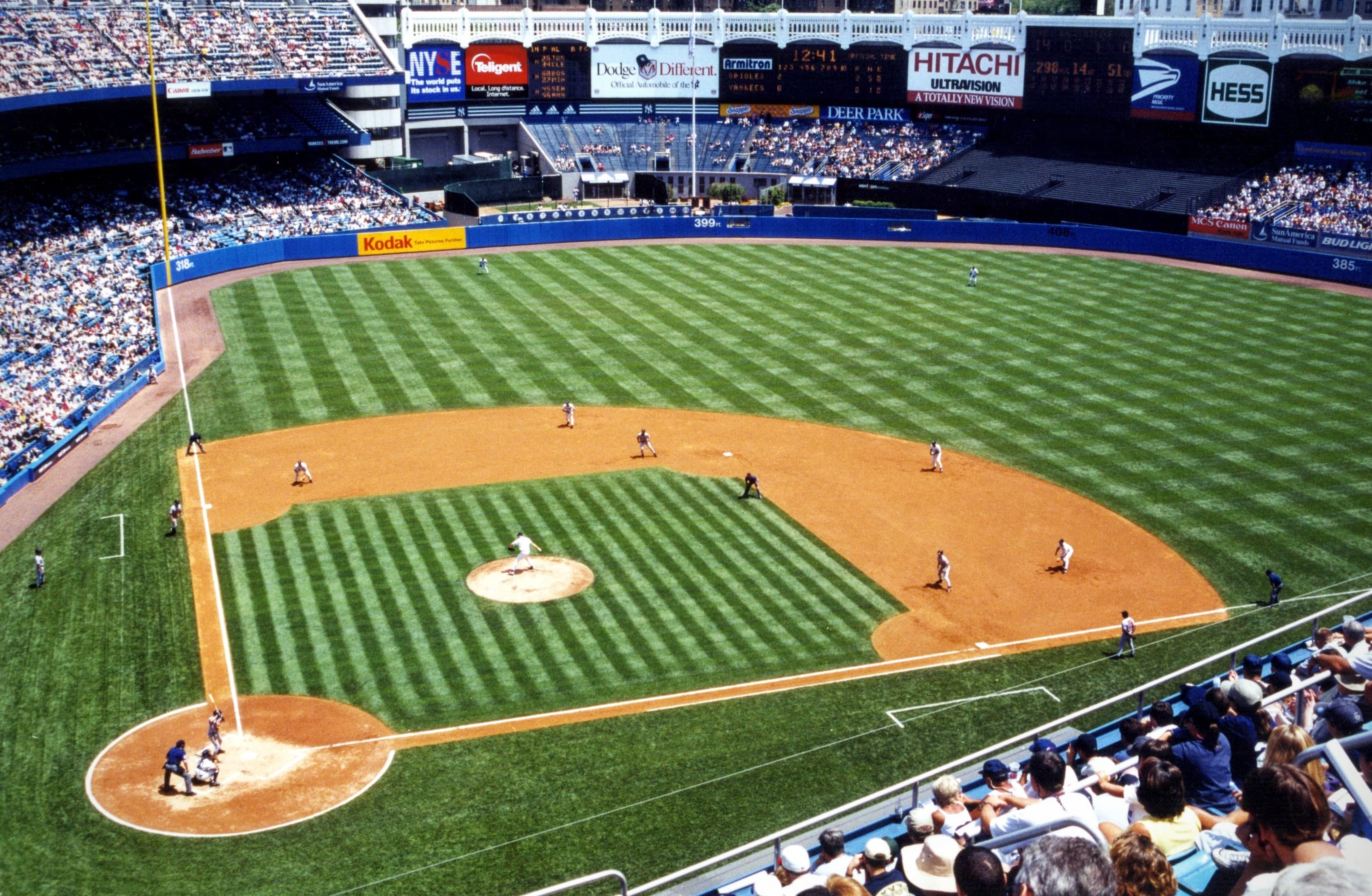
No ballpark in America has a better origin story. In the early 1920s the Yankees were tenants, sharing the Polo Grounds with the New York Giants baseball team, and the relationship had soured. The Yankees' owners, Jacob Ruppert and Tillinghast L'Hommedieu Huston, built their own stadium in the Bronx, on a lumberyard site at 161st Street and River Avenue. It opened on April 18, 1923, the first ballpark in the country with three decks, a concrete-and-steel giant in an age of wooden grandstands. Babe Ruth, whose arrival had made the Yankees a sensation, hit a home run in the first game, and the building picked up the nickname it never lost: the House That Ruth Built.
What followed is the spine of baseball history. Lou Gehrig played here, and on July 4, 1939, the dying first baseman told the crowd he considered himself the luckiest man on the face of the earth — the most famous farewell in sports. Joe DiMaggio, Mickey Mantle, Whitey Ford, and Yogi Berra wore the pinstripes here. Don Larsen threw the only perfect game in World Series history here, on October 8, 1956, against the Brooklyn Dodgers. The stadium hosted 37 World Series in its 85 years, along with boxing matches, football games, papal masses, and concerts. Rebuilt from the inside out in the mid-1970s, it kept going until September 21, 2008, when the final game was played. Demolished after closing, its site is now Heritage Field, a public park where neighborhood games are played on the ground where Ruth and Gehrig once stood.
A new stadium that remembers the old one
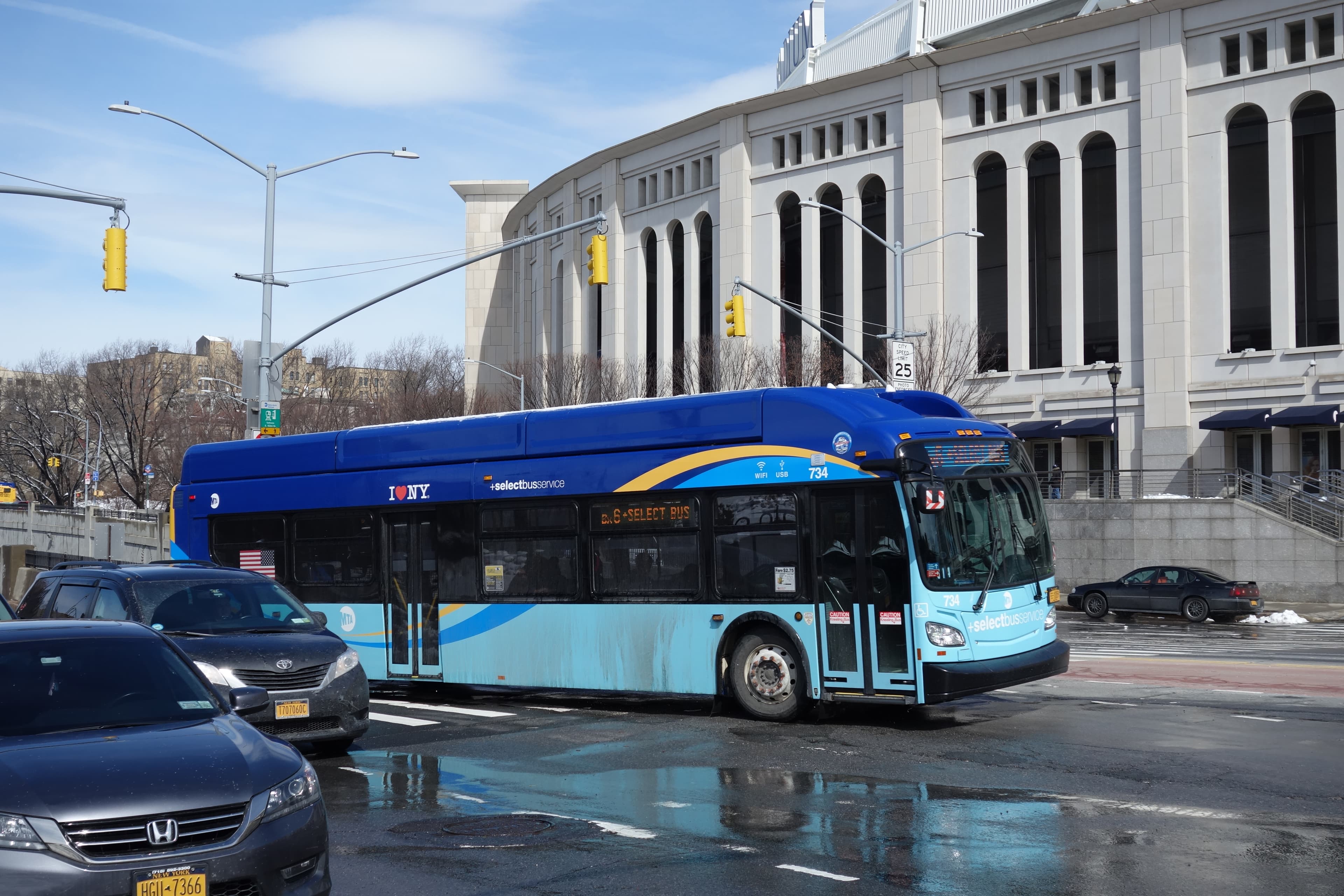
The current Yankee Stadium opened in April 2009 — an exhibition game against the Chicago Cubs on April 3, and the first regular-season game, against the Cleveland Indians, on April 16 — and the Yankees promptly won the World Series in its first season, beating the Philadelphia Phillies that October. The architects, Populous (then known as HOK Sport), borrowed shamelessly from 1923. The exterior is wrapped in some 11,000 pieces of Indiana limestone, with gold-leaf letters above each gate echoing the original's formal grandeur. Above the upper deck runs the white frieze, the scalloped cornice that was the old stadium's signature silhouette, cast in concrete this time and ringing the seating bowl.
The field keeps the dimensions of the old stadium's final layout: a short porch in right field, 314 feet down the line, and 408 feet to dead center. Seating capacity is roughly 46,500, smaller than the old stadium's later years, but the building is far larger overall, with wide concourses, suites, clubs, restaurants, and shops the 1923 building could never have contained. The place fills, it roars, and on a summer night with the frieze glowing white against the Bronx sky, it looks like it has always been there. The main entrance is Gate 4, behind home plate, facing 161st Street; arrive from the subway via River Avenue and walk around to Gate 4 to see the building at its most formal.
Inside: the Great Hall, Monument Park, and the Museum
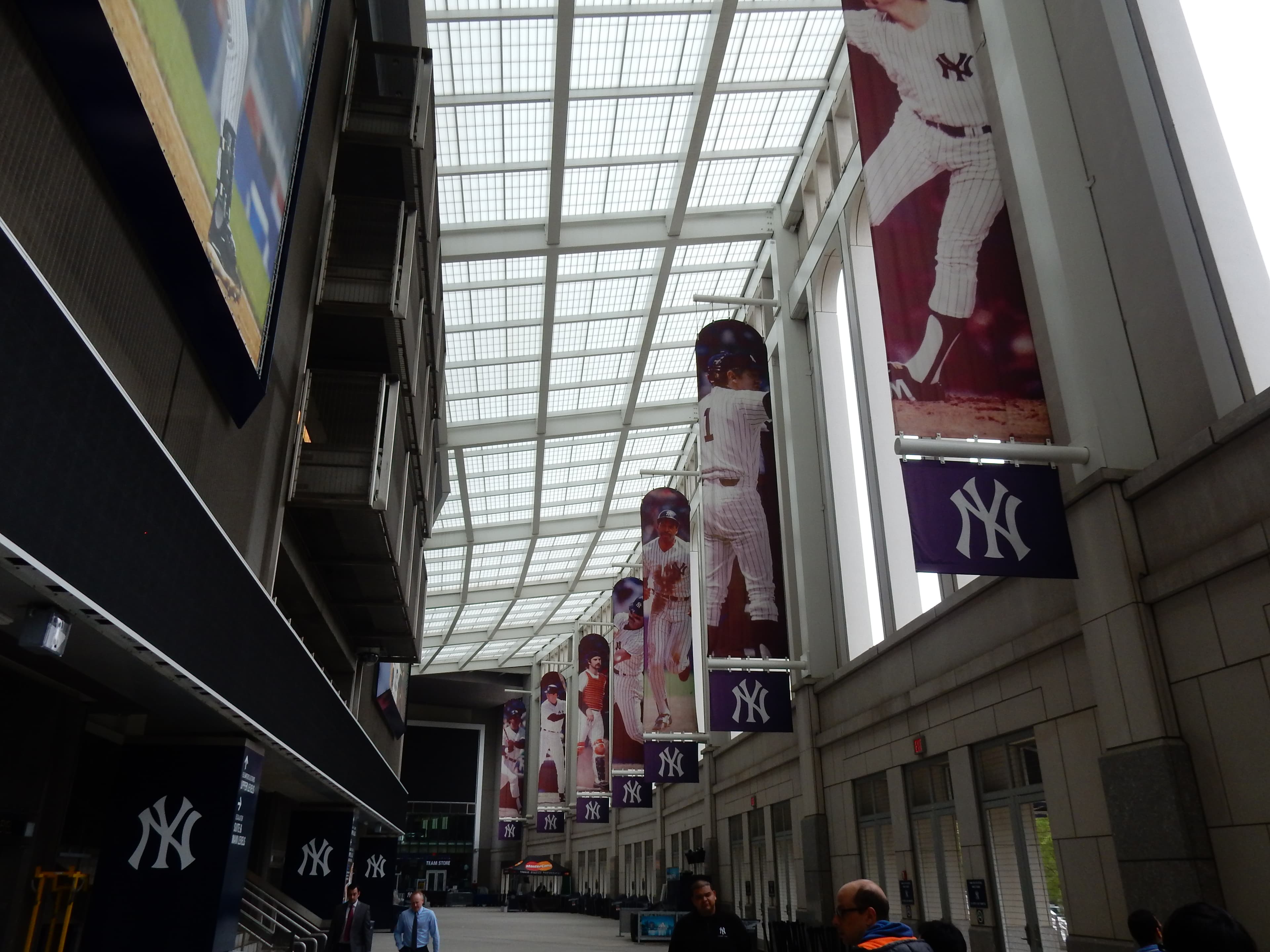
Step through the gates and the first space you enter is the Great Hall, a soaring, open-air concourse running from Gate 4 to Gate 6, with a high skylit roof and walls lined with enormous photographs of Yankees greats. On a game day it is the loudest, most crowded room in the Bronx; even when quiet, the photographs on its walls are the team's hall of fame in picture form.
Then there is Monument Park, and for a first-time visitor it is the single most important stop inside the stadium. Beyond the center-field fence, in an open-air gallery, stand the monuments and plaques honoring the Yankees' immortals — Ruth, Gehrig, DiMaggio, Mantle, Berra, and the managers and owners who built the franchise, along with the retired numbers mounted on the wall. It began in the old stadium as a small collection of monuments in deep center field and has grown into a shrine fans visit quietly, hats off, reading every plaque. Monument Park is open to ticket holders before games, and on tours when there is no game; it is the one place in the building where the noise of the crowd drops away and the history takes over. The Yankees Museum, on the main level, continues the story in trophies, rings, signed baseballs, and memorabilia — best treated as part of the ballpark visit, not a separate destination.
Game day for a first-timer
If you are coming for a game, arrive early. The gates open well before first pitch, and the early hours are when Monument Park and the Museum are easiest to visit, when the Great Hall is walkable rather than packed, and when you can find your seat without rushing. Walk the concourses, too: a full lap of the main-level concourse gives you the building's scale — the frieze overhead, the Bronx beyond the outfield — in a way one seat never will.
Think about where to sit. The field-level seats near the infield put you close to the action and the dugouts, but the upper deck gives you the classic Yankee Stadium view: the whole green field laid out below, the frieze ringing the bowl, the Bronx beyond. Every seat faces a major-league field, but the upper deck is where the building itself looks best, and it is usually the easiest ticket to find. Eat like a local, from classic ballpark fare to the modern building's specialty stands, and stay for the traditions: the bleacher roll call, the organ, the seventh-inning stretch, "New York, New York" after a win. These are habits, not staged attractions, and they are what make a game here feel different.
Around the stadium, and how to get here
Yankee Stadium sits at 1 East 161st Street, at River Avenue, in the Concourse neighborhood of the Bronx, and the subway is the way to get here: the 4, B, and D trains stop at 161st Street–Yankee Stadium, right at the ballpark's doorstep, and on a game day the station disgorges a river of pinstripes that flows straight to the gates. Metro-North's Yankees–East 153rd Street station is a short walk to the south. If you drive, be ready for game-day traffic and garage prices that belong to a major event; the subway is faster, cheaper, and more fun.
Before or after the game, walk the neighborhood: River Avenue's souvenir shops, sports bars, and food vendors give the area the feel of a working Bronx neighborhood that happens to host a cathedral. Across 161st Street to the south, Heritage Field occupies the old stadium's footprint. To the west, the Macombs Dam Bridge crosses the Harlem River into Manhattan, and the view from the bridge back toward the stadium is one of the great unheralded views in New York. With more time, the Bronx Zoo and the New York Botanical Garden are a subway ride north.
A century after the House That Ruth Built opened across the street, Yankee Stadium endures because it still does what it was built to do: gather tens of thousands of people in the Bronx, under the frieze, to watch the Yankees play baseball.

Key Facts
- Yankee Stadium is at 1 East 161st Street, at River Avenue, in the Concourse neighborhood of the Bronx, New York.
- The current stadium is the home of the New York Yankees of Major League Baseball. It opened in April 2009, replacing the original Yankee Stadium (1923–2008), which stood one block south, across 161st Street; the current building stands on the former site of Macombs Dam Park.
- The first regular-season game in the current stadium was played on April 16, 2009, against the Cleveland Indians; an exhibition game against the Chicago Cubs was played on April 3, 2009. The Yankees won the World Series in the new stadium's first season, in October 2009.
- The stadium was designed by Populous (then HOK Sport). Its exterior is clad in Indiana limestone, with gold-leaf lettering above the gates, and the white frieze above the upper deck echoes the original 1923 stadium's signature cornice.
- The field dimensions mirror the old stadium's final layout: 314 feet down the right-field line and 408 feet to dead center. Seating capacity is roughly 46,500.
- The original Yankee Stadium opened on April 18, 1923, as the first three-tiered ballpark in the United States, built by Yankees owners Jacob Ruppert and Tillinghast L'Hommedieu Huston after the team shared the Polo Grounds with the Giants. It was nicknamed the House That Ruth Built.
- The original stadium hosted 37 World Series, Lou Gehrig's farewell speech on July 4, 1939, and Don Larsen's perfect game in the 1956 World Series (October 8, 1956). Its final game was played on September 21, 2008; the site is now Heritage Field, a public park.
- Inside the current stadium, the Great Hall is the open-air concourse running from Gate 4 (behind home plate, the main entrance) to Gate 6, lined with large photographs of Yankees greats.
- Monument Park, beyond the center-field fence, honors the franchise's immortals with monuments, plaques, and retired numbers, including Babe Ruth, Lou Gehrig, Joe DiMaggio, Mickey Mantle, and Yogi Berra. The Yankees Museum displays World Series trophies, rings, and franchise memorabilia.
- The Yankees have won 27 World Series championships, more than any other franchise in American sports.
- The stadium has also hosted other sports, including New York City FC soccer matches, as well as concerts and special events.
Visitor Details
Address: Yankee Stadium, 1 East 161st Street, Bronx, NY 10452 (at River Avenue).
Transit: 161st Street–Yankee Stadium station (4, B, D trains) at the ballpark; Metro-North Yankees–East 153rd Street station a short walk south; buses run along 161st Street and River Avenue.
Hours/Admission: Game times, ticket prices, tour schedules, and Monument Park and Museum access change from season to season and from game to game — check the official source at mlb.com/yankees/ballpark before visiting for current schedules, ticket information, and tour availability, and book ahead for popular games, which sell out. No fixed ticket price, fee, or game time is stated in this article, since none was verified against the official source in this run. Arrive early on game days: gates open well before first pitch, and Monument Park and the Museum are easiest to visit before the crowd builds.
Best timing: Come for a game if you can — an evening game under the lights is the classic visit — or take a stadium tour on a non-game day to see the Great Hall, Monument Park, and the Museum. Pair the visit with Heritage Field across 161st Street (the old stadium's site) and, with more time, the Bronx Zoo or the New York Botanical Garden to the north.