A Town Founded in Freedom
In 1838, James Weeks — an African-American stevedore from Virginia who had been enslaved — bought a plot of land in what is now Crown Heights, Brooklyn, from Henry C. Thompson, a free African American. It was eleven years after New York State abolished slavery in 1827. Weeks was not just buying property; he was founding a town.
He called it Weeksville. Other free Black families followed, buying lots and building homes, and within seventeen years the community had grown to roughly 521 residents. They built churches, schools, and benevolent associations. They published the Freedman's Torchlight, a newspaper of the African Civilization Society. They established the Howard Colored Orphan Asylum and Colored School No. 2. Weeksville became one of the largest free Black communities in antebellum America — a place where Black families could own land, educate their children, and build institutions beyond the reach of Manhattan's racism.
The town's residents included remarkable figures. Susan Smith McKinney Steward became the first African-American female physician in New York State. Sarah Smith Tompkins Garnet became Brooklyn's first Black female public school principal and later founded the Equal Suffrage League of Brooklyn. During the 1863 Draft Riots, when white mobs terrorized Black New Yorkers in Manhattan, Weeksville served as a refuge — its distance from the city center and its organized community offering safety.
The Hunterfly Road Houses
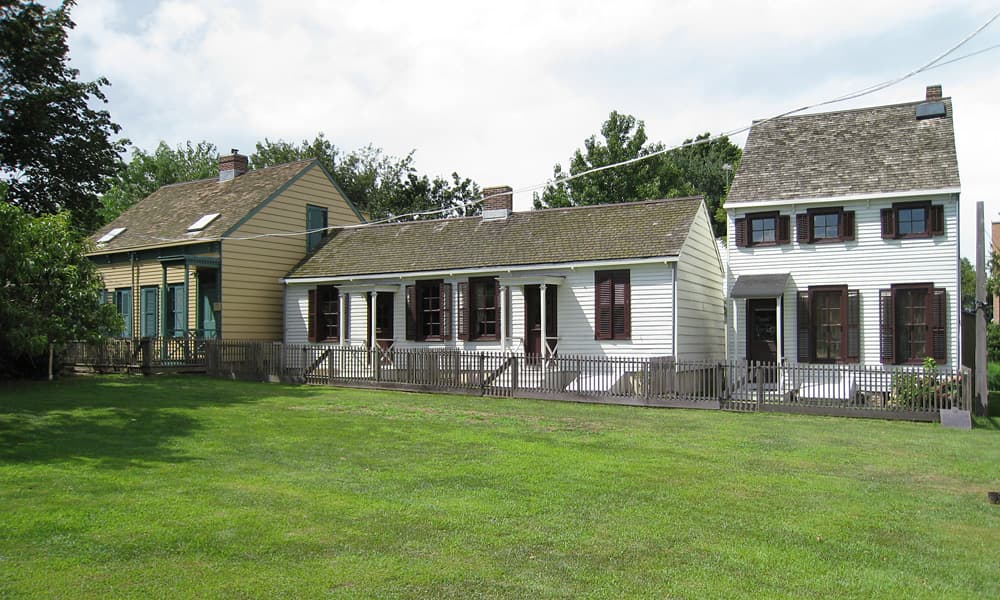
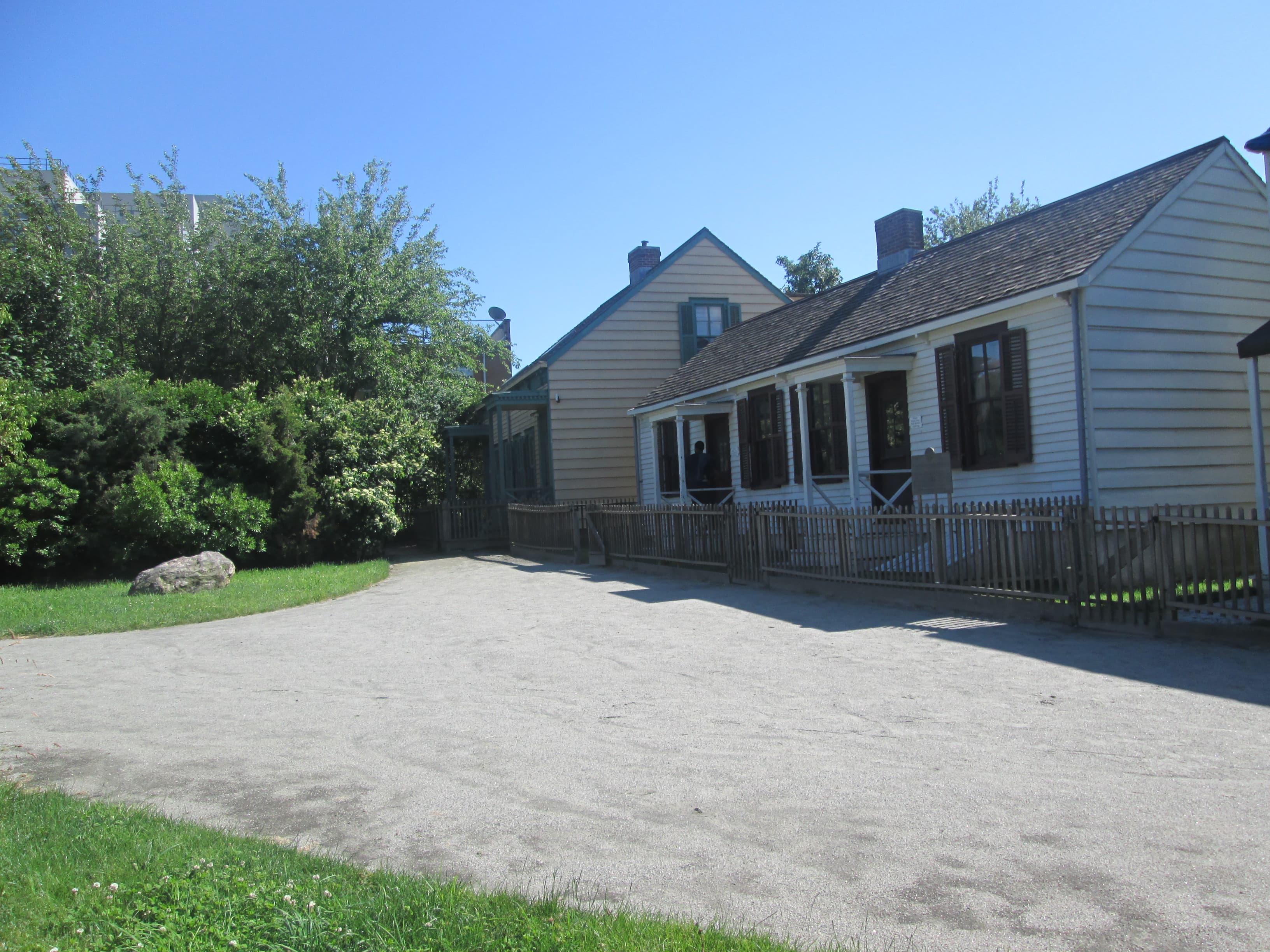
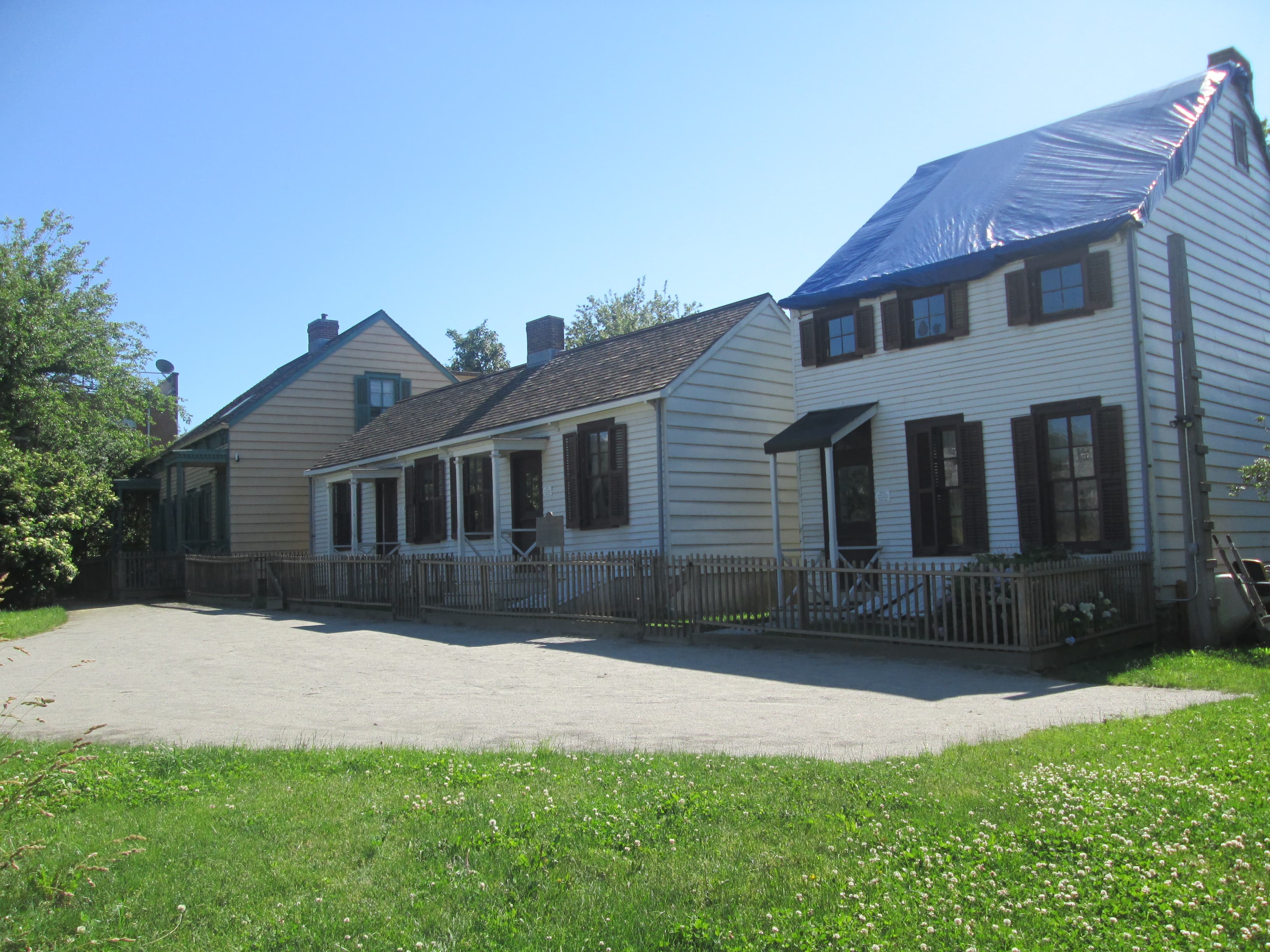
What remains of Weeksville today are four small wood-frame houses on Bergen Street — the Hunterfly Road Houses, built between 1840 and 1880 at what are now 1698–1708 Bergen Street. They face a remnant of Hunterfly Road, an old lane that marked the eastern edge of the 19th-century village.
Each house represents a different era of Weeksville's history. They are modest buildings — the kind of homes that working families built for themselves — but they carry extraordinary weight. When the houses were rediscovered, they were among the only surviving physical traces of a community that had once numbered in the hundreds and stretched across what is now Crown Heights and Bedford-Stuyvesant.
The houses were not grand, but they were free. That was the point. In a city where Black New Yorkers faced housing discrimination, employment barriers, and mob violence, Weeksville offered something radical: a place where Black families owned their homes outright, on land they had purchased themselves.
Rediscovery from the Air
By the mid-20th century, Weeksville had been largely forgotten. The community dispersed as Brooklyn developed; the name survived mainly in old maps and property records. The Hunterfly Road Houses stood, overgrown and dilapidated, but unrecognized for what they were.
In 1968, Pratt Institute professor James Hurley and pilot Joseph Haynes set out to find Weeksville — from the air. Using historical maps and aerial survey, they spotted four small buildings that matched the location of the historic settlement. On the ground, they confirmed: these were original Weeksville structures, survivors from the 19th century.
The discovery galvanized preservation efforts. Joan Maynard — an artist, community member, and force of nature — made the preservation of the Hunterfly Road Houses her life's work. With Dolores McCullough, Patricia Johnson, and others, she founded the Society for the Preservation of Weeksville and Bedford-Stuyvesant History. Their advocacy led to the houses being designated New York City Landmarks on August 18, 1970, and placed on the National Register of Historic Places on December 5, 1972, as the Hunterfly Road Historic District.
The Society purchased the houses in 1973. After a $3 million restoration, they reopened to the public in 2005 as the Weeksville Heritage Center, with each house interpreting a different period of the community's history.
The Heritage Center Today
The Weeksville Heritage Center now comprises the four historic Hunterfly Road Houses and a modern 19,000-square-foot education and cultural center, designed by Caples Jefferson Architects and completed in 2014. The contemporary building — all glass and sharp angles — sits in deliberate contrast to the 19th-century wood-frame houses, a architectural dialogue between past and present.
The Center's mission extends beyond the houses. It documents and interprets the history of free African, Caribbean, and African American communities in Weeksville, Brooklyn, and beyond, through research, education, the arts, and civic engagement. Programs include guided tours of the historic houses, the annual Garden Party concert series, the Brilliant Corners jazz concerts, a seasonal farmers market, Emancipation Day celebrations, and oral history projects.
In 2019, Weeksville joined the city's Cultural Institutions Group — the first Black cultural institution in Brooklyn to receive that designation, and the first new addition in over twenty years. The designation provides stable operating support, a recognition of the Center's importance after years of financial precarity.
A $3.9 million restoration of the Hunterfly Road Houses broke ground in October 2024 and was completed in March 2026, with additional state funding announced in early 2026. The houses, restored once before in 2005, continue to require care — wood-frame buildings from the 1840s do not maintain themselves.
Visiting Weeksville
The Heritage Center is located at 158 Buffalo Avenue in Crown Heights, Brooklyn — the historic houses face Bergen Street, but the modern entrance is on Buffalo. Guided tours of the Hunterfly Road houses are the heart of the visit: 45-minute walks through 19th-century homes, led by docents who bring the community's history to life.
Walk-in tours have historically been offered on weekday afternoons, but schedules change. The Center also hosts extensive public programming, particularly in the summer months — jazz concerts on the lawn, the farmers market, family days. Check the official site before visiting for current tour times and program schedules.
What makes Weeksville powerful is not the grandeur of the buildings — they are small, simple houses — but the story they tell. In 1838, a formerly enslaved man bought land and started a town. That town became a haven, a refuge, a proof of concept for Black self-determination. The houses are the physical evidence that it happened, here, in Brooklyn.
Key Facts
- Founded 1838 by James Weeks, a formerly enslaved African-American stevedore from Virginia, eleven years after New York abolished slavery (1827).
- Grew to ~521 residents by 1855; included churches, schools, the Freedman's Torchlight newspaper, and the Howard Colored Orphan Asylum; refuge during 1863 Draft Riots.
- Hunterfly Road Houses: four wood-frame houses (1840–1880) at 1698–1708 Bergen St; rediscovered 1968 via aerial survey by James Hurley and Joseph Haynes.
- NYC Landmarks Aug 18, 1970; National Register Dec 5, 1972; purchased by preservation Society 1973; opened as museum 2005 after $3M restoration; 19,000-sq-ft education center opened 2014.