First System Coastal Defense
Erected between 1807 and 1811 under the direction of Lt. Col. Jonathan Williams, Chief Engineer of the U.S. Army Corps of Engineers, Castle Williams was pioneering in its circular multi-tiered casemate design. It allowed defensive artillery to sweep the surrounding channel.
The Engineer Who Designed His Own Monument
Castle Williams is named for the man who built it — an honor almost unheard of in American fortification. Jonathan Williams was the Chief Engineer of the U.S. Army Corps of Engineers, the first Superintendent of the United States Military Academy at West Point, and a relative of Benjamin Franklin. Between 1807 and 1811 he directed construction of the circular stone fort on the island's western point, and before it was finished, the Army made the tribute official. On November 24, 1810, Colonel Henry Burbeck, commanding the defenses of New York City, issued an order — approved by the Secretary of War — declaring that "the Stone Tower on this Island will bear the name of CASTLE WILLIAMS, in honor of the commandant of the United States Corps of Engineers, who designed and erected it." The fort was one piece of a defensive ring for the inner harbor: Fort Columbus (later Fort Jay) and the South Battery on Governors Island, Castle Clinton at the southern tip of Manhattan, Fort Wood on what is now Liberty Island, and Fort Gibson on Ellis Island. Castle Williams was Castle Clinton's sister and counterpart — the East Battery to Clinton's West Battery — positioned so their guns could sweep the channel between Brooklyn and Manhattan as tensions hardened toward the War of 1812. Williams never tested his design in battle; New York was never attacked. But the fort he drew became the model for American coastal defense for the rest of the century.
A Fort Built Like No Other
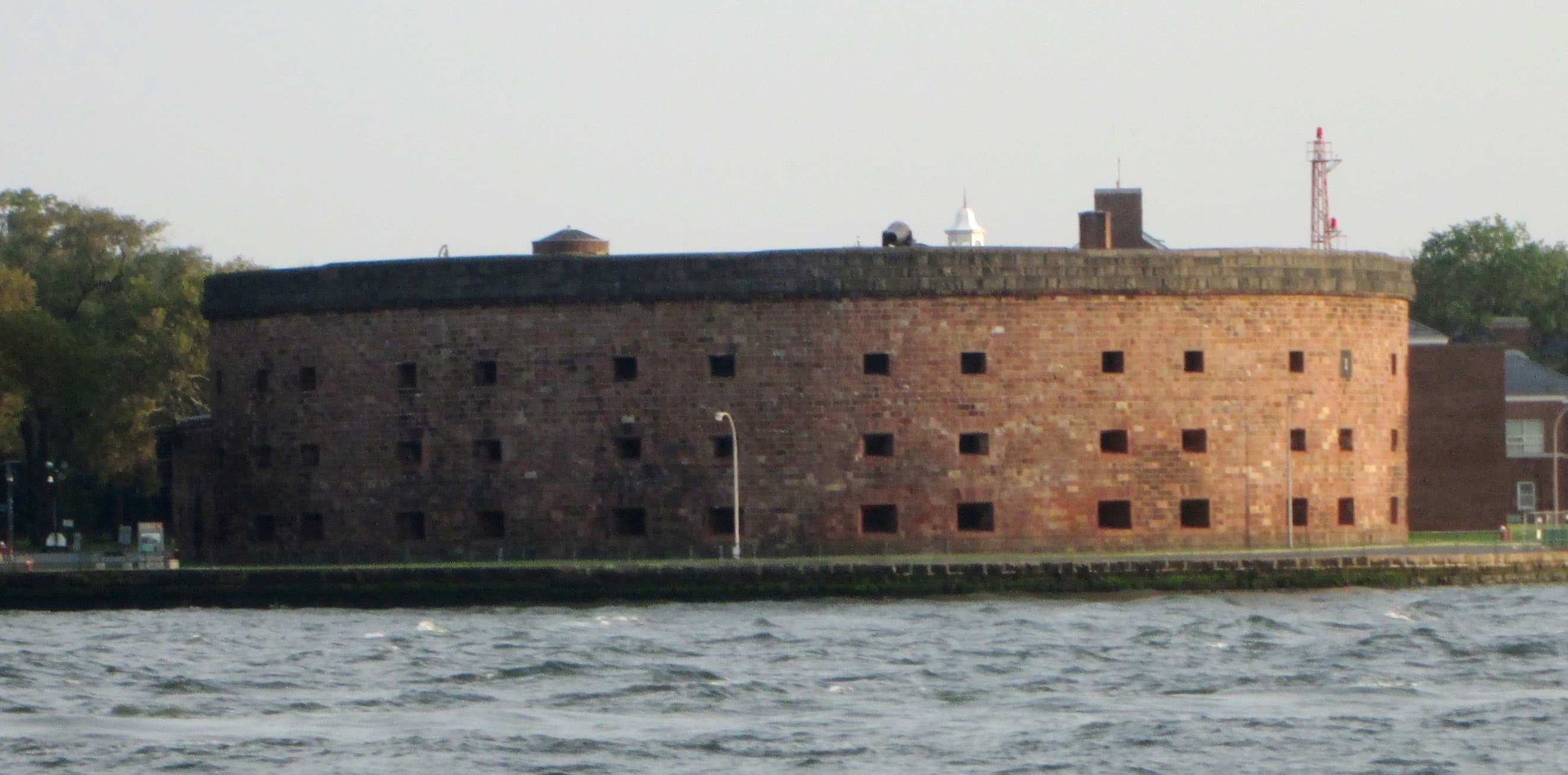
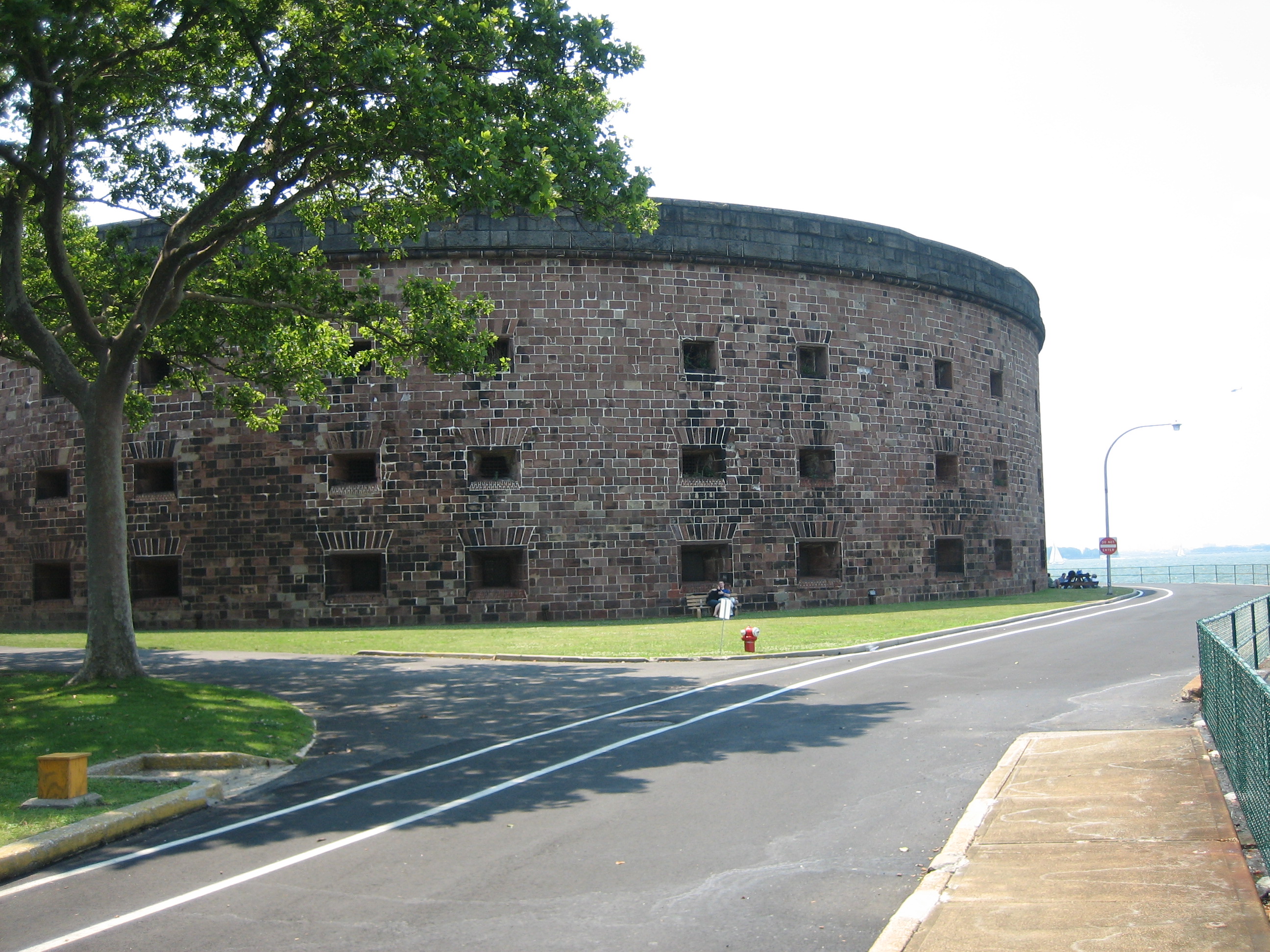
Nearly circular, forty feet high and 210 feet across, the fort was built of red Newark sandstone with walls seven to eight feet thick at the base. The pioneering idea was the casemate — an enclosed, vaulted gun emplacement inside the masonry itself, letting crews fire through protected openings rather than standing exposed. The fort stacked them four levels high, thirteen casemates to a tier, room for twenty-six cannons of varied caliber each. The third tier was left unarmed and fitted as barracks. When completed in 1811, the fort carried eighty guns, later raised to more than a hundred, making it the most formidable American seacoast work yet built. It drew on the French engineer Montalembert's forts circulaires, but nothing like it had been attempted in the United States. The Park Service's nomination papers call it the prototype for a new era of American coastal fortification; only two other American forts ever duplicated the four-tier scheme, Battery Weed at Fort Wadsworth and Fort Point in San Francisco. Its guns never fired in anger. The walls' height and distance from the water put it beyond musket range from enemy ships, and Williams calculated incoming shot would either pass over the parapet or be stopped by it. It was a machine for deterrence, and it worked: the British never came.
Two Centuries of Service After the Guns
The fort's working life as a fortress was brief; its afterlife as a place of confinement lasted more than a century. During the Civil War, Castle Williams held Confederate prisoners of war while Fort Jay held captured Confederate officers. After the war, the casemates became cells and storerooms, and the castle became the east coast counterpart of the military prisons at Fort Leavenworth, Kansas, and Alcatraz Island, California. At the turn of the twentieth century, Secretary of War Elihu Root committed to preserving the island's forts as landfill doubled Governors Island's size. In 1903 the castle was fitted as a model prison; by 1915 it was the Atlantic Branch of the Fort Leavenworth Disciplinary Barracks, and in 1921 the Eastern Branch of the United States Disciplinary Barracks. The 1930s brought steel-reinforced floors and roof, grating, and solitary cells in selected casemates. The castle remained a military prison until 1965, when the Army moved Headquarters, First United States Army to Fort Meade, Maryland. In 1966 the Coast Guard wanted the building demolished. Instead it became a youth community center — cells converted into nurseries, Scout meeting rooms, a woodworking shop, art studios, and a photo lab. Few buildings in New York have been asked to serve so many masters.
Rescue, Monument, and the View Today
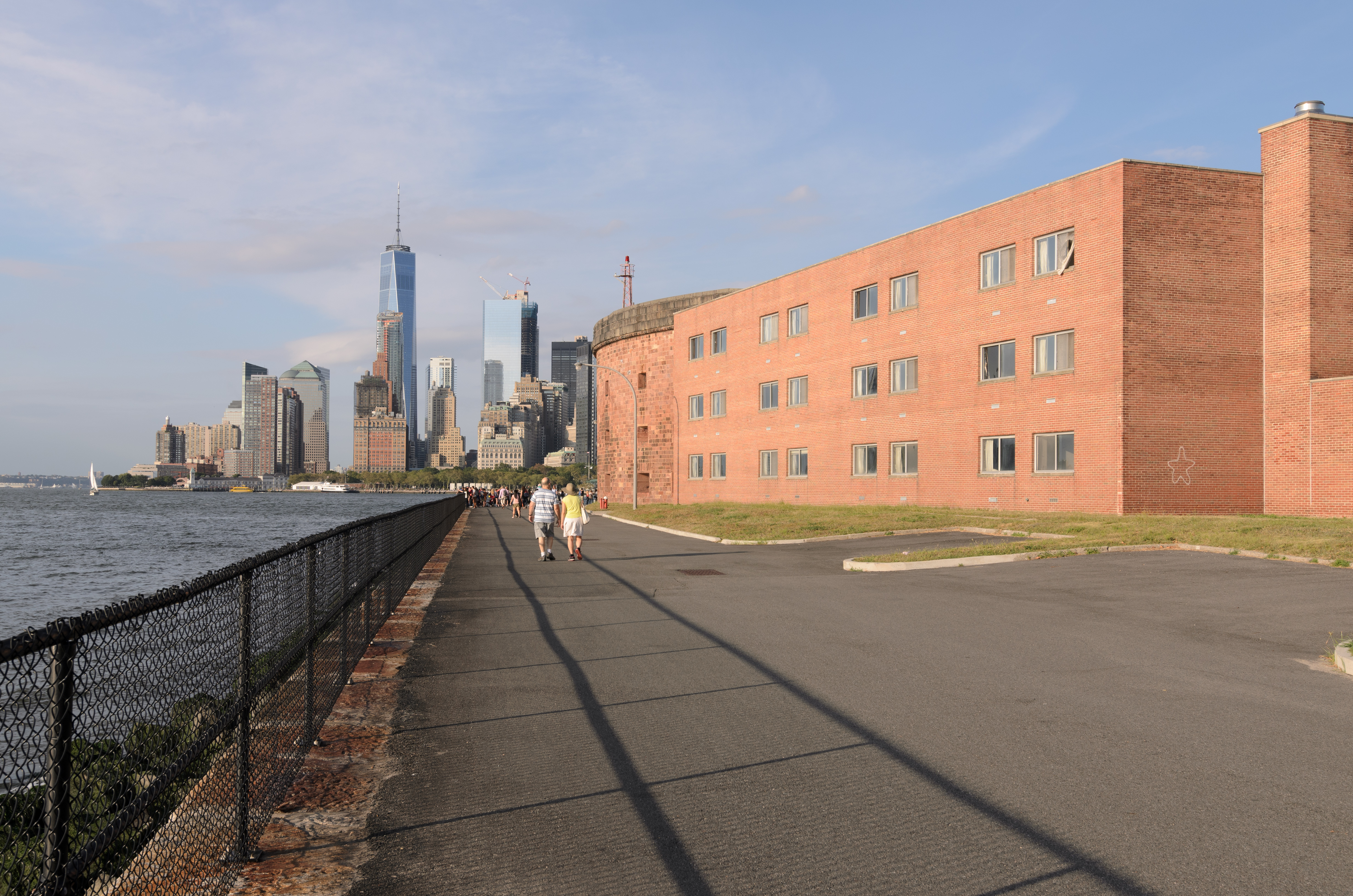
The fort was listed in the National Register of Historic Places in 1972, which helped fend off demolition. In 2001, Castle Williams and Fort Jay and their surroundings were proclaimed the Governors Island National Monument; on January 31, 2003, it transferred to the Department of the Interior, and the National Park Service took over management of the forts. Today the castle stands on the west point of the island, its red sandstone drum visible from the harbor, the Staten Island Ferry, and the Manhattan shoreline. The Park Service runs tours inside during the season, and the casemates — vaulted chambers that once held cannons, then recruits, then prisoners — now hold exhibitions. The Governors Island Art Fair has staged installations in the fort's rooms, using the curved walls and the weight of the building's history as part of the work. Getting there is part of the experience: the island is reached only by ferry, and the walk from the landing to the fort crosses one of the oldest military landscapes in the country. Stand in the courtyard, look up at the four tiers of arches rising around you, and you are standing inside the prototype that taught America how to defend its harbors.
Fortification Highlights
- The fort was built using red Newark sandstone with walls up to 8 feet thick at the base.
- It is a sister fortification to Castle Clinton at the southern tip of Manhattan.
- The fort is now managed by the National Park Service as part of Governors Island National Monument.
Editorial Note: Seasonal Access
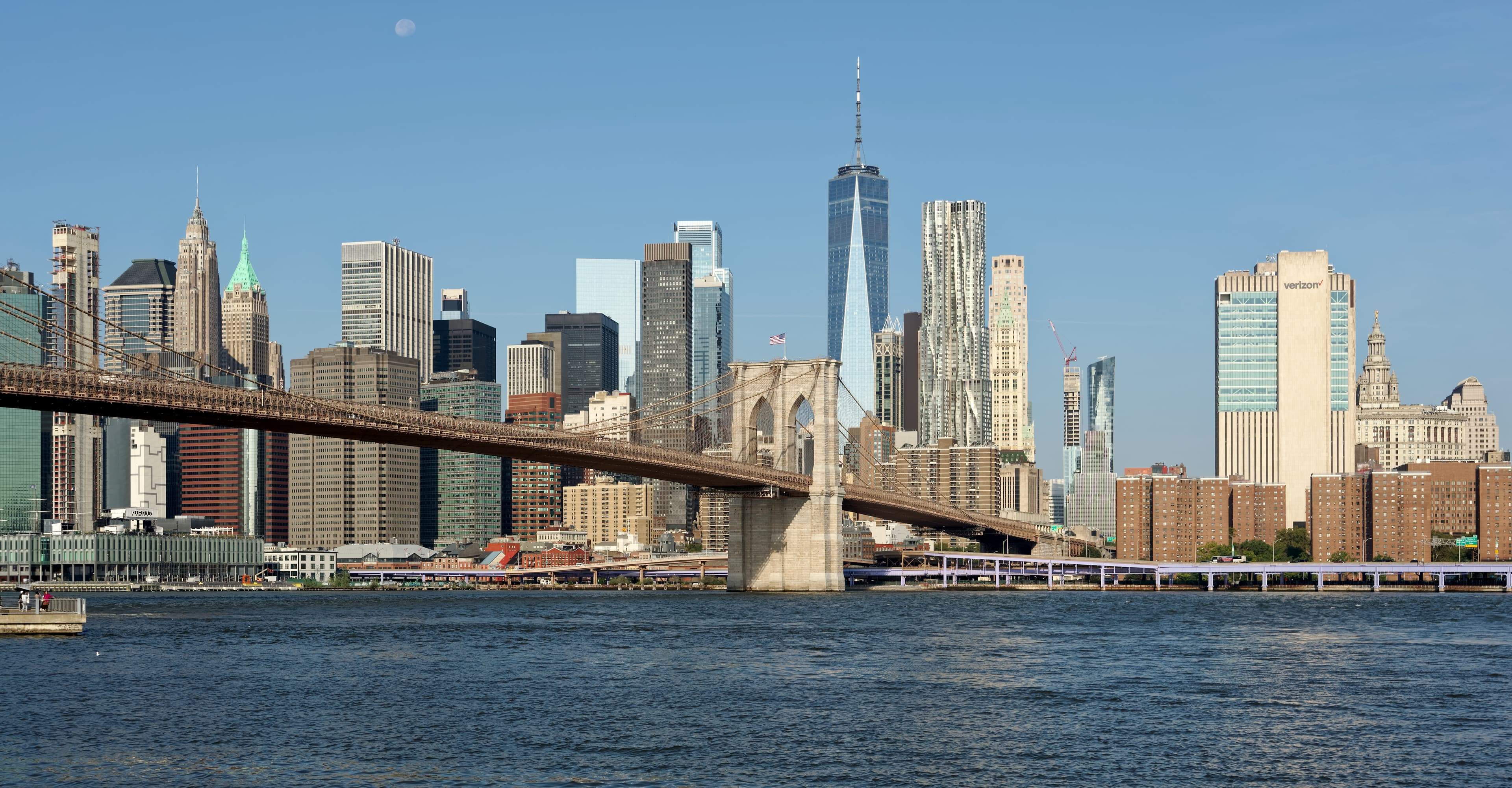
Ferry service to Governors Island runs year-round from Lower Manhattan and seasonally from Brooklyn Bridge Park. Check the Trust for Governors Island schedule before traveling.
Hero photo: Beyond My Ken, CC BY-SA 4.0, via Wikimedia Commons.
Editorial Note: Seasonal Access
Ferry service to Governors Island runs year-round from Lower Manhattan and seasonally from Brooklyn Bridge Park. Check the Trust for Governors Island schedule before traveling.
Location Photography


Gallery photos: Joe Mabel (CC BY-SA 3.0), ChrisRuvolo (CC BY-SA 4.0), Beyond My Ken (CC BY-SA 4.0), King of Hearts (CC BY-SA 4.0) via Wikimedia Commons.