A Temporary Transit Fix That Became a Permanent Icon
When the residential master plan for Roosevelt Island was developed in the 1970s, subway connection via the 63rd Street tunnel was years behind schedule. To provide immediate transport for incoming residents, the Roosevelt Island Tramway opened in May 1976 as an interim solution. It became so beloved that it remained in operation long after the F train arrived in 1989.
1976: the Swiss-built stopgap
The tram was never supposed to last. It was proposed in 1971 and approved in 1973 as a temporary mode of transport: the residential plan for Roosevelt Island was moving ahead, but the 63rd Street subway tunnel was years behind schedule, and incoming residents needed a way off the island. When it opened on May 17, 1976, the Roosevelt Island Tramway became the first commuter aerial tramway in the United States — a working transit line, not a tourist ride. The system was built by the Swiss company Von Roll, working with American designers Prentice & Chan and Ohlhausen architects. In its first year the tram carried 1.25 million riders, and it kept going long after the F train finally reached the island in 1989. The original equipment was straightforward and rugged: two 125-person cabins hauled by the same cable, each suspended from a single hanger arm — which meant the cabins could sway noticeably on windy days. The machinery had been given a predicted useful life of 17 years. It served for 34 before it was finally taken out for a complete rebuild. The cabins travel 3,140 feet between an at-grade terminal on Roosevelt Island and an elevated terminal on the Manhattan side, running along the north side of the Ed Koch Queensboro Bridge.
Seven hours over the East River
The system's age caught up with it in the mid-200s, in the most public way possible. A series of power outages stranded passengers in the cabins for extended stretches, and after an incident in April 2006 left riders trapped over the East River for seven hours, the tramway was shut down from April to September 2006 for emergency work. Passengers were eventually brought down in rescue baskets. The renovation that followed targeted the electrical backup system — and the human side of a long entrapment. The cabins were equipped with blankets, water, and food for emergencies, and attendants were given cell phones to carry alongside their radios while in the cars. The fix bought time, but the message was plain: the 1976 machinery had outlived its design life by a wide margin, and a stopgap needed replacing, not patching. Service resumed that September, but the system was clearly running on borrowed time. Riders today benefit from that reckoning every time the doors close — the modern system carries its own redundant safety equipment as standard kit.
The 2010 rebuild — and a star turn
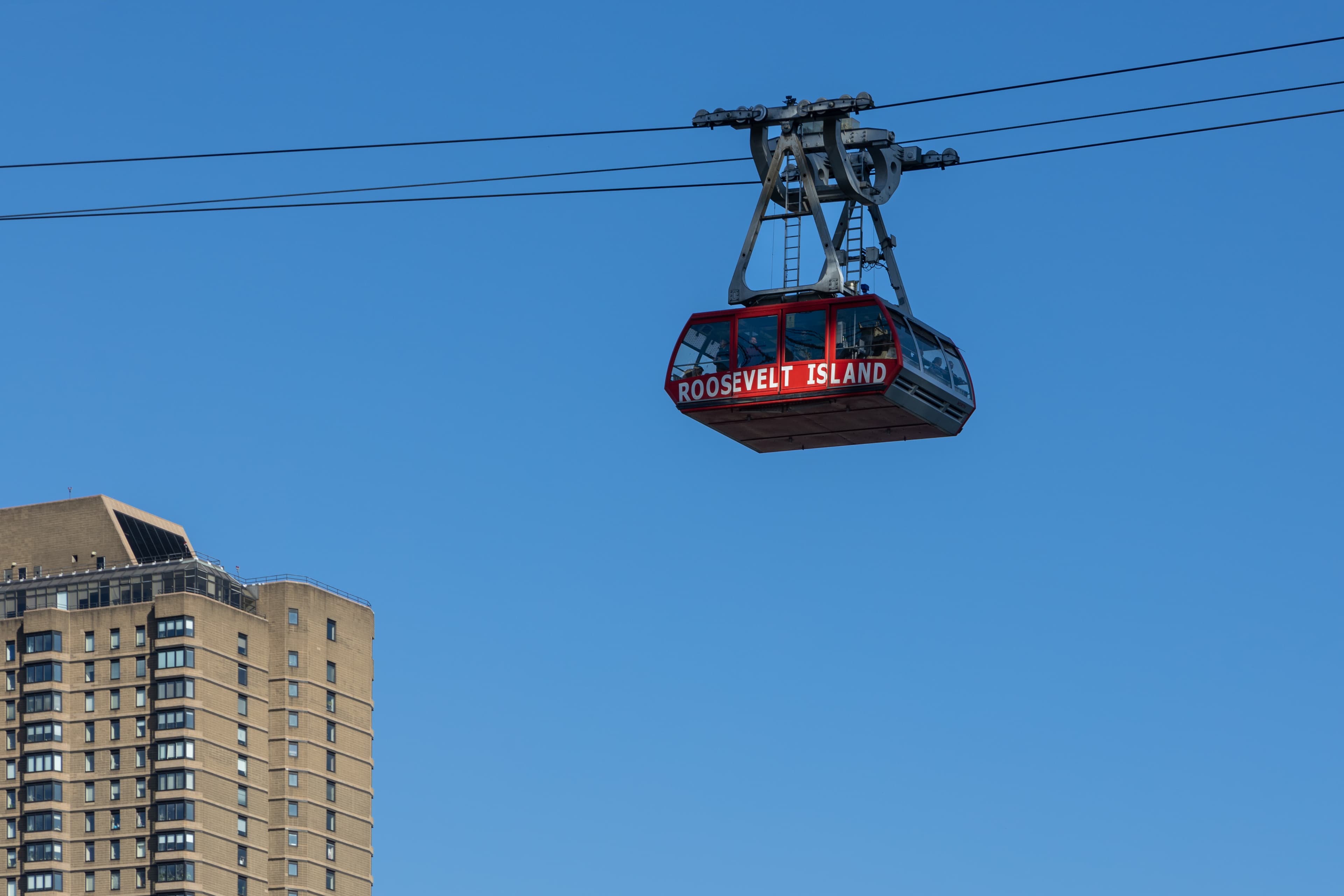
In March 2010 the tramway closed for its most radical surgery: a nine-month, complete overhaul by POMA of France, one of two companies in the world equipped to do the job. Everything from the 1976 build was replaced — cars, cables, machinery — except for the three tower bases. The biggest change was the operating system: the old single-cable setup, in which the two cabins moved in lockstep, gave way to a dual-haul system that lets each cabin run independently, so both can sit in the stations at the same time during peak hours. The new cabins, roughly 110-passenger vehicles attached to double hanger arms, ride far more steadily than their single-hanger predecessors — a fix for the wind sway riders remembered. Each cabin measures about 22 feet 11 inches by 12 feet 9 inches and weighs 22,125 pounds empty, rising to 41,525 pounds fully loaded. The stations were renovated again in the late 2010s. The fare structure matches the city's buses and subways, paid by tap-to-pay or OMNY card with free transfers. The tram has also had a film career: in the 1976 King Kong, the ape attacks the tram in his path of destruction across Manhattan, a scene later recreated in Universal Studios' Kongfrontation ride.
1989: the subway arrives — and the tram stays anyway
Before the tram, the only way to reach the island was the Roosevelt Island Bridge from Queens, which had opened in 1955. The 63rd Street subway line had been under construction since the late 1960s, and when the F train finally reached Roosevelt Island in 1989, tram ridership fell off sharply — the stopgap's reason for existing had vanished overnight. But the tram stayed, and New Yorkers kept riding it. The reasons were practical and sentimental in equal measure. The tram runs at all times except late nights, with headways of 7.5 to 15 minutes, and it is operated by Leitner-Poma on behalf of the Roosevelt Island Operating Corporation of the State of New York — a genuine transit agency, not a novelty ride. Its fare structure matches the city's buses and subways, paid by tap-to-pay or OMNY card, with free transfers to and from the MTA system, so a crossing counts as part of a normal commute. More than two million passengers a year now cross the East River in the cabins. Over the years the line has been praised as an icon of the city and depicted in several works of media — the stopgap that became a symbol. The original 1976 cabins, retired in the rebuild, spent over a decade sitting idle beneath the island's Motorgate parking garage — the brutalist structure designed by Kallmann & McKinnel and built in 1974 to hold the cars of the predominantly car-free island, which also houses retail spaces, a supermarket, a firehouse, and a post office. As the tram's 50th anniversary approached in May 2026, RIOC invited residents, artists, and designers to propose new lives for the old cabins: public art installations, historical displays, community spaces. The temporary fix had become permanent history.
Technical Specs & Fare Information
- The tram travels approximately 3,100 feet in under 4 minutes.
- The tram reaches an apex altitude of roughly 250 feet above the river.
- The tram accepts standard MTA MetroCard and OMNY contactless fare ($2.90 standard fare).
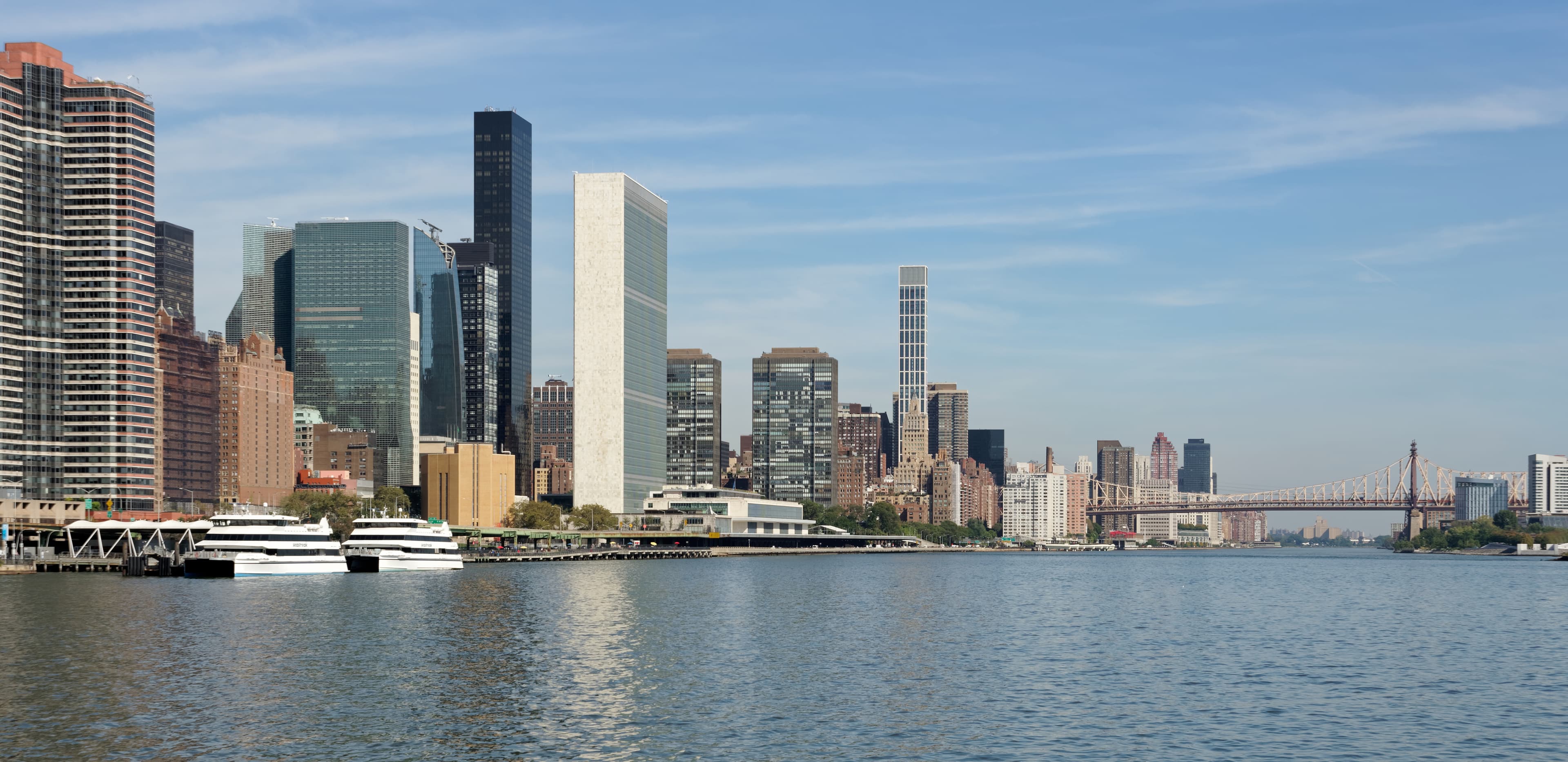
- Riders enjoy panoramic sightlines of the Queensboro Bridge, Midtown East, and the United Nations complex.
Hero photo: Superbass, CC BY-SA 4.0, via Wikimedia Commons.
Location Photography


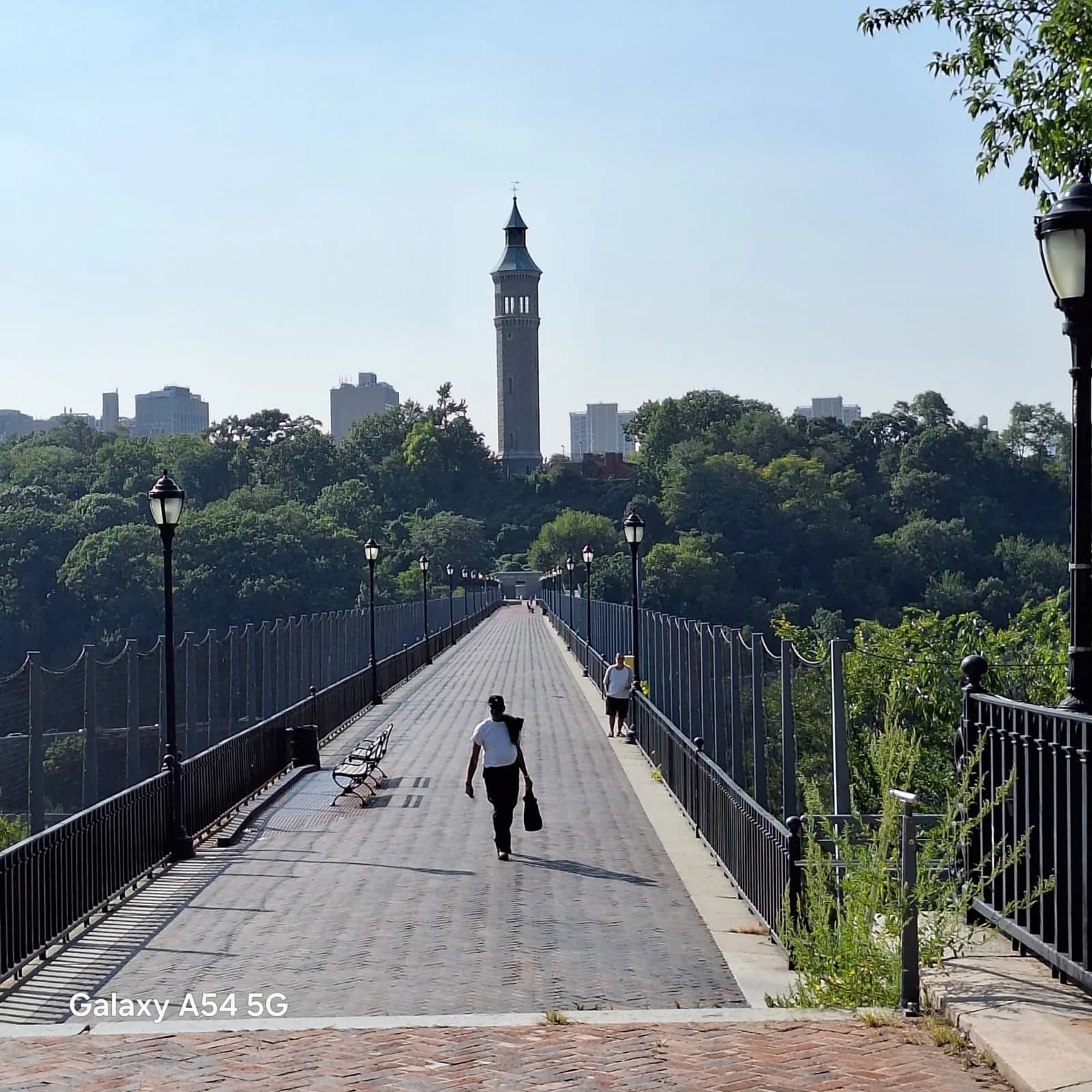
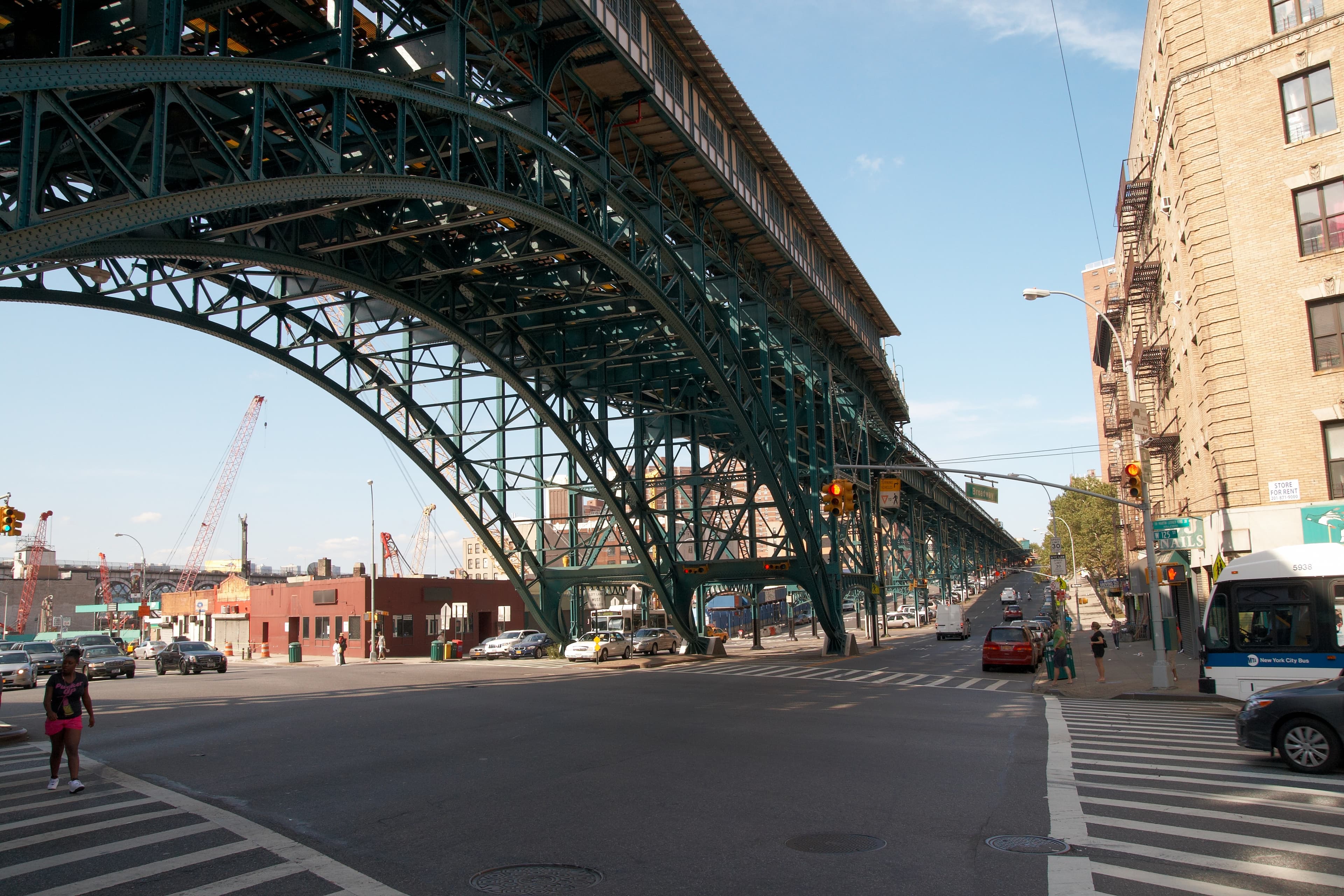
Gallery photos: Jdforrester (CC BY 4.0), TheCatalyst31 (CC BY-SA 4.0), TheCatalyst31 (CC BY-SA 4.0), TheCatalyst31 (CC BY-SA 4.0) via Wikimedia Commons.