The Cemetery That Became a Destination
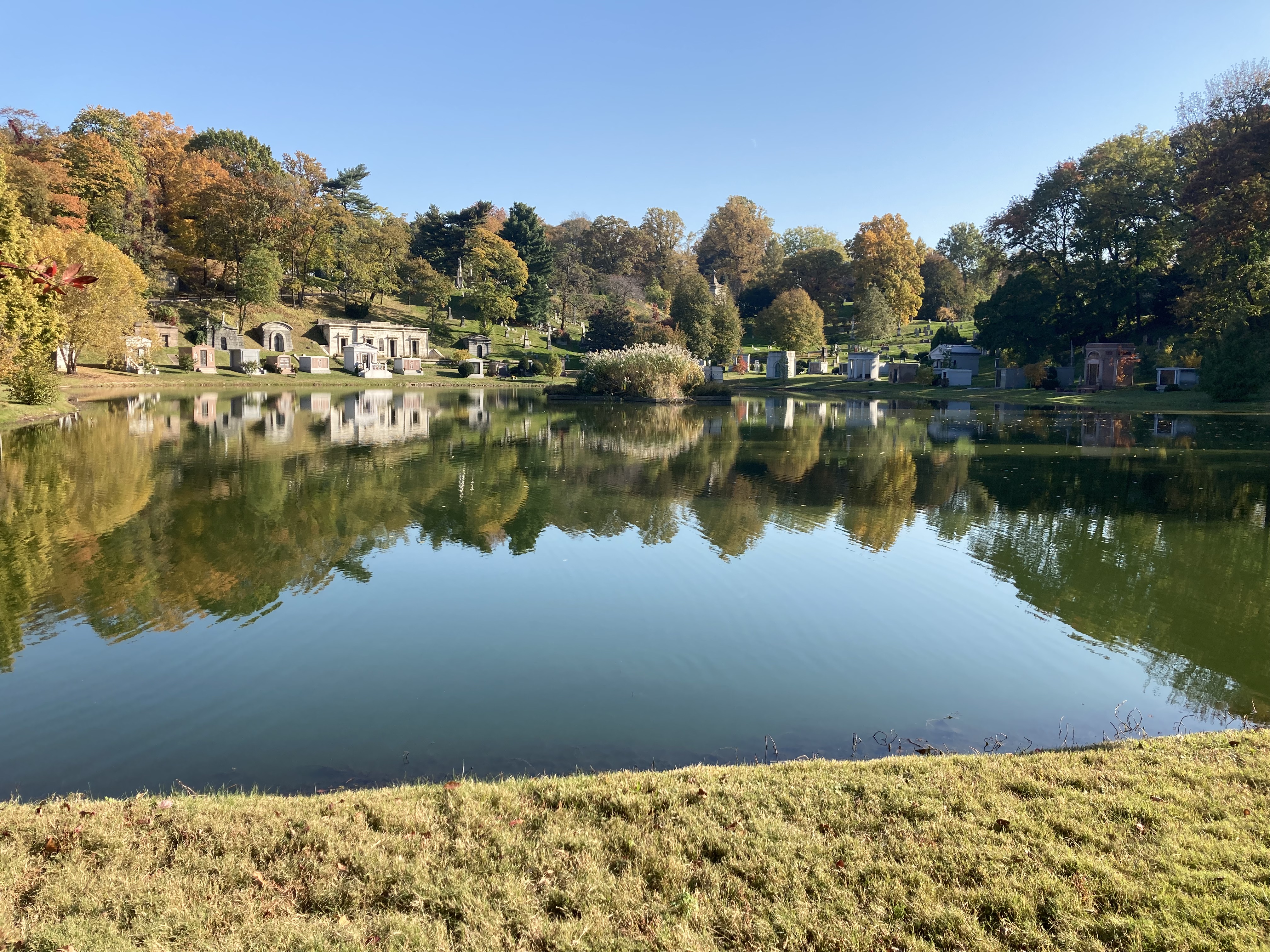
Green-Wood Cemetery was founded in 1838 on 478 acres in Brooklyn — rolling hills, glacial ponds, and carefully planned landscapes designed to be beautiful. It worked. By the early 1860s, Green-Wood was the second most visited tourist destination in New York State, drawing around 500,000 visitors a year, second only to Niagara Falls. Victorians picnicked among the monuments, took carriage rides along the winding paths, and treated the cemetery as a public park. The cemetery is now a National Historic Landmark (designated 2006) with an estimated 560,000 to 600,000 burials. Its residents include politicians, artists, inventors, and scoundrels — a cross-section of 19th-century New York. But beneath one of its hills lies something most visitors never see: the Catacombs, thirty burial vaults from the early 1850s, rarely open to the public.
Digging the Catacombs
The Catacombs were not originally planned as catacombs. In the early 1850s — the commonly cited date is 1854 — Green-Wood needed gravel to lay out its roads. Workers excavated a pit in a hillside, extracting the material. When the gravel ran out, the cemetery faced a choice: fill the pit or use it. They used it. Into the excavated hillside they built thirty vaults — fifteen rooms on each side of a central corridor — creating an underground mausoleum. The vaults were faced with marble and bronze, secured behind locked iron gates. Skylights were set into the ground above, allowing natural light to filter down into the corridor. The Catacombs offered a middle path for burial. A private mausoleum was expensive, beyond the reach of most families. A simple ground burial was affordable but lacked prestige. The Catacombs vaults provided above-ground interment — considered more dignified and sanitary — at a price between the two. For middle-class families who wanted something better than a plot but couldn't afford a mausoleum, the vaults were the answer.
The 400 and Ward McAllister
The most famous resident of the Catacombs is Ward McAllister, who died in 1895. McAllister was the arbiter of Gilded Age high society — the man who coined the term "The 400" to describe the exclusive set of New Yorkers who could fit in Mrs. Astor's ballroom. He was, in essence, the inventor of the social register, the gatekeeper who decided who mattered. That McAllister ended up in the Catacombs rather than a grand private mausoleum is telling. The vaults attracted a particular clientele: respectable, established, but not extravagantly wealthy. They were for people who understood the value of appearances but calculated the cost. The Catacombs saw their last burials in the 1960s. Some vaults are still owned by descendants of the original purchasers, who hold the keys. The iron gates remain locked; the skylights still let in daylight; the names are still etched in bronze and marble.
Fear of Premature Burial
The Victorians had a specific terror: being buried alive. Medical science could not always distinguish death from deep coma, and stories of premature burial circulated widely. Edgar Allan Poe wrote about it. Newspapers reported exhumed coffins with scratch marks inside. The Catacombs addressed this fear directly. Unlike a ground burial, where a coffin was sealed under six feet of earth, the vaults were accessible. The skylights and ventilation meant the space was not airtight. If — by some horrible mistake — someone was interred alive, there was light, air, and the possibility of being heard. The Catacombs were marketed, in part, as a safeguard against the ultimate nightmare. This was not an idle concern for the people who bought vaults. The 19th century saw patents for "safety coffins" with bells, flags, and breathing tubes. The Catacombs offered a simpler solution: don't bury the body underground at all.
Concerts in the Dark
For most of their history, the Catacombs were closed to the public except for rare guided tours. That began to change as Green-Wood embraced programming. The cemetery — under the leadership that transformed it from a quiet burial ground into a cultural institution — started opening the Catacombs for special events. The most notable is "The Angel's Share," a classical music series organized by Unison Media's Andrew Ousley. The concerts take place inside the Catacombs, with musicians performing in the vault-lined corridor. The acoustics — stone walls, low ceiling, enclosed space — create an extraordinary listening environment. Audiences sit among the vaults, in candlelight, hearing music in a place built for the dead. Green-Wood also offers "After Hours" tours that end in the Catacombs — nighttime visits to the cemetery that conclude with entry to the usually locked vaults. These tours, offered on select dates, are among the only ways for the public to see inside. The Catacombs have also hosted contemporary art. In 2019, artist Janine Antoni installed work in the space. In 2022, Heidi Lau — Green-Wood's first artist-in-residence — created "Gardens as Cosmic Terrains," ceramic sculptures suspended from the Catacombs' skylights, inspired by funerary objects and Chinese garden design. The installation ran from May to July 2022.
Visiting the Catacombs
The Catacombs are not open for casual visits. They are locked, gated, and accessible only on guided tours or during special events. Green-Wood's regular daytime admission does not include the Catacombs. To see inside, you need to book a specific tour or event. The "After Hours" tours — which include the Catacombs as the finale — are offered on select evenings, typically in the warmer months. "The Angel's Share" concerts are ticketed separately. Both sell out; check Green-Wood's official site for schedules and availability. The cemetery itself is worth visiting regardless. The main entrance is at 5th Avenue and 25th Street in Brooklyn. Even without entering the Catacombs, you can walk the grounds, see the hill under which the vaults lie, and understand why this place drew half a million visitors a year in the 1860s. But if you want to go underground — into thirty vaults from the 1850s, past Ward McAllister's resting place — you'll need a ticket and a guide.
Key Facts
- Green-Wood Cemetery founded 1838; 478 acres; National Historic Landmark 2006; ~560,000–600,000 burials; 2nd most visited NY tourist site by early 1860s (~500,000/year).
- Catacombs: 30 vaults (15 per side off central corridor) beneath a hill, built early 1850s (1854) in a former gravel excavation; marble and bronze vaults behind iron gates; skylights above.
- Built as affordable alternative to private mausoleum; eased Victorian fear of premature burial (accessible vaults, light, air).
- Ward McAllister (d. 1895), who coined "The 400," interred there; last burials ~1960s; some vaults still owned by descendants who hold keys.
Location Photography