The Village That Refused the Grid
Greenwich Village began as somewhere else. The Lenape called its Hudson River cove Sapokanikan, “tobacco field”; Dutch settlers cleared it into farmland and named their hamlet Groenwijck — “Green District,” the source of “Greenwich.” For two centuries it was a separate country village more than two miles north of the city, close enough to flee to when yellow fever swept downtown — as New Yorkers did in 1822, many of them staying for good — and far enough to keep its own winding lanes, laid out along cow paths, property lines, and the buried course of Minetta Brook. Then came the Commissioners’ Plan of 1811, the great grid that stamped numbered streets and avenues across the rest of Manhattan. The plan simply went around the Village: the streets west of Sixth Avenue were already built up, and the surveyors let the old pattern stand. The result is the most disorienting map in Manhattan. Streets here have names, not numbers — Bleecker, Carmine, Jane, Perry — and the few numbered ones misbehave. West 4th Street, which runs obediently east–west across the rest of the island, bends north–south inside the Village and manages to intersect West 10th, West 11th, and West 12th Streets. There is an address where West 4th crosses West 12th, and on a first visit it feels like a clerical error. It is, instead, the whole point: a neighborhood the grid was never allowed to straighten.
Washington Square: A Burial Ground That Became a Front Lawn
At the Village's center sits Washington Square Park, 9.75 acres at the foot of Fifth Avenue — and beneath its lawns lies the neighborhood's darkest layer. From 1797 to 1825 the square was a potter's field, the public burial ground for the poor, the unclaimed, and victims of the city's yellow fever epidemics; by the most common estimates, as many as 20,000 bodies still rest under the pavement. In 1826 the city leveled the field into the Washington Military Parade Ground, and within a few years the north side of the square filled with a protected row of handsome Greek Revival houses, built about 1832 and still standing — the address of old, moneyed New York. The park's crown arrived in two acts: a temporary wooden-and-plaster arch raised over Fifth Avenue in 1889 for the centennial of George Washington's inauguration proved so beloved that a permanent version followed in 1892, a 77-foot Tuckahoe marble arch designed by Stanford White and modeled on the Arc de Triomphe. Workmen digging its foundations turned up coffins and a gravestone from 1803, ten feet down. The square has been the Village's front lawn and soapbox ever since — chess players at the southwest corner, buskers around the fountain, NYU students on every bench — a parade ground over a graveyard, ruled by an arch built for a one-day party that the city refused to take down.
Bohemia Moves In
What made the Village famous was cheap rent and crooked streets. In the early 1900s, writers, painters, and radicals discovered that the old rowhouses west of Sixth Avenue were affordable and gloriously unsupervised, and Greenwich Village became the capital of American bohemia. The Provincetown Players staged the first plays of Eugene O'Neill here; little magazines, salons, and costume balls filled the rest. After the Second World War the Beats moved in — Jack Kerouac, Allen Ginsberg, and William S. Burroughs all passed through Village bars and Village apartments — and then came the folk revival: on any night in the early 1960s you could hear the future of American music for the price of a coffee. Bob Dylan arrived in New York in January 1961 and was playing Gerde's Folk City within months; Cafe Wha?, the Gaslight, and a dozen MacDougal and Bleecker Street clubs formed the circuit. The Village Vanguard, a basement room on Seventh Avenue South, has presented live jazz since 1935. And in 1958, Joe Cino began staging plays in his Caffe Cino on Cornelia Street, launching Off-Off-Broadway in a coffeehouse with no license, no budget, and no rules. The Village's great export has never been a product; it has been permission — to live differently, dress differently, and make art the uptown world hadn't approved yet.
Five Nights on Christopher Street
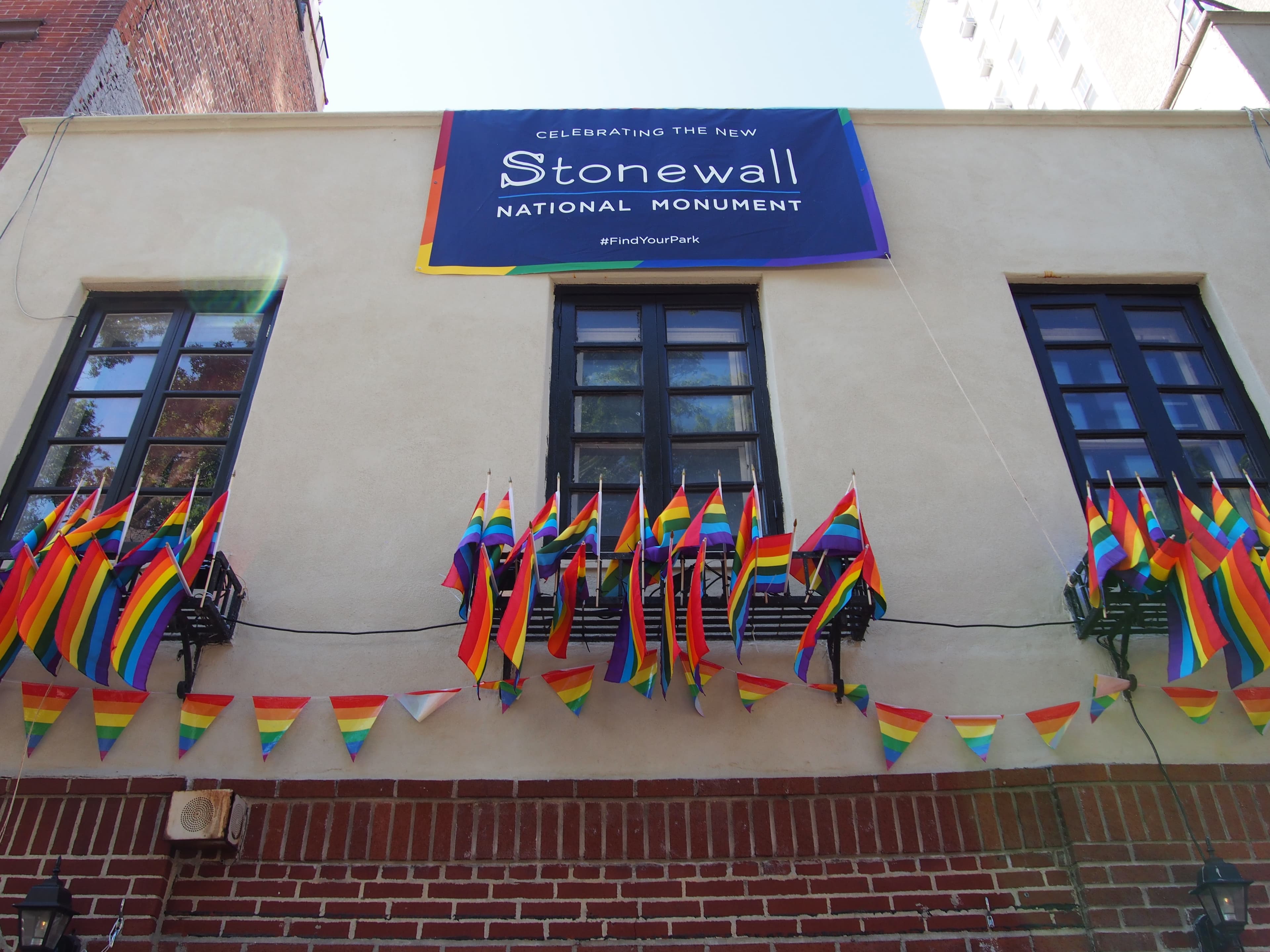
The Village's bohemia was always also a refuge. Through the middle of the 20th century it was one of the few places in America where gay men and women could live with something approaching openness — in the bars, if nowhere else, most of them Mafia-run and all of them technically illegal. The Stonewall Inn, at 51–53 Christopher Street, was the biggest of them: two storefronts, a dance bar that admitted drag queens and homeless gay teenagers whom other bars turned away. Police raids were routine — a cost of doing business, usually choreographed in advance. The raid that began in the early hours of June 28, 1969, was not. This time the patrons fought back, the crowd outside swelled into the hundreds, and Christopher Street became a battleground of flying coins, parking meters used as battering rams, and chorus lines taunting riot police. Disturbances rolled on for several nights. The Stonewall uprising did not invent gay activism, but it detonated it: within a year, activists had organized the first Pride march, held on the uprising's first anniversary in June 1970, and the modern LGBTQ rights movement had its founding address. The bar is now the centerpiece of the Stonewall National Monument, designated in 2016 — the first U.S. national monument to an LGBTQ story — and a stop on every serious walking tour of American civil rights.
The Neighborhood That Fought City Hall — and Won
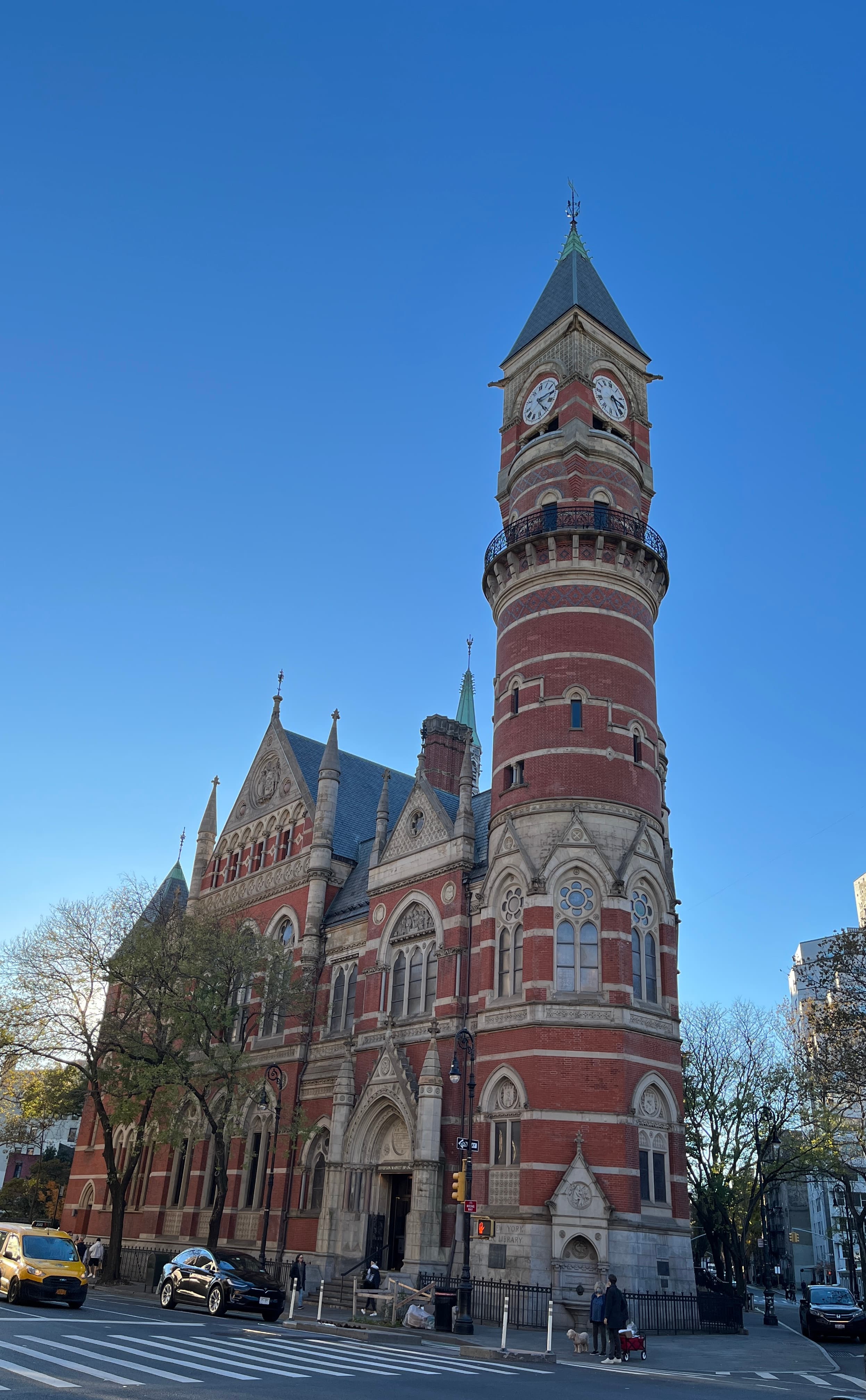
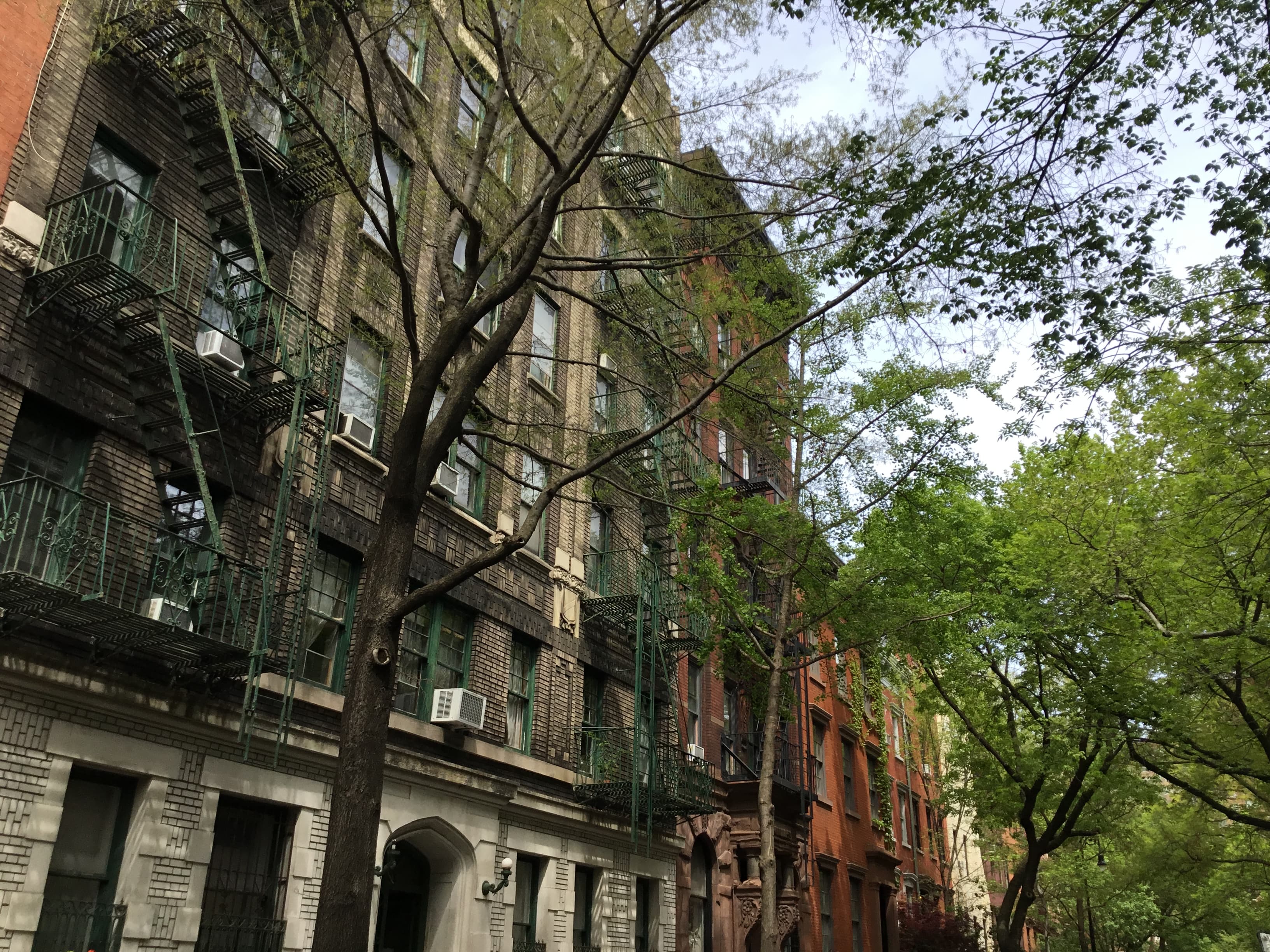
Twice in the 20th century, Robert Moses tried to run highways through the Village, and twice the Village stopped him. As parks commissioner, Moses spent years pushing to drive a roadway — an extended Fifth Avenue — through Washington Square Park. Local parents, led by Shirley Hayes and backed by Eleanor Roosevelt, fought him for most of a decade; in August 1959 the park was closed to cars for good. Then Moses proposed the Lower Manhattan Expressway, an elevated ten-lane highway that would have slashed across the Village's southern edge and demolished blocks of Broome Street. The neighborhood's most famous defender, Jane Jacobs of 555 Hudson Street, turned the fight into a philosophy: her 1961 book The Death and Life of Great American Cities, written from Village sidewalks, argued that planners were destroying exactly the dense, mixed, watchful streets that made neighborhoods safe and alive. The expressway was defeated. The preservation victories stacked up beside it. The Jefferson Market Courthouse on Sixth Avenue — Frederick Clarke Withers's High Victorian Gothic fantasy of 1874–77, once voted among the most beautiful buildings in America — stood empty and marked for demolition in 1958; neighbors, led by Margot Gayle, campaigned until it reopened in 1967 as a public library, one of the first great adaptive-reuse projects in the country. In April 1969 the city designated the Greenwich Village Historic District, protecting more than fifty blocks of brownstones and rowhouses — then one of the largest historic districts in New York. The Village you walk today exists because its residents out-organized the most powerful builder in America.
The Village Today
The bohemians could no longer afford it. The Village's four ZIP codes have ranked among the most expensive in the United States, the brownstones that rented as cold-water artists' flats are now some of the priciest houses in the city, and New York University — once a tenant of the square — has become its landlord-in-chief, ringed around the park in converted warehouses and purpose-built towers. Chain stores have taken corners that were bookshops. And yet the Village survives as more than a brand. The streets still refuse the grid; West 4th still collides with West 12th. The Vanguard still seats 120 people in a basement wedge. The chess hustlers still work the southwest corner of the square, the folk clubs' descendants still run open mics on Bleecker, and on the last Sunday of every June the Pride March pours down Fifth Avenue, under the arch, past the Stonewall Inn. Walk it slowly and the layers read like a core sample of American dissent: a Dutch farm, a potter's field, a parade ground, a bohemia, a battleground, a preservation victory — all inside roughly half a square mile that the surveyors of 1811 never got to straighten. That refusal, maintained for two hundred years, is the neighborhood's true monument.
Key Facts
- Boundaries: 14th Street to the north, Broadway to the east, Houston Street to the south, and the Hudson River to the west — about 0.29 square miles, roughly centered on Washington Square Park.
- The Village kept its 18th-century street pattern when the Commissioners' Plan of 1811 imposed the grid on the rest of Manhattan; West 4th Street runs north–south here and intersects West 10th, 11th, and 12th Streets.
- Washington Square Park was a potter's field from 1797 to 1825 — an estimated 20,000 burials remain beneath it; the 77-foot Washington Square Arch, designed by Stanford White, was completed in 1892.
- The Stonewall uprising began at the Stonewall Inn on Christopher Street on June 28, 1969; the first Pride march followed in June 1970, and the area became the Stonewall National Monument in 2016.
- Jane Jacobs, a Hudson Street resident, led the fights that kept a roadway out of Washington Square Park (closed to traffic in 1959) and killed the Lower Manhattan Expressway; her The Death and Life of Great American Cities appeared in 1961.
- The Greenwich Village Historic District, designated April 29, 1969, protects more than 50 blocks; the Jefferson Market Library (1874–77), saved from demolition, has served as a library since 1967.
Visitor Details
Address: The neighborhood runs from 14th Street to Houston Street, Broadway to the Hudson River. Start at Washington Square Park (foot of Fifth Avenue at Waverly Place) — the Village's center of gravity for two centuries.
Transit: The West 4th Street–Washington Square station (A/C/E and B/D/F/M) drops you at Sixth Avenue in the middle of it all. Also close: Christopher Street–Stonewall (1), 8th Street–NYU (R/W), and 14th Street–Union Square for the east side.
Hours/Admission: A neighborhood has no hours and no ticket — the streets are always open and free. Washington Square Park is a public NYC park (open roughly dawn to midnight; check NYC Parks for the current curfew). Interiors keep their own schedules: Jefferson Market Library hours vary by day — check the NYPL site before planning around it — and the Stonewall Inn is a working bar with an age-21 door policy at night, while the national monument visitor center across Christopher Street keeps daytime hours.
Best timing: Walk it on a weekday morning, when the square belongs to dog walkers and chess players and the West Village side streets are empty enough to hear your own footsteps — then stay into the evening, when the comedy, jazz, and off-Broadway marquees on Bleecker, MacDougal, and Seventh Avenue South switch on. A good route: Washington Square Arch → MacDougal and Bleecker → Christopher Street and the Stonewall Inn → Jefferson Market Library → the brownstone blocks of Bank, Charles, and Perry Streets in the West Village, where the grid gives up entirely.