First Subterranean Railroad in Urban America
In 1844, steam locomotives operated at street level along Atlantic Avenue, presenting dangers to pedestrians and horse-drawn carriages. To defuse mounting public opposition, the Long Island Rail Road dug an open trench, spanned it with a heavy brick barrel vault, and covered it back up — creating a subterranean railway nearly two decades before the London Underground.
Why 1844 Brooklyn dug a trench
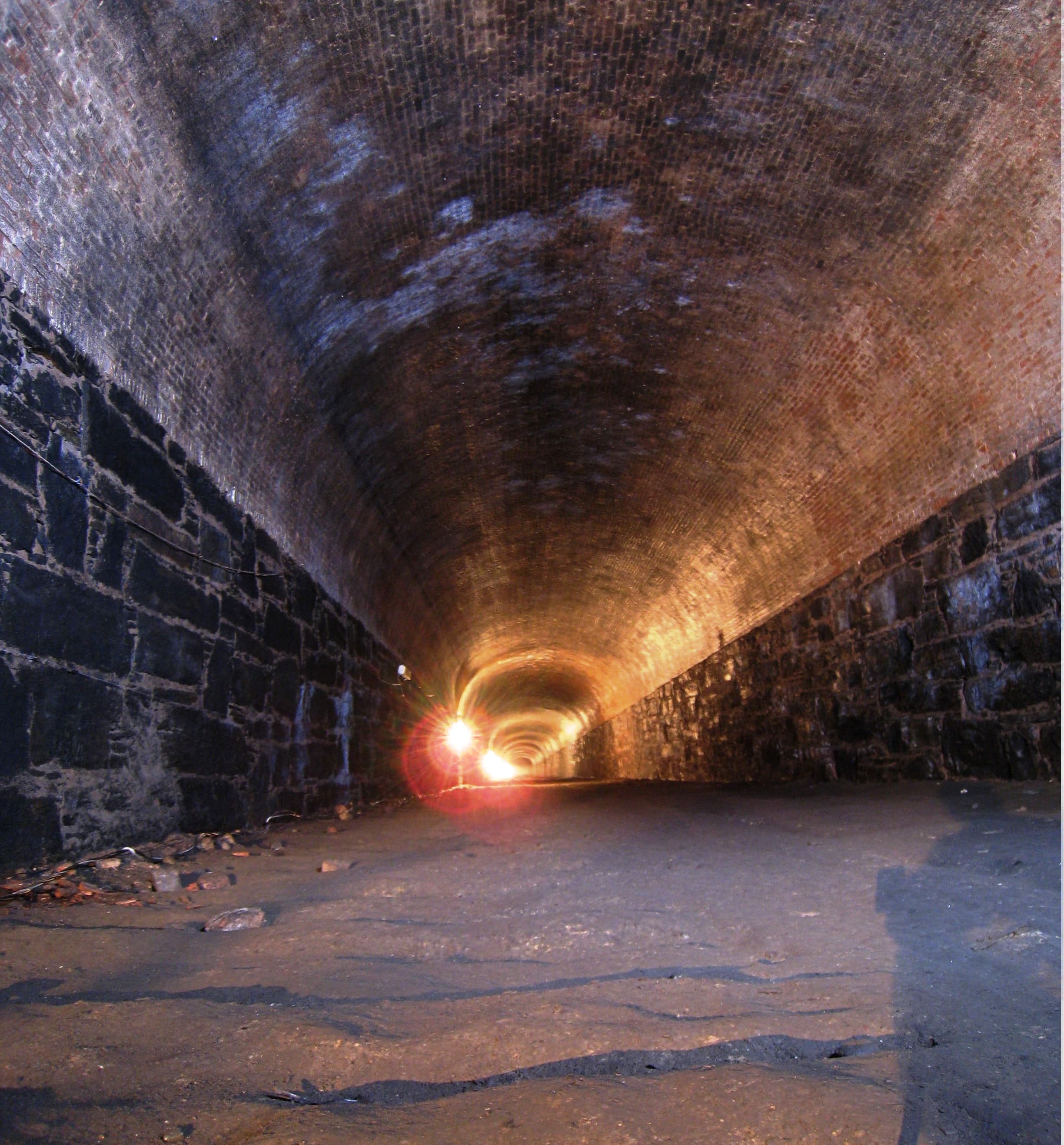
The problem was trains running through a city that wasn't ready for them. In the 1840s, the Long Island Rail Road ran its steam locomotives at street level along Atlantic Avenue, in what was then the independent City of Brooklyn. The engines had poor brakes, the streets were crowded, and the combination was deadly: a series of injuries — including the deaths of two young people — turned public opinion against street-running trains. Brooklyn's answer was to bury the problem. On December 3, 1844, the railroad opened a reinforced open cut — a trench — to carry the line below the street, reducing the grade on the way to the South Ferry at the foot of Atlantic Street, where passengers caught ferries to Manhattan. About five years later, a sturdy brick arch was built over the cut, turning it into a true tunnel: 21 feet wide, 17 feet high, with five layers of red brick laid in bond with headers and stretchers over mica-schist masonry walls. Trains ran through it the way trains ran everywhere in 1844 — slowly, and with precautions that sound medieval today. The Brooklyn Eagle reported in 1911 that trains through the tunnel were "preceded by a man on horseback," and that the sealed tunnel was later "used by smugglers and thieves." The poet Walt Whitman, then an editor at the Brooklyn Daily Eagle, wrote of the tunnel too. It had no stations; it was simply a street made of railroad, hidden underground.
A century of break-ins
The tunnel was sealed at both ends in the fall of 1861, when changing street-rail rules made it obsolete. What happened next reads like a crime blotter. In March 1916, the FBI suspected German terrorists were building bombs inside and broke through the seal. Agents found nothing, installed an electric light, and resealed the tunnel behind them. The electric light the agents left behind burned in a sealed tomb for decades. The 1920s gave the tunnel a second life as a secret — reportedly as a site for mushroom growing and bootleg whiskey stills. In 1936, New York City police broke in with jackhammers, hunting for the body of a hoodlum said to be buried there. In 1941, the federal Works Progress Administration opened it again to inspect the brickwork's structural strength. A few years later the FBI came back, this time looking for spies. In the late 1950s, two rail historians, George Horn and Martin Schachne, made their own inspection. None of these intrusions found what the folklore promised. The tunnel's legends — lost locomotives, bootlegger caches, hidden chambers — kept growing anyway, fed by the fact that almost nobody could get inside to check. By the time the tunnel was forgotten, it had become a rumor with a street address. What was actually down there — a brick vault, an electric light, and silence — was less dramatic, and for a young engineering student in 1980, that was exactly the point.
Bob Diamond's manhole
Bob Diamond was 18, an engineering student, and the only person in New York who believed the tunnel was still there. In 1980, after more than a year poring over archival maps and newspaper articles — and arguing with city authorities who said the tunnel didn't exist, and if it did, wasn't where he said it was — he pried up a manhole cover at Atlantic Avenue and Court Street and dug down with his hands until he found the top of a brick ceiling. He broke through, and a whoosh of cold air rushed out of the dark. Diamond founded the Brooklyn Historic Railway Association in 1982 and started giving tours. They were like nothing else in the city: he would haul three orange barricades into the middle of Atlantic Avenue, pry off the manhole with a crowbar, and steady a thin ladder down a narrow shaft — the tunnel's only entrance. Visitors descended one by one, in sneakers with flashlights in hand, through a tight passage into a brick hall 21 feet wide, 17 feet high, and roughly half a mile long. The tours ran from 1982 to 2010, and at their peak the line for the mini-adventure wound around the block. Diamond also made the case that the tunnel mattered. It was listed on the National Register of Historic Places in 1989, and the Guinness Book of World Records recognizes it as the oldest subway tunnel in the world — older than the London Underground's first line, older than Boston's Tremont Street subway.
The end of the tours
The tours ended the way they ran: in the middle of Atlantic Avenue. In 2010, the Fire Department forced Diamond to cancel a Rooftop Films screening inside the tunnel, citing concerns about ventilation and the single narrow entrance — one shaft in, one shaft out, for hundreds of visitors. The FDNY had been urging Diamond for years to build a second entrance a few feet down Atlantic Avenue, but the Department of Transportation dragged its feet on permission. Diamond was apoplectic, and he had reason to be: the FDNY's demand for a second entrance had been on the table for years while the DOT refused to grant permission to open one. On December 17, 2010, the DOT revoked his tour permit in a 4:45 p.m. letter. The manhole stayed shut. Diamond never got back in. He had bigger dreams for the tunnel than tours: he wanted to run an old-time electric trolley through it, looping downtown Brooklyn from Red Hook, and he spent years assembling historic trolleys to prove it could work. Friends and supporters had spent years campaigning for the trolley loop as an alternative to the area's thin transit connections; in 2010, the same year the tunnel closed, the DOT studied the trolley plan and deemed it not feasible. Diamond — Brooklyn's self-styled urban archaeologist — died on August 21, 2021, at 62, having lost nearly everything to the bureaucracy he spent his life fighting. The tunnel is still down there, sealed between Boerum Place and Columbia Street, holding its Guinness record and its 1989 National Register listing. No tours run, no trains use it, and the brick arch that five layers of red brick built in 1849 keeps holding up Atlantic Avenue. It waited 119 years for Bob Diamond. But the brick, the cold air, and the record remain exactly where he left them.
Sealing and Legend
- Sealed at both ends in 1861 when street rail restrictions shifted.
- Spawned local folklore concerning lost locomotives, bootlegger caches, and hidden chambers.
- Rediscovered in 1980 by engineering student Bob Diamond who crawled through manholes.
Current Access Status
Public tours organized through manhole entry were discontinued by the city in 2010 due to safety regulations. The tunnel remains sealed beneath Atlantic Avenue between Boerum Place and Columbia Street.
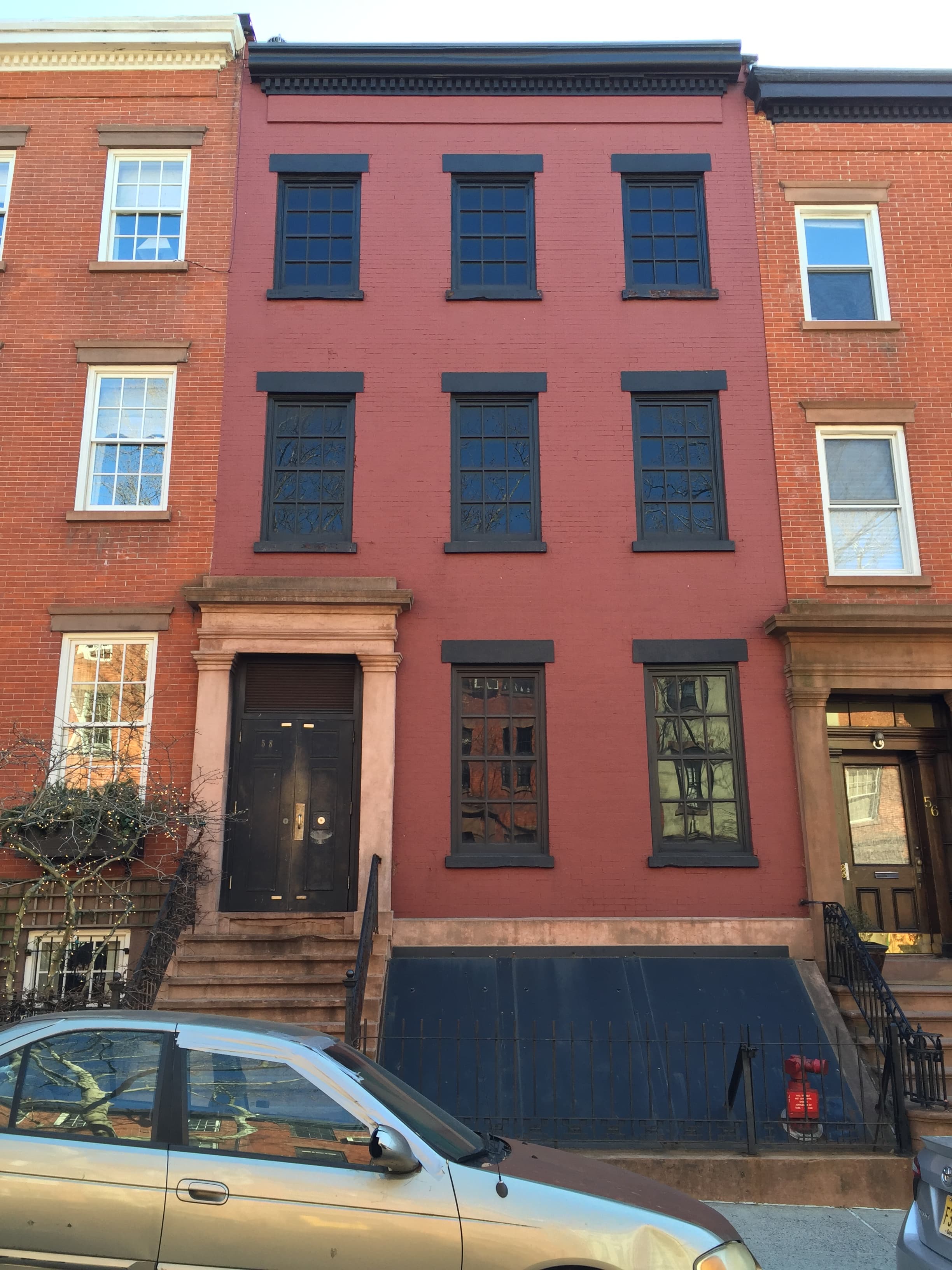
Hero photo: Vlad Rud, CC BY-SA 3.0, via Wikimedia Commons.
Location Photography


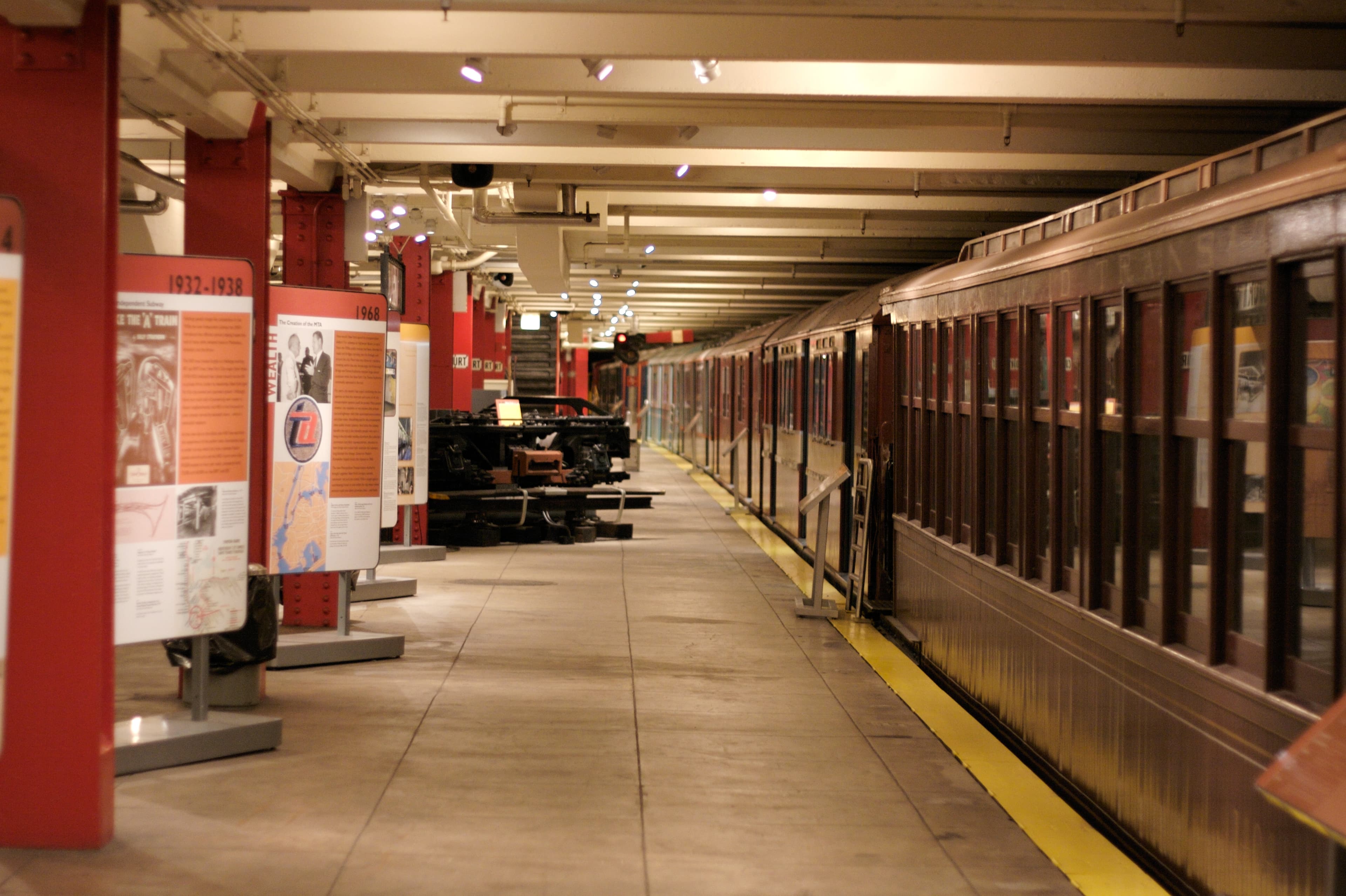
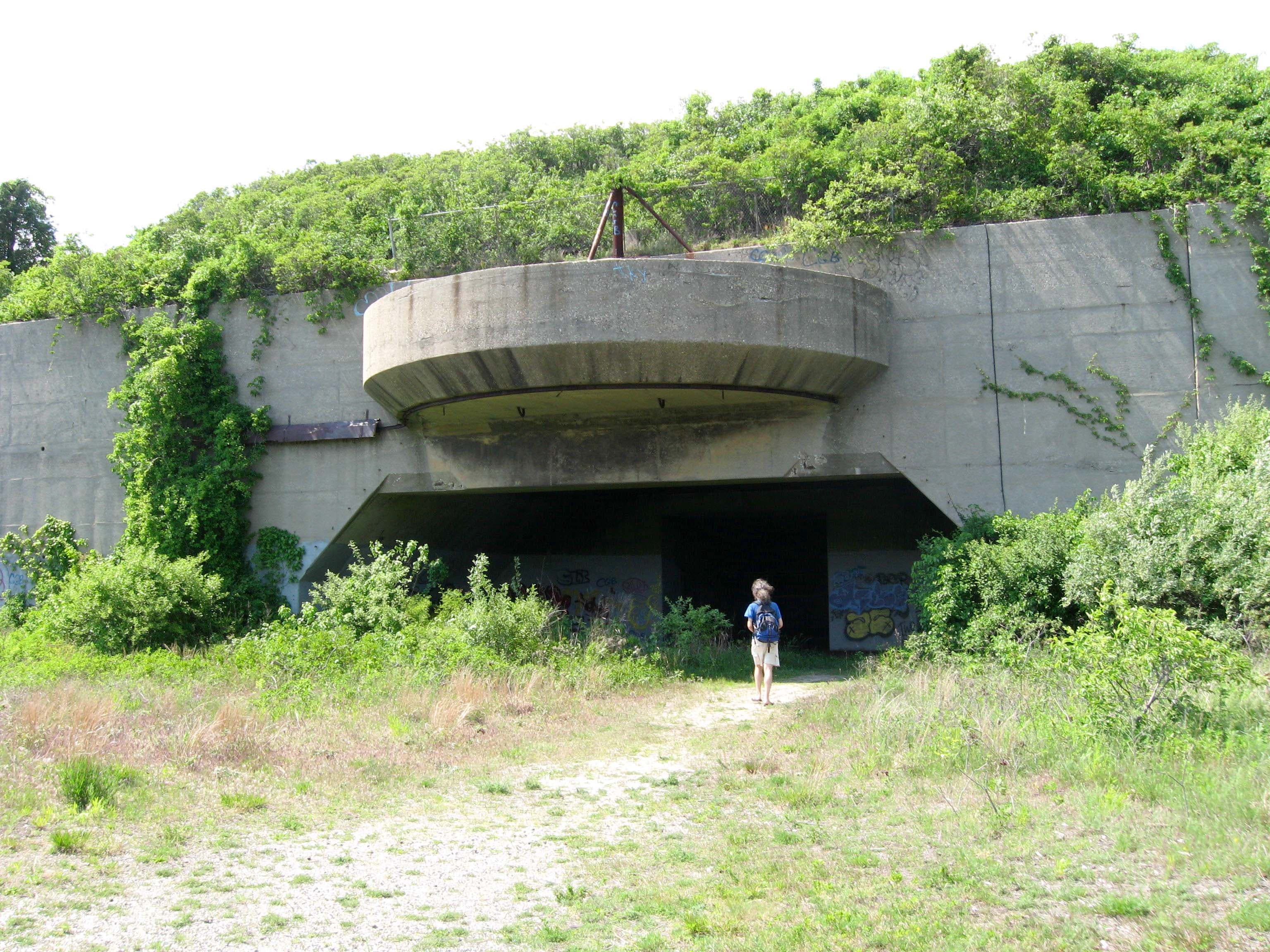
Gallery photos: DanTD (CC BY-SA 4.0), Tdorante10 (CC BY-SA 4.0), Unknown author (Public domain), Mars Infomage (CC BY 2.0) via Wikimedia Commons.