The beach the world pictures when it pictures Miami
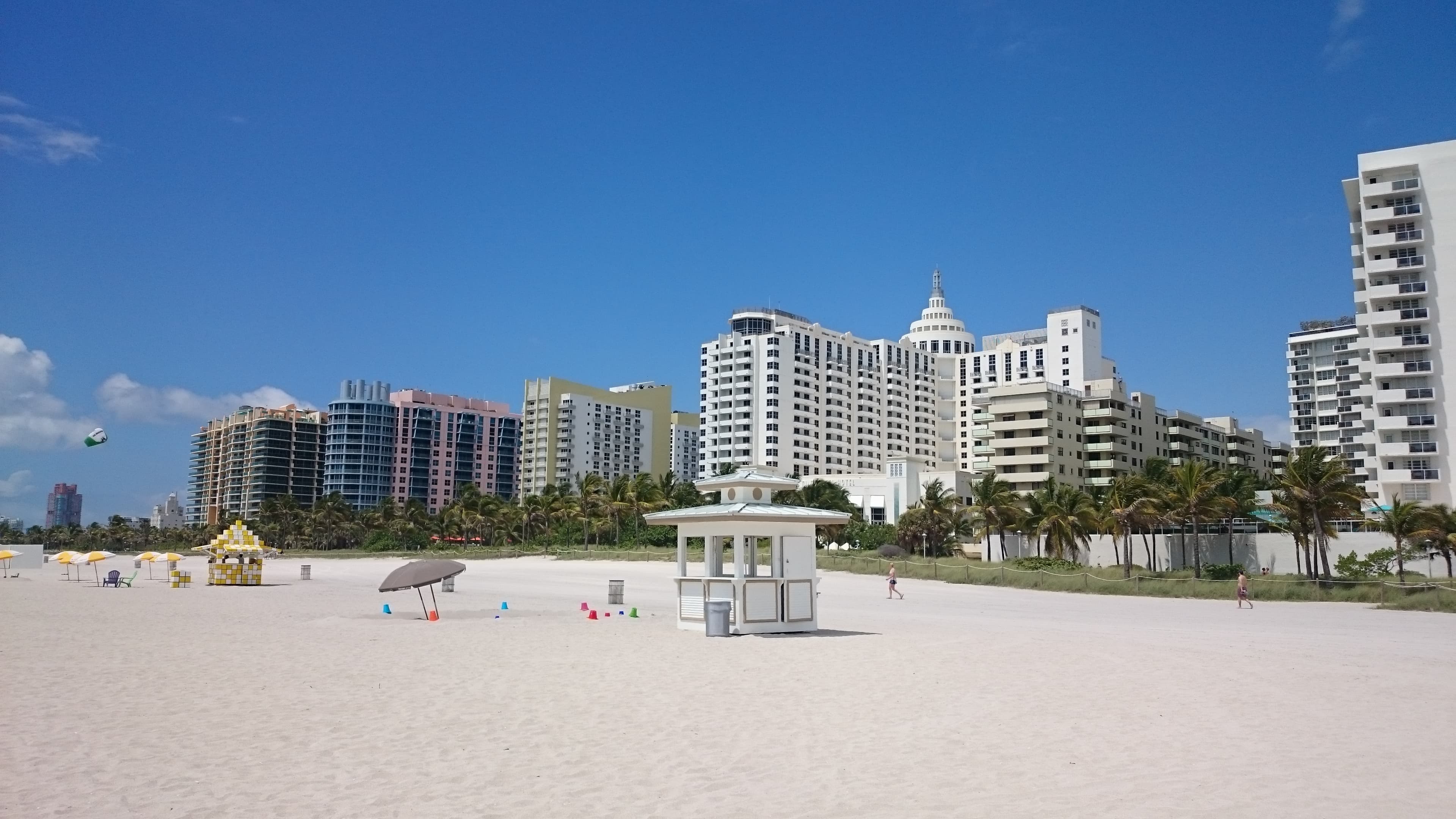
Say "Miami" to almost anyone, anywhere in the world, and the image that comes to mind is South Beach: a wide sweep of white sand, turquoise Atlantic water, candy-colored lifeguard stands, and, just behind the palms, the pastel hotels of Ocean Drive. South Beach — "SoBe" to locals — is the southern tip of the barrier island that is the City of Miami Beach, roughly from South Pointe Park in the south to about 23rd Street in the north. It is not a single beach club or a single stretch of sand, but a whole neighborhood built around its beach, and it is the most famous beach in Florida.
What makes South Beach different from other famous beaches is that the beach and the city are inseparable. Step off the sand and you are in Lummus Park, a palm-lined green strip that runs between the beach and Ocean Drive. Cross Ocean Drive and you are among the Art Deco hotels that made this place a style capital. Walk a few blocks west and you are on Lincoln Road, one of America's great pedestrian shopping streets. Few beaches in the world pack a beach day, an architecture walk, and a night out into the same few blocks.
This article is about the beach itself as the signature sight — the sand, the water, the park, and the promenade — rather than the architecture alone. The Art Deco hotels get their own story elsewhere on this site; here, the beach is the star.
From mangrove island to resort: a short history
South Beach began as almost nothing. In the early 1900s, the barrier island off Miami was a strip of mangroves and sand, reachable only by boat. Two men changed that: developer John S. Collins, who began building a bridge from the mainland, and Indianapolis auto-parts and racing magnate Carl G. Fisher, who bought up much of the island, dredged Biscayne Bay to widen it, and finished the Collins Bridge in 1913, the first bridge to the island. Fisher promoted his new resort with a famous stunt — he hired an elephant, Rosie, to haul lumber and pose for photographs — and Miami Beach was incorporated as a town in 1915.
The 1920s Florida land boom turned the island into a resort almost overnight. Hotels, apartments, and winter homes rose along the oceanfront, and wealthy northerners came south for the season. The Great Miami Hurricane of 1926 battered the young city, but building resumed, and through the 1930s and early 1940s the oceanfront filled with the small, stylish hotels in the streamlined Art Deco style that now define Ocean Drive. After the Second World War, Miami Beach boomed again as a winter playground, with big resort hotels rising farther north.
Then came the long decline. By the 1960s and 1970s, South Beach's small hotels had faded, many were turned into retirement homes, and the area acquired a reputation for seediness. Preservationists led by Barbara Baer Capitman fought to save the Deco hotels from demolition, founding the Miami Design Preservation League in 1977; the Miami Beach Architectural District — the Art Deco Historic District — was listed on the National Register of Historic Places in 1979, the first 20th-century district in the country to earn that recognition.
The revival of the 1980s and 1990s is the South Beach the world knows today. Films and television — Scarface in 1983, the TV series Miami Vice from 1984 — beamed the pastel hotels and palm trees into living rooms everywhere. Fashion photographers followed, then designers, models, and restaurateurs. Gianni Versace bought the Casa Casuarina mansion on Ocean Drive in 1992, and South Beach became a byword for glamour. Through it all, the beach itself — public, open, and free to walk — remained the reason everyone came in the first place.
The beach itself: sand, surf, and lifeguard stands
The beach at South Beach is wide, flat, and easy to walk, with fine white sand that stays cool enough for bare feet in the morning and soft underfoot all day. The Atlantic here is warm for much of the year, with gentle surf on calm days and bigger waves when the wind picks up. The water's color — pale turquoise near shore, deeper blue farther out — is the postcard view, and on a clear day you can see cruise ships leaving the Port of Miami to the south.
The beach's most photographed feature is not natural at all: the lifeguard stands. Painted in pastel pinks, blues, yellows, and greens, in a style that echoes the Art Deco hotels behind them, the stands are scattered along the sand at intervals, each one a little different. They are working lifeguard posts, staffed by Miami Beach Ocean Rescue lifeguards, and they double as the beach's unofficial logo — almost every visitor photographs at least one.
Behind the sand, Lummus Park is the beach's front lawn. The park runs along Ocean Drive, with palm trees, grassy areas, playgrounds, volleyball courts, and an outdoor gym known as Muscle Beach. It is where runners stretch, families picnic, and pickup volleyball games run all afternoon. The Miami Beach Boardwalk — a paved promenade — runs north from South Pointe along the beach for miles, and it is the best way to see the whole oceanfront: walkers, joggers, cyclists, and rollerbladers share it from dawn to dusk, with the ocean on one side and hotels and condominiums on the other.
At the southern end, South Pointe Park caps the island. From its pier and promenade you can watch cruise ships and cargo ships pass through Government Cut, look across to Fisher Island and the downtown Miami skyline, and see the beach curve away to the north. It is the quietest corner of South Beach, and the best place to watch the sun set over the bay side of the island.
Ocean Drive: the promenade behind the sand
Ocean Drive is the street that made South Beach famous, and it runs directly behind Lummus Park, one block from the water. Its southbound lane is lined with the small Art Deco hotels — the Colony with its blue neon sign, the Carlyle, the Breakwater, the Clevelander — their facades painted in pastel shades and lit with neon at night. Sidewalk cafes spill out in front of them, and on a warm evening the whole street becomes an open-air theater: diners, strollers, classic cars, and street performers, with the sound of the surf just behind the palms.
Ocean Drive is at its best on foot, and at its best in the early morning or at golden hour, when the light hits the facades and the crowds are thinner. By day it is a promenade; by night it is the center of South Beach nightlife, with bars, clubs, and restaurants that stay busy late. The hotels themselves are small by modern standards — most were built in the 1930s with modest rooms — which is part of their charm: this is a district of boutique hotels, not mega-resorts, and its scale is human.
A note for the architecture-minded: the full story of the Art Deco Historic District — the architects, the styles, the preservation fight — is told in this site's companion article on the district. Ocean Drive is the district's front porch, but the beach is why the porch exists.
Lincoln Road and the neighborhood beyond the sand
Walk a few blocks west from the beach and South Beach changes character. Lincoln Road is an eight-block pedestrian promenade, closed to cars, lined with shops, galleries, restaurants, and cafes under a canopy of trees and shade structures. It is where Miami Beach residents actually spend their time — brunch on a Sunday, a movie at the Regal cinema, window-shopping between the galleries — and it gives South Beach a lived-in, local feeling that the Ocean Drive strip alone does not.
Just off Lincoln Road, Española Way is a short, narrow lane of Mediterranean-style buildings from the 1920s, now filled with restaurants with outdoor tables — a good detour for dinner after a beach day. To the north, Collins Avenue continues the hotel strip, and to the south, the quieter residential streets of the South of Fifth (SoFi) neighborhood lead down to South Pointe Park. South Beach rewards wandering: the grid is small, the blocks are short, and almost every side street has a pastel facade or a palm-shaded courtyard worth a photograph.
Visiting South Beach well
South Beach is a public beach, open to everyone, and the best way to enjoy it is simple: arrive early, claim a spot near a lifeguard stand, and plan to stay through the afternoon. Mornings are the calmest time on the sand and the best time for a boardwalk walk or run; late afternoon brings the golden light that photographers love, and the crowds thin as the sun drops. Midday in summer is hot and the sun is strong — shade, water, and sunscreen are not optional.
Bring the basics: water, sunscreen, a hat, and something to sit on, since the beach has no natural shade beyond the palms of Lummus Park. Swim near a staffed lifeguard stand and heed the flags and warnings, which indicate surf and water conditions. The beach is family-friendly by day; Ocean Drive and the bar scene get livelier — and louder — after dark, so families tend to drift toward the quieter stretches near South Pointe or farther north in the evening.
Getting here is easy: Miami Beach is connected to mainland Miami by several causeways, and buses run along Collins Avenue and Washington Avenue. Parking near Ocean Drive is limited and fills early on weekends, so public transit or a rideshare is usually the calmer choice. And one practical note: hours, lifeguard schedules, rules, and any fees for parking or rentals change seasonally — check the City of Miami Beach's official pages before visiting rather than relying on any single article.
South Beach has been photographed, filmed, and mythologized more than almost any beach on earth, and it still manages to surprise first-time visitors. The surprise is not the glamour — that is exactly as advertised. It is how simple the place is at heart: a wide public beach, a park full of palms, a street of small pastel hotels, and an ocean that has been drawing people here for more than a century.
Key Facts
- South Beach is the southern tip of the barrier island that is the City of Miami Beach, roughly from South Pointe Park to about 23rd Street.
- The island was a mangrove strip until John S. Collins and Carl G. Fisher built the Collins Bridge in 1913 and promoted the new resort; Miami Beach was incorporated in 1915.
- The 1920s Florida land boom built the first oceanfront hotels; the Great Miami Hurricane of 1926 battered the young city but did not stop its growth.
- The small Art Deco hotels along Ocean Drive were mostly built in the 1930s and early 1940s.
- Preservationist Barbara Baer Capitman founded the Miami Design Preservation League in 1977, and the Miami Beach Architectural District was listed on the National Register of Historic Places in 1979.
- The 1980s and 1990s revival was driven by film and television — Scarface (1983) and Miami Vice (1984–1989) — plus fashion photography and design.
- Lummus Park, the palm-lined strip between Ocean Drive and the beach, holds playgrounds, volleyball courts, and an outdoor gym.
- The pastel lifeguard stands along the sand are working Miami Beach Ocean Rescue posts and the beach's most photographed feature.
- The Miami Beach Boardwalk runs north from South Pointe along the oceanfront for miles, shared by walkers, joggers, cyclists, and rollerbladers.
- Lincoln Road, a few blocks west of the beach, is an eight-block pedestrian promenade of shops, galleries, and restaurants.
- South Pointe Park, at the island's southern tip, offers views of Government Cut, Fisher Island, and the downtown Miami skyline.
Visitor Details
Address: Ocean Drive / Lummus Park, Miami Beach, FL 33139
Area: The beach runs along the Atlantic side of Miami Beach from South Pointe Park north to about 23rd Street; Ocean Drive and Lummus Park sit directly behind the sand
Hours/Fees: South Beach is a public beach; lifeguard hours, beach rules, and parking or rental fees vary seasonally — check the City of Miami Beach's official pages before visiting for current information
Best timing: Early mornings are calmest for the sand and the boardwalk; late afternoon brings golden light on the Ocean Drive facades; midday summer sun is strong, so bring shade, water, and sunscreen
Getting there: Buses run along Collins Avenue and Washington Avenue; parking near Ocean Drive is limited and fills early on weekends, so transit or rideshare is usually calmer
Location Photography