
Ti Ayiti, in the middle of Miami
Drive north from downtown Miami on Northeast 2nd Avenue, past Wynwood's warehouses and the Design District's polished storefronts, and the city changes register. The signs are in Kreyòl as well as English. A mural of Henri Christophe, the Haitian revolutionary general and king, looks down over the traffic. Fruit stands sell mangoes and plantains beside botanicas — shops selling herbs, candles, and religious goods — and the smell of griot, Haiti's marinated and fried pork, drifts out of small restaurants. This is Little Haiti, known to its residents as Ti Ayiti: "ti" for little, "Ayiti" for Haiti in Kreyòl.
It is one of the most culturally distinct neighborhoods in the United States, and one of the most consequential. Greater Miami is home to the largest Haitian population outside Haiti itself — about half a million Haitians live in Florida, most of them in South Florida — and Little Haiti is where that community first put down roots, built its institutions, and still gathers. It is not a theme park or a tourist district, and it does not behave like one. It is a working neighborhood, a residential neighborhood, and a cultural capital all at once, and the right way to visit it is the way you would visit any neighborhood that belongs to someone else: on foot, slowly, with respect, and with an appetite.
Little Haiti is also, unusually for a Miami neighborhood, a place whose name is young and whose history is old. The name was only made official in 2016, after a long campaign by residents. The ground underneath it — Lemon City, one of the oldest settlements in the Miami area — predates the City of Miami itself. The tension between those two facts, a new name on old ground, runs through everything about the neighborhood, including the argument over its future that is still going on today.
Lemon City, before Little Haiti
Long before there was a Little Haiti, there was Lemon City. The area was settled in the years after the Civil War by homesteaders, including Bahamian immigrants, who squatted on unclaimed land north of the Miami River and eventually applied for homestead grants. By 1889 a community had formed with a post office named "Motto"; by 1893 the name had become Lemon City, after the lemon groves in the area, and a school had opened in 1890. Lemon City had businesses, a newspaper, and port facilities on Biscayne Bay, and for a time it looked as if it might become the region's main town — until the Florida East Coast Railway reached Miami in 1896 and the new city to the south quickly overshadowed it.
Lemon City survived as a historically Black neighborhood, and its neighbor Little River, just to the north, did the same. The streets were laid out, the churches and schools were built, and the area settled into a quiet, working-class existence on the edge of a booming city. That is the neighborhood the Haitians found when they began arriving in large numbers in the 1970s: affordable, overlooked, close to downtown but not part of its glitter, with small houses and storefronts that a new arrival could afford. The Haitians did not erase Lemon City. They moved into it, and the older history is still there — in the Lemon City Branch Library, in Lemon City Park, and in the objections raised by Bahamian descendants and historians when the name was changed in 2016, a reminder that the ground had a story before the new one began.
The boat people
The Haitians came to Miami because they had to. François "Papa Doc" Duvalier seized power in Haiti in 1957 and ruled through terror, enforced by his paramilitary Tonton Macoutes; after his death in 1971 his son Jean-Claude "Baby Doc" Duvalier carried on the dictatorship until he was driven out in 1986. Political persecution, poverty, and violence pushed Haitians out of the country in waves from the 1960s onward. The first exiles were often professionals who flew to New York, Montreal, or Paris. The people who came to Miami in the late 1970s and early 1980s were different: poorer, often from the countryside, and with no visa and no money for a plane ticket. They came by sea, in small boats and homemade rafts, on a dangerous crossing of roughly 700 miles, and they became known, in the language of the time, as the "boat people."
The numbers are large and the estimates vary. Roughly 60,000 Haitians arrived in the Miami area between the late 1970s and the early 1980s, according to scholars writing on the neighborhood, and one account puts the figure at 50,000 to 70,000 arriving by boat between 1977 and 1981 alone. About 25,000 Haitians arrived in 1980, the same year as the Mariel boatlift that brought some 125,000 Cubans to Florida. The contrast in how the two groups were received became one of the defining injustices of the era: Cubans fleeing a Communist government were generally welcomed as refugees, while Haitians fleeing a right-wing dictatorship that the United States supported were routinely detained — many of them for long periods at the Krome Detention Center west of Miami — denied refugee status, and deported. On October 26, 1981, 33 Haitians drowned in the Atlantic a few hundred yards from the Florida shore, a tragedy the community still remembers; ten of the bodies were buried at Our Lady of Mercy Cemetery after a funeral Mass, and a wood-and-iron crucifix was raised in their memory.
The people who stayed settled where they could afford to live and where they were not turned away, and that was Lemon City and Little River, northeast of downtown. They bought property where they could, opened businesses, and built the institutions a community needs to survive in a new country: a church, a bookstore, a market, a radio station, a community association. Within a decade, the area had been transformed, and it had a new name.
How the neighborhood got its name
The name "Little Haiti" was coined, by the account the community itself tells, by Viter Juste, a Haitian businessman, activist, and community leader. Juste had left Haiti after his arrest under the Duvalier regime and settled in Miami, where he found Haitians scattered across the city with no place of their own. In the late 1970s he wrote to the Miami Herald proposing that the community be called "Little Port-au-Prince," after Haiti's capital. The Herald's editors found that too long for a headline and shortened it to "Little Haiti," and the name stuck. Juste opened a book and music store, Les Cousins, helped new arrivals with their paperwork, organized English classes, and became one of the founders of the Haitian American Community Association of Dade. Haitians also call the neighborhood Ti Ayiti, the Kreyòl translation of the name, and that is the name you will hear most often on the street.
For decades the name was informal — the name everyone used, but not the name on the map. The campaign to make it official took years, and it was contested: historians, African American residents, and Bahamian descendants of Lemon City's founders objected to replacing a historic name, and the debate was real and unresolved in many minds. On May 26, 2016, the Miami City Commission voted to designate Little Haiti as an official neighborhood, with boundaries overlapping historic Lemon City: roughly NE 54th Street on the south, Interstate 95 on the west, the city boundary near NW/NE 79th and 80th Streets and the Little River on the north, and NE 2nd and 4th Avenues on the east. The designation ceded a swath of the neighborhood's southern territory to the fast-encroaching Design District, a fact residents still note. In 2026, the neighborhood marked ten years since that vote with a celebration at the Caribbean Marketplace, organized by the Little Haiti Revitalization Trust. The name on the map is ten years old. The community that earned it is fifty.
The Cultural Complex and the Caribbean Marketplace
The heart of the neighborhood is a single block on NE 2nd Avenue, around NE 59th to 62nd Streets, where its two great public institutions stand side by side: the Little Haiti Cultural Complex and the Caribbean Marketplace.
The Caribbean Marketplace — Mache Ayisyen in Kreyòl — is the more visible of the two. It is a 9,000-square-foot open-air market designed by architect Charles Harrison Pawley as a modern replica of Port-au-Prince's Iron Market, built in the brightly colored Haitian "gingerbread" architectural style, with fretwork, steep roofs, and vivid paint. Inside, vendors sell Haitian art and crafts, clothing, jewelry, and food, and on market days the courtyard fills with music. The marketplace was nearly demolished after the City of Miami took control of it in 2005; local activists pushed back, and it was preserved and reopened. Its survival is one of the neighborhood's proudest stories, and it is the reason the building is treated as a landmark rather than a mall.
Next door, the Little Haiti Cultural Complex is the neighborhood's living room: an arts center and museum with galleries, a 300-seat proscenium theater, dance studios, and classrooms, offering exhibitions of Haitian painting, sculpture, and crafts, classes from ceramics to Afro-Caribbean folk dance, and performances of music and theater. On the third Friday of each month it hosts Sounds of Little Haiti, an evening of live konpa — Haiti's dance music — and rara, folk dance, and theater that draws the community together and welcomes outsiders in. The monthly series began as Big Night in Little Haiti in March 2011, launched by the Rhythm Foundation after a benefit concert following the devastating 2010 earthquake in Haiti, and it has run ever since. The complex's courtyard, with its murals and its stage, is where the neighborhood celebrates, mourns, and argues — sometimes all in the same week.
Between the two buildings, the block works the way a village square works. People stop, talk, eat, and listen. More than 100,000 people visit or take part in activities at the complex each year, according to the City of Miami. If you visit Little Haiti once, visit here first.
Murals, statues, and the street as a gallery
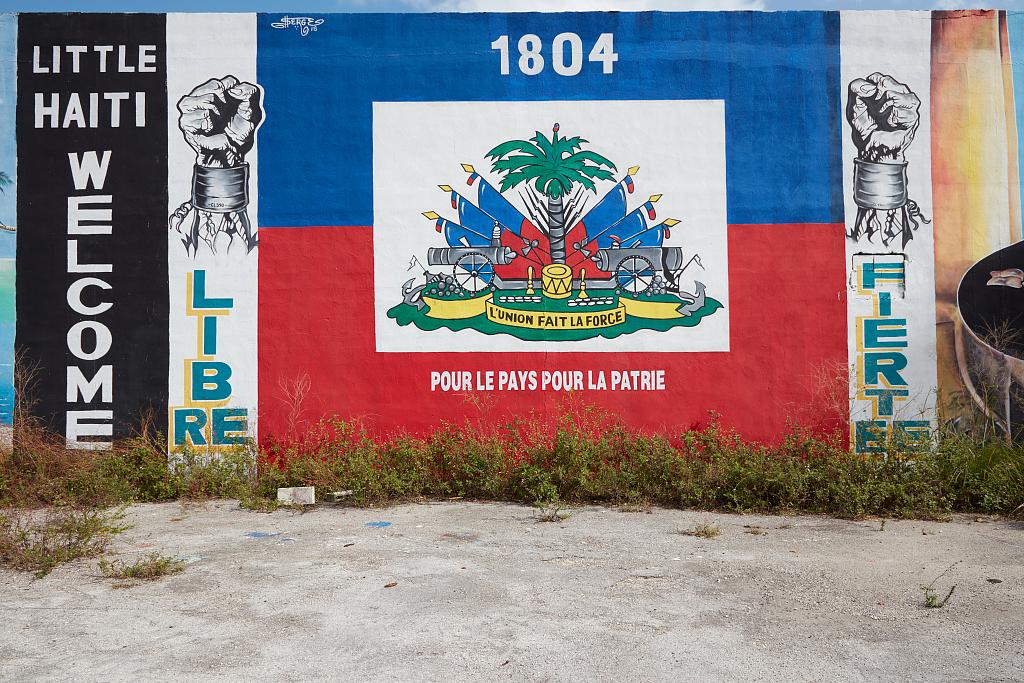
Little Haiti is a neighborhood that paints its history on its walls. The murals along NE 2nd Avenue and the side streets are not decoration added for visitors; they are the neighborhood's public memory, and they repay a slow walk.
The most photographed is the great welcome mural, a long, brightly colored wall that greets visitors with scenes of Haitian life, history, and landscape. A section of it honors Henri Christophe, the revolutionary general who became King Henri I of Haiti, in a portrait that pairs his image with the symbols of the country he helped to free. Elsewhere, murals honor Toussaint L'Ouverture, the general who led the Haitian Revolution — the only successful slave revolt in history, which made Haiti the world's first Black republic in 1804 — and celebrate the flag, the music, and the countryside of Haiti. A 13-foot bronze statue of General Toussaint L'Ouverture stands on North Miami Avenue at 62nd Street, a few blocks from the Cultural Complex, marking the neighborhood's main crossroads with the figure of the man Haitians call the father of their independence.
The street art is not confined to the famous names. Small shops paint their shutters and facades in the colors of the Haitian flag — blue and red — and botanicas, the shops that sell herbs, candles, oils, and religious goods for Vodou and folk Catholic practice, decorate their walls with vivid, devotional imagery. The decorative wall of the Twa Zom Fo Botanica is one of the most photographed in the neighborhood, and it is worth seeing for what it is: not a tourist attraction, but a working shop's expression of a living faith tradition, painted for the people who shop there. Look, admire, and photograph from the street; do not treat a place of worship or a family business as a backdrop.
In recent years, as Wynwood and the Design District to the south have become expensive, artists and galleries priced out of those neighborhoods have moved into Little Haiti and Little River, and the area has become an arts haven in its own right. That has brought new galleries, new murals, and new visitors — and new questions about who the art is for, which are part of the larger argument about the neighborhood's future.
Notre Dame d'Haiti: the church at the center
If the Cultural Complex is Little Haiti's living room, Notre Dame d'Haiti is its spiritual home. The Catholic church at 110 NE 62nd Street, in the heart of the neighborhood, describes itself as "the home of the Haitian community in the diaspora," and the claim is not an exaggeration. It was founded as a mission in the early 1980s, after Haitian Catholics in Miami had worshipped first at Corpus Christi and then at St. Mary's Cathedral, with a 4 p.m. Mass added for Haitians in 1977 and the Pierre Toussaint Haitian Catholic Center founded in 1980. The mission's first home was a school cafeteria; its community grew through the hardest years of the boat-people era, burying the drowned, defending the detained, and helping new arrivals find work, housing, and English classes.
The mission's long-serving pastor, the Rev. Reginald Jean-Mary, has led the parish since 2004. Under his leadership the community built its own church — a cream-colored, stained-glass-windowed building whose construction began in 2005 and picked up steam in 2011, dedicated on February 1, 2014, in a ceremony that filled the new 1,200-seat worship space, a 166-seat chapel, and the old 700-seat space beside it. It was, by the account of the Florida Catholic newspaper at the time, the first new building erected by and for the Haitian community in Miami, with an $87,000 Italian marble altar and 25 stained-glass memorial windows. The church's Pierre Toussaint Leadership and Learning Center, its social-services hub, offers free day care, job training, and language and technology classes. Masses are said in Kreyòl and French as well as English, and the singing — loud, joyful, and participatory — is famous well beyond the neighborhood. Visitors are welcome at Mass; come quietly, dress respectfully, and remember that you are a guest in a community's spiritual home, not an audience at a performance.
The food of NE 2nd Avenue
Haitian food is one of the great cuisines of the Caribbean, and Little Haiti is the best place in the United States to eat it. The main drag, NE 2nd Avenue, is lined with small restaurants, bakeries, and juice stands, and the food is the neighborhood's most accessible pleasure.
Start with griot: pork shoulder marinated in citrus, garlic, and Scotch bonnet pepper, then fried until crisp at the edges and tender inside, served with pikliz — a fiery, vinegary slaw of pickled cabbage, carrots, and peppers — and fried plantains and rice and beans. It is the dish to order if you order one dish. Alongside it, look for diri ak djon djon, rice cooked black with djon djon mushrooms; tassot, fried goat or beef; lambi, conch in a Creole sauce; and soup joumou, the pumpkin soup Haitians eat on New Year's Day, January 1, to mark the anniversary of independence in 1804 — a soup enslaved Haitians were forbidden to eat under French rule, and therefore a dish of freedom. Bakeries sell patties and sweet breads, and juice stands press sugarcane and tropical fruit to order.
The restaurants are mostly small, family-run, and unpretentious; longtime favorites along the avenue include Chef Creole and Naomi's Garden, and new places open regularly, including the Michelin-recognized Boia De, a sign of how the neighborhood's food scene is drawing attention from beyond it. Menus change, restaurants close and reopen, and no price is quoted here because none was verified against an official source in this run — check before visiting, and bring cash as well as a card, since some of the smallest places still prefer it. The point is not a single restaurant. It is the avenue itself, and the fact that a cuisine carried across the sea in the memories of refugees is now one of Miami's defining flavors.
Books, botanicas, and the life of the mind
A few doors from the Cultural Complex, at 5919 NE 2nd Avenue, stands one of the most important small rooms in American literature: Libreri Mapou, the Haitian bookstore founded by Jan Mapou — born Jean-Marie Denis in Les Cayes, Haiti, in 1941 — and the largest inventory of books on Haitian culture and history in the United States.
Mapou was a co-founder of the Haitian Creole movement in 1965, a group of writers, artists, and teachers who fought to make Kreyòl, the language most Haitians actually speak, the primary language of Haiti's schools. He was jailed under Papa Doc in 1969 for promoting the language, migrated to New York in 1972, moved to Florida in 1984, and founded the Miami chapter of Sosyete Koukouy (Society of Fireflies), a society of writers devoted to Haitian traditional culture, in 1985. In 1990 he rented a booth at the Caribbean Marketplace, set out 300 books from his own collection — history, folklore, religion, politics, romance, children's stories, mostly in Kreyòl — and opened Libreri Mapou, formally founded on April 6, 1990. The shop moved into its own storefront on NE 2nd Avenue and became a cultural center in its own right, hosting theater and choir performances, readings, meetings, Kreyòl classes, and the annual Little Haiti Book Festival, held in early May at the Cultural Complex in partnership with the Miami Book Fair and Sosyete Koukouy. Mapou, a recipient of Florida's Folk Heritage Award in 2007, has called the bookstore a step toward a larger dream: a cultural center where a library, a bookstore, and a theater can meet. It is still, by most accounts, the only Haitian bookstore in the nation, and it is the kind of place that makes a neighborhood a civilization rather than an address.
Around the bookstore, the avenue's other small shops tell the rest of the story: botanicas selling herbs and candles; thrift shops and fabric stores; barbershops and beauty salons where Kreyòl is the language of the day; fruit stands; and galleries showing Haitian painting, with its bright colors and its scenes of market days, mountains, and Vodou lwa. The shops are not curated for visitors. They are the neighborhood's supply chain, and browsing them respectfully — buying something, asking a question, listening to the answer — is the best way to understand what Little Haiti is for.
Flag Day, Heritage Month, and the calendar of celebration
The best time to visit Little Haiti is May. The month is Haitian Heritage Month in the United States — a celebration that began in Palm Beach County in 2001 and marked its 25th annual observance in 2025 — and in Little Haiti it is a full month of music, food, books, dance, and theater, centered on the Cultural Complex.
Its heart is Haitian Flag Day, May 18, the anniversary of the creation of the Haitian flag in 1803, on the eve of independence. In Little Haiti, Flag Day is marked by flag-raising ceremonies, performances at churches and parks, and remarks from civic leaders and historians, and the Sounds of Little Haiti concert on the third Friday of May is the month's biggest night, with konpa bands, rara processions, and street performers filling the Cultural Complex courtyard. The Little Haiti Book Festival, held in early May at the Complex and the Marketplace, brings Haitian authors, storytelling, and children's programs to the neighborhood. The Chefs of the Caribbean brunch, Caribbean Market Days, Creole-language theater, and folkloric dance fill out a calendar that runs all month.
Come in May if you can, and come on a third Friday if you can manage it. But do not treat the neighborhood as a festival that only exists in May. The market, the church, the bookstore, and the restaurants are there all year, and a quiet Tuesday in February, when the avenue belongs to its residents, is as true a picture of Little Haiti as the loudest night of Flag Day.
Gentrification, Magic City, and the fight to stay
No honest account of Little Haiti can end with the food and the festivals. The neighborhood is under the most sustained development pressure of any community in Miami, and the argument over its future is the most important story in Little Haiti today. It deserves to be told factually, and without taking a side for the reader.
The pressure has several sources, and they interact. Little Haiti sits on relatively high ground — the Caribbean Marketplace area is about 13 feet above sea level — on a limestone ridge close to downtown, at a moment when coastal land is becoming more expensive to insure and develop. Some journalists and scholars have called what is happening "climate gentrification": the idea that buyers and developers are moving inland to higher ground in anticipation of sea-level rise. A recent University of Miami study, however, found a more complicated picture: that the shift is driven largely by ordinary development economics — cheaper land, higher expected returns — with flood-insurance costs playing a role, and that few homebuyers cite climate fear directly. The label is contested; the pressure is not.
The largest single project is the Magic City Innovation District, a mixed-use development planned for roughly 18 acres in Little Haiti, first proposed in the 2010s and approved by the Miami City Commission in 2019. Press reports describe it as a multi-billion-dollar project of residential towers, offices, a hotel, and retail, led by Dragon Global and Plaza Equity Partners. It has drawn controversy and protests since it was first proposed, driven by fears of displacement and rising rents in one of Miami's last affordable neighborhoods. As part of the 2019 approval, the developers pledged $31 million in payments over 30 years to the Little Haiti Revitalization Trust, a city-created agency that funds neighborhood investment, small-business support, home repairs, and affordable housing; the Trust was established by city ordinance in 2019, and its money is already being used for small-business and home-rehab grants, a home-ownership program, and scholarships, according to its director. As of October 2026, the project had still not broken ground on its first phases, and new proposals — two rental towers with 553 units on NE 60th Street — were approved with conditions by the city's Urban Development Review Board in October 2026. Other large projects are planned nearby, and more than 10,000 apartments and over a million square feet of commercial space have been proposed between NW 75th and NE 54th Streets in the coming years, according to reporting on the area.
Residents and organizers are not passive in this story. The campaign that won official recognition in 2016, the fight that saved the Caribbean Marketplace, the Revitalization Trust, the Little Haiti Ecodistrict founded in 2017, and the bookstore's long stand against displacement are all part of the same effort: to make sure that the people who built Little Haiti benefit from its future rather than being priced out of it. The neighborhood's median household income has long been well below Miami's, and its housing stock — small homes, duplexes, and low-rise apartments — is among the city's most affordable, which is precisely why it is both vulnerable and valuable. What happens here in the next decade will answer a question every American city is asking: can a neighborhood become more valuable without losing the people who made it valuable? Little Haiti's answer is still being written, and the people writing it are the ones who live there.
How to visit
Little Haiti rewards a slow, on-foot visit, and it punishes a rushed one. Start at the Little Haiti Cultural Complex and the Caribbean Marketplace, at 5925 NE 2nd Avenue, and give them an unhurried hour: the galleries, the market stalls, the courtyard, and the murals outside. Walk north on NE 2nd Avenue past Libreri Mapou at 5919 NE 2nd Avenue, the restaurants and botanicas, and the welcome mural, and east to North Miami Avenue and 62nd Street for the Toussaint L'Ouverture statue. Stop at Notre Dame d'Haiti at 110 NE 62nd Street, and look in — quietly — if a service is not in progress. Eat on the avenue. Buy a book at Libreri Mapou, or a piece of art at the Marketplace, and you will have done more for the neighborhood than any amount of looking.
Come by car or rideshare; the neighborhood is about five miles north of downtown Miami, and public transit exists but is slower than driving. Street parking is generally available on the avenue and side streets. Allow a half day if you want to walk the avenue properly, eat, and visit the Complex and the bookstore, and a full evening if you are coming for a third-Friday Sounds of Little Haiti concert. No fixed admission, menu price, or opening hours are stated in this article, since none was verified against an official source in this run: the Cultural Complex, the Marketplace, the bookstore, and the restaurants keep their own hours, and market days and concert schedules vary by season, so check before visiting for current hours, prices, and event details. Come with respect, with curiosity, and with an appetite, and Little Haiti will do the rest.
Location Photography


Key Facts
- Little Haiti (Kreyòl: Ti Ayiti; French: La Petite Haïti) is a neighborhood of Miami, Florida, home to the Haitian community of South Florida; Greater Miami is the largest home of the Haitian diaspora, with about half a million Haitians living in Florida.
- The area was first settled after the Civil War as Lemon City, founded in part by Bahamian immigrants; a post office named "Motto" existed by 1889, the name became Lemon City by 1893, and a school opened in 1890. The Florida East Coast Railway's arrival in Miami in 1896 overshadowed it.
- Haitians began settling in Lemon City and Little River in large numbers in the late 1970s and early 1980s, fleeing the Duvalier dictatorships (François "Papa Doc" Duvalier, in power from 1957, and his son Jean-Claude "Baby Doc," driven out in 1986). Roughly 60,000 Haitians arrived in the Miami area in that period, many by boat; about 25,000 arrived in 1980, the year of the Mariel boatlift. Many were detained, including at the Krome Detention Center, and denied refugee status.
- Viter Juste, a Haitian businessman, activist, and community leader, proposed the name "Little Port-au-Prince" in a letter to the Miami Herald in the late 1970s; Herald editors shortened it to "Little Haiti," and the name stuck. Residents also call the neighborhood Ti Ayiti.
- On May 26, 2016, the Miami City Commission voted to designate Little Haiti as an official neighborhood, with boundaries roughly NE 54th Street on the south, Interstate 95 on the west, the city boundary near NW/NE 79th and 80th Streets and the Little River on the north, and NE 2nd and 4th Avenues on the east. The designation overlapped historic Lemon City and ceded southern territory to the Design District. The 10th anniversary was marked in 2026.
- The Caribbean Marketplace (Mache Ayisyen), at 5925 NE 2nd Avenue, is a 9,000-square-foot open-air market designed by architect Charles Harrison Pawley as a modern replica of Port-au-Prince's Iron Market, in Haitian gingerbread style. The City of Miami took control of it in 2005 and demolition was considered; activists preserved it.
- The Little Haiti Cultural Complex, next door to the Marketplace, is an arts center and museum with galleries, a 300-seat proscenium theater, dance studios, and classrooms. It hosts Sounds of Little Haiti on the third Friday of each month; the series began as Big Night in Little Haiti in March 2011.
- Notre Dame d'Haiti Catholic Church, at 110 NE 62nd Street, was founded as a mission in the early 1980s; its new church, the first new building erected by and for the Haitian community in Miami, was dedicated on February 1, 2014. The Rev. Reginald Jean-Mary has led the parish since 2004. Its Pierre Toussaint Leadership and Learning Center offers free day care, job training, and language and technology classes.
- Libreri Mapou, at 5919 NE 2nd Avenue, was founded on April 6, 1990, by Jan Mapou (Jean-Marie Denis, born in Les Cayes, Haiti, in 1941), a co-founder of the Haitian Creole movement in 1965. He began with a booth of 300 books at the Caribbean Marketplace in 1990; the shop holds the largest inventory of books on Haitian culture and history in the United States. Mapou received Florida's Folk Heritage Award in 2007.
- A 13-foot bronze statue of General Toussaint L'Ouverture, leader of the Haitian Revolution, stands on North Miami Avenue at 62nd Street. Haiti became the world's first Black republic in 1804, after the only successful slave revolt in history.
- Haitian Heritage Month is observed in May; Haitian Flag Day is May 18, marking the creation of the Haitian flag in 1803. The Little Haiti Book Festival is held in early May at the Cultural Complex.
- The Magic City Innovation District, a mixed-use project planned for roughly 18 acres in Little Haiti, was approved by the Miami City Commission in 2019. Its developers pledged $31 million over 30 years to the Little Haiti Revitalization Trust, created by city ordinance in 2019. As of October 2026, new phases — two rental towers with 553 units on NE 60th Street — had been approved with conditions, and the project had not yet broken ground.
- The neighborhood covers about 3.5 square miles; its population was 29,760 in the 2010 Census. The Caribbean Marketplace area sits about 13 feet above sea level.
- Coordinates: 25.8205, -80.1920 (Little Haiti Cultural Complex area).
Visitor Details
Address: Little Haiti Cultural Complex and Caribbean Marketplace, 5925 NE 2nd Avenue, Miami, FL 33137 (NE 2nd Avenue around NE 59th–62nd Streets). Notre Dame d'Haiti Catholic Church, 110 NE 62nd Street, Miami, FL 33137. Libreri Mapou, 5919 NE 2nd Avenue, Miami, FL 33137. Toussaint L'Ouverture statue, North Miami Avenue at 62nd Street.
Transit: About five miles north of downtown Miami, adjacent to the Design District and Wynwood. Come by car or rideshare; street parking is generally available on NE 2nd Avenue and side streets.
Hours/Admission: No fixed admission, menu price, or opening hours are stated in this article, since none was verified against an official source in this run. The Cultural Complex, Caribbean Marketplace, Libreri Mapou, and restaurants keep their own hours, and market days and concert schedules vary by season — check before visiting for current hours, prices, and event details. Sounds of Little Haiti is held on the third Friday of each month at the Cultural Complex; Haitian Flag Day is May 18.
Best timing: Allow a half day to walk NE 2nd Avenue, visit the Cultural Complex and Marketplace, and eat; allow a full evening for a third-Friday Sounds of Little Haiti concert. May, Haitian Heritage Month, is the liveliest time to visit.