A Building Older Than the Restaurant, Older Than the Republic
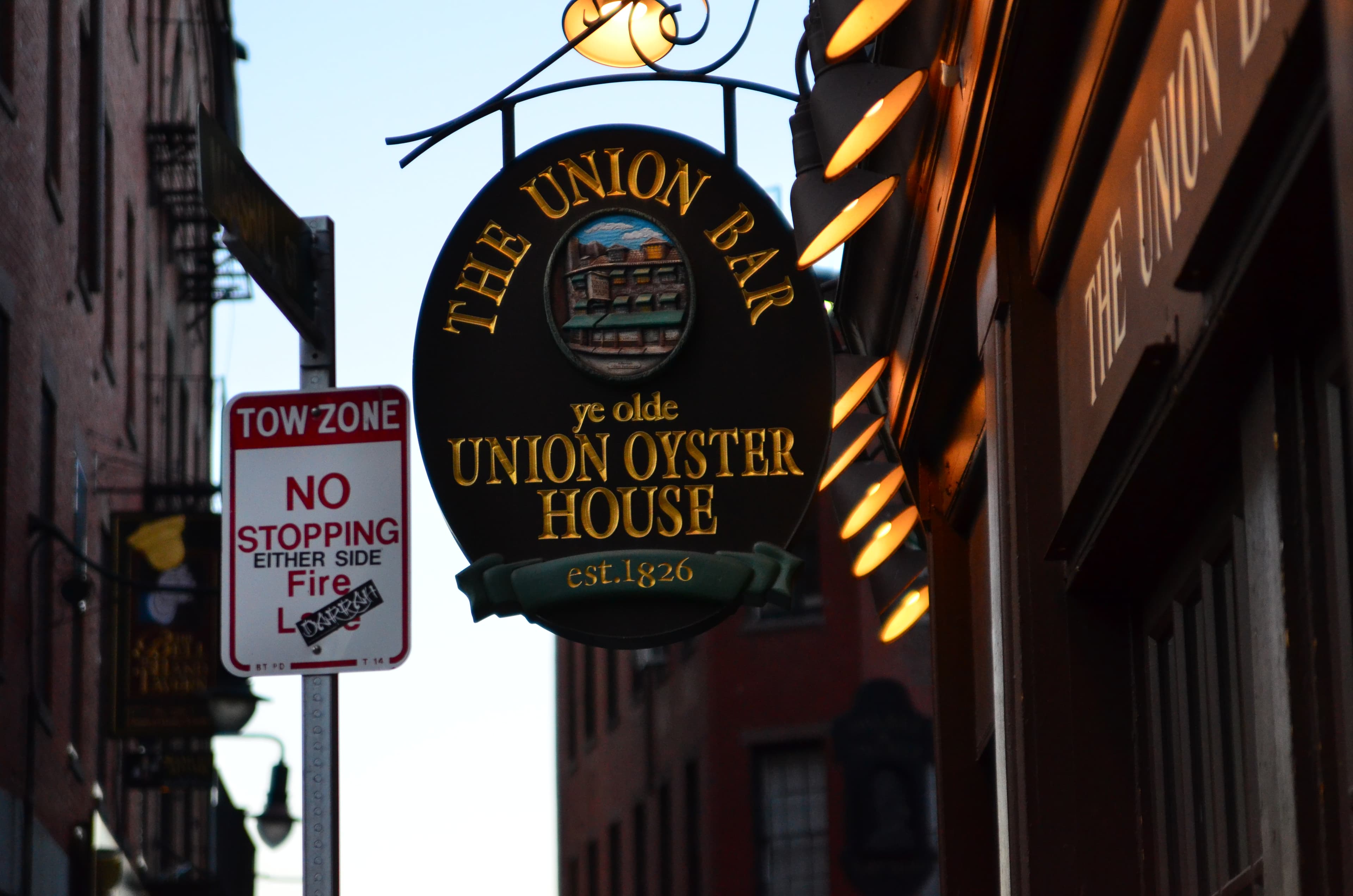
The Union Oyster House was already ancient when the first oyster was shucked in it. The brick building at 41–43 Union Street, in the crooked lanes of the Blackstone Block, was completed around 1716, and its odd angled front still follows the bends of two colonial streets at once — two bays along Marshall Street, three along Union. In 1742 it was Hopestill Capen's dry-goods shop, "At the Sign of the Cornfields," importing goods from London. In 1771 the printer Isaiah Thomas moved his newspaper, the Massachusetts Spy, to the second floor and made it a voice of the coming Revolution; during the war, Ebenezer Hancock, the Continental Army's first paymaster general, used the building as his headquarters. In 1796 the upstairs rooms sheltered a tenant with a future: Louis Philippe, the exiled Duke of Orléans, who would become King of the French, supported himself in Boston by giving French lessons to young women in what is now the restaurant's Pine Room. A building that has housed a patriot newspaper, a paymaster, and a king-in-exile might have rested on its laurels as a museum. Instead, on October 7, 1826, the Atwood & Bacon Oyster House opened on the ground floor — and it has not closed since.
1826: The Bar That Has Never Moved
To understand the opening, forget white tablecloths. In the 1820s the oyster was America's fast food — cheap, plentiful, and eaten standing up, by everyone from stevedores to senators. What the Atwoods installed in 1826 was the machine for eating them: a semicircular oyster bar of oak (possibly mahogany), its inner well first soapstone and later sheathed in copper, with the shuckers working inside the curve and the customers bellied up around it. That bar still stands in its original position, and the room around it — low ceilings, dark wood, booths in the old stalls — is essentially the room Bostonians have eaten in for two hundred years. The business stayed in the Atwood family until 1913, when the Fitzgerald family bought it and gave it the name it carries today, taken from Union Street outside. The Greaves brothers followed in 1940, and in 1970 the Milano family took over, expanding into the neighboring buildings on both sides over the following decades. In 2003 the original building was designated a National Historic Landmark — a rare honor for a restaurant — and in March 2026 the house celebrated its 200th anniversary, still plating an estimated 60,000 plates of oysters a year, as it has at roughly that pace for a decade.
Webster's Six Plates, and the Great Toothpick Caper
The bar's first celebrity regular set an impossible standard. Daniel Webster — senator, Secretary of State, the most famous orator in America — made the Union Oyster House his Boston headquarters and is reliably reported to have put away at least six plates of oysters at a sitting, washing them down at his place at the bar. The house has been coasting happily on his appetite ever since. The restaurant's other claim on American history is smaller, sharper, and pointed at both ends. Around 1890, a Maine entrepreneur named Charles Forster began importing wooden toothpicks from South America and needed to create a market for a product Americans didn't know they wanted. By the house's well-loved account, Forster hired Harvard students, dressed them well, seated them at the Union Oyster House — then as now, a place where Boston watched itself dine — and had them demand toothpicks, loudly, at the end of the meal. Other diners, unwilling to seem behind the fashion, began asking for them too. The restaurant started setting toothpicks out on small trays after meals, restaurants across the country copied the ritual, and Forster's market was made. It is a perfect piece of Boston theater: the toothpick's American debut, stage-managed in the city's most visible dining room.
Upstairs: A King's Room and a Kennedy's Booth
Climb the stairs and the restaurant turns into a family album. The second floor's Pine Room, with its original corner fireplace, is the room where Louis Philippe lived and taught in 1796. But the pilgrimage seat is a high-backed booth that John F. Kennedy claimed as his own. As a young congressman and then senator, Kennedy — whose family were longtime regulars — would come in on Sundays, settle into the upstairs booth, and work through the newspapers over his favorite meal. After his assassination, the booth became a shrine by acclamation; a plaque now marks it, and it remains the most requested seat in the house, kept as it was rather than roped off, so that diners still eat where he ate. That doubleness is the whole charm of the place. The Union Oyster House is not a replica of a historic restaurant. It is a historic restaurant that never got around to stopping — the same building, the same bar, the same trade, with each generation of famous appetites simply layering itself onto the last. Webster at the bar downstairs, a king and a president upstairs: the walls did not have to be decorated with history. They accumulated it.
Still Serving: Two Hundred Years Without Closing
Continuity at this scale is not an accident; it is a discipline. The menu is a museum you can eat from — oysters on the half shell from the raw bar, the clam chowder that has anchored Boston cooking for generations, lobster, scrod, and the rest of the New England canon, finished with Boston cream pie in the city that invented it — and the house has resisted every era's temptation to reinvent it. The wider world keeps confirming the formula: the World Culinary Awards named it North America's Best Landmark Restaurant, most recently in 2025. In August 2026, a few months after the bicentennial, the Milano family — owners since 1970 — sold the restaurant to the Fertitta family of Texas, who pledged to keep the staff, the menu, and the traditions exactly as they found them. It was, in its way, the most Boston possible outcome: a two-century-old institution changing hands on the explicit condition that nothing visible changes at all. Presidents will keep coming, presumably. The bar will keep shucking. The building on its bent colonial corner has now fed five generations of one family of owners' customers and shows no sign of developing an exit strategy.
Eating in a Landmark
Practical advice for a place like this begins with a choice of centuries. Downstairs, take a seat at the semicircular oyster bar itself if one opens — it is the oldest seat in American restaurant history, and the shuckers work a few feet from your plate, close enough to quiz about the day's oysters. Upstairs, ask whether the Kennedy booth is free; it often isn't, but it is worth the ask, and the dining rooms around it carry the same dark-wood, low-beamed 18th-century atmosphere. Expect Freedom Trail crowds at lunch and tour groups in season; the room handles them with the briskness of long practice. Reservations are accepted and genuinely useful at dinner and on weekends. The location does quiet double duty: the New England Holocaust Memorial's glass towers stand directly across Congress Street, Faneuil Hall is a block away, and the red line of the Freedom Trail runs past the front door, so the restaurant folds naturally into a day of downtown historic sites — as it has, in truth, since before the Trail existed. Come hungry, order the chowder and a plate of oysters at minimum, and remember to ask for a toothpick afterward. In this room, of all rooms, it is a historically appropriate request.
Key Facts
- Opened October 7, 1826, as the Atwood & Bacon Oyster House, in a brick building completed around 1716 — making it the oldest restaurant in the United States known to have operated continuously, in one of Boston's oldest surviving buildings.
- The original semicircular oyster bar, installed in 1826, still stands in its original position; Daniel Webster, a regular, was known for eating at least six plates of oysters at a sitting.
- Around 1890, importer Charles Forster is believed to have launched the toothpick in America here, hiring Harvard students to dine at the restaurant and loudly demand toothpicks until other diners copied them.
- Before it was a restaurant, the building housed Hopestill Capen's dry-goods shop (1742), Isaiah Thomas's revolutionary newspaper the Massachusetts Spy (1771), and, in 1796, the exiled future King Louis Philippe of France, who lived and taught French upstairs.
- An upstairs booth marked with a plaque was John F. Kennedy's favorite seat as a congressman and senator; the Kennedy family were longtime regulars.
- Designated a National Historic Landmark in 2003; celebrated its 200th anniversary in March 2026, and was sold that August by the Milano family (owners since 1970) to the Fertitta family, who pledged to keep operations unchanged.
Visitor Details
Address: Union Oyster House, 41 Union Street, Boston, MA 02108 — in the Blackstone Block on the Freedom Trail, one block from Faneuil Hall and directly across from the New England Holocaust Memorial.
Transit: Government Center station (Blue and Green Lines) is a two-minute walk; Haymarket (Orange and Green Lines) is nearly as close. Follow the restaurant's own directions: from Government Center, walk down the steps beside City Hall and cross Congress Street. Driving is possible but downtown parking is scarce and pricey; the T is the sane option.
Hours/Admission: There is no admission — it is a working restaurant, and you pay for what you eat. Current posted hours are Monday–Thursday and Sunday, 11 am to 9 pm, and Friday–Saturday, 11 am to 10 pm (per the restaurant's listings, checked before writing; confirm on unionoysterhouse.com, as hours shift seasonally). Reservations are accepted and recommended for dinner and weekends; the ground-floor oyster bar is first-come seating.
Best timing: Arrive for an early lunch on a weekday, around 11 am, to have a real shot at a seat at the historic oyster bar and a quieter room; later lunches in season draw Freedom Trail tour groups. If the Kennedy booth matters to you, mention it when you reserve — and accept with grace if Webster's ghost, or a bus tour, got there first.
Location Photography