The oldest house in downtown Boston
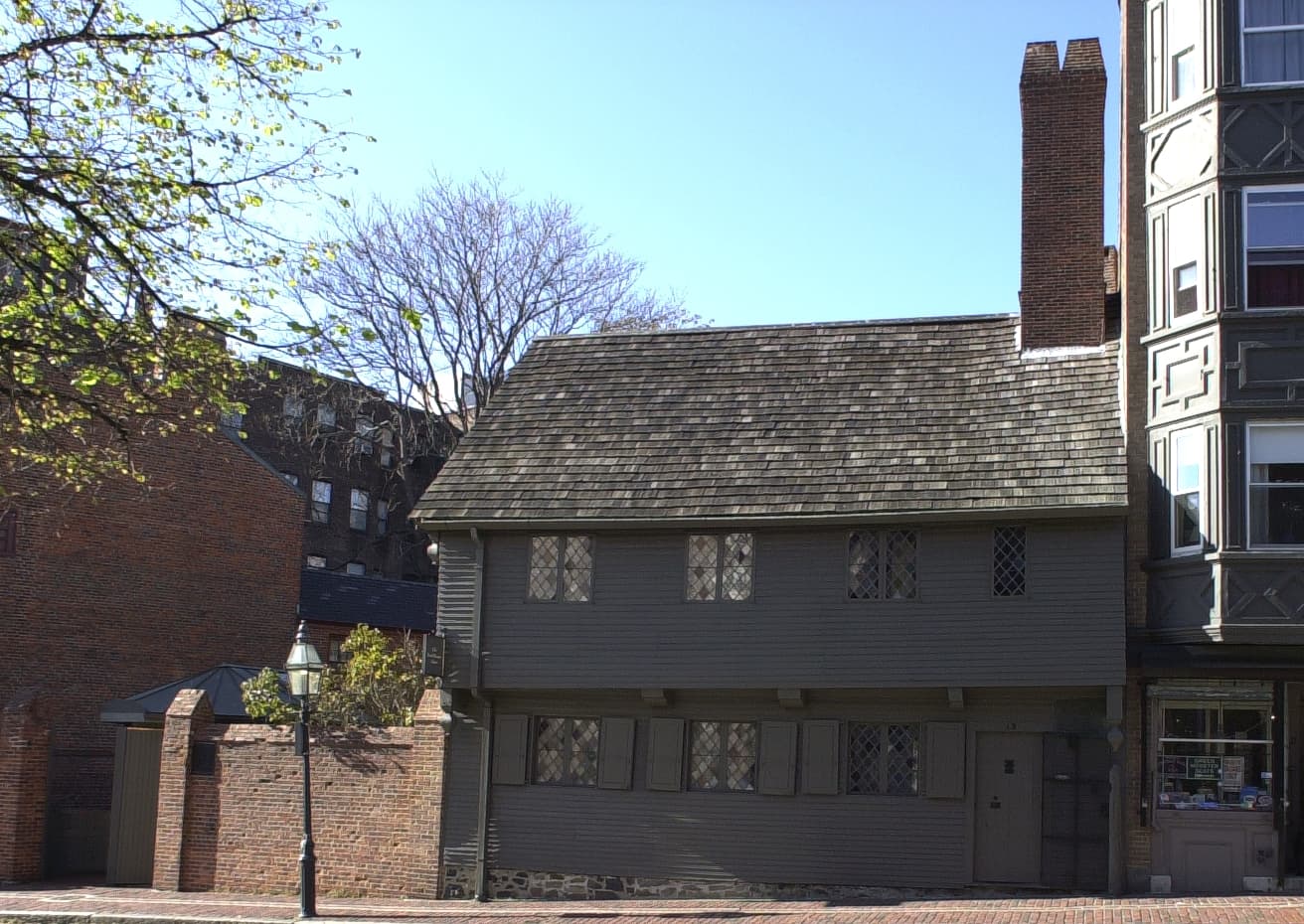
Stand in North Square, in the heart of Boston's North End, and one building looks visibly older than everything around it. Its neighbors are brick apartment blocks from the late nineteenth and early twentieth centuries, built for the immigrant families who made this neighborhood famous for its Italian restaurants and pastry shops. The Paul Revere House is made of wood. Its second story juts out over the sidewalk, its windows are small casement panes set in diamond-shaped leaded glass, and its steep roofline belongs to another century entirely — because it does. Built around 1680, this is the oldest surviving building in downtown Boston, and one of the few seventeenth-century houses still standing in any large American city.
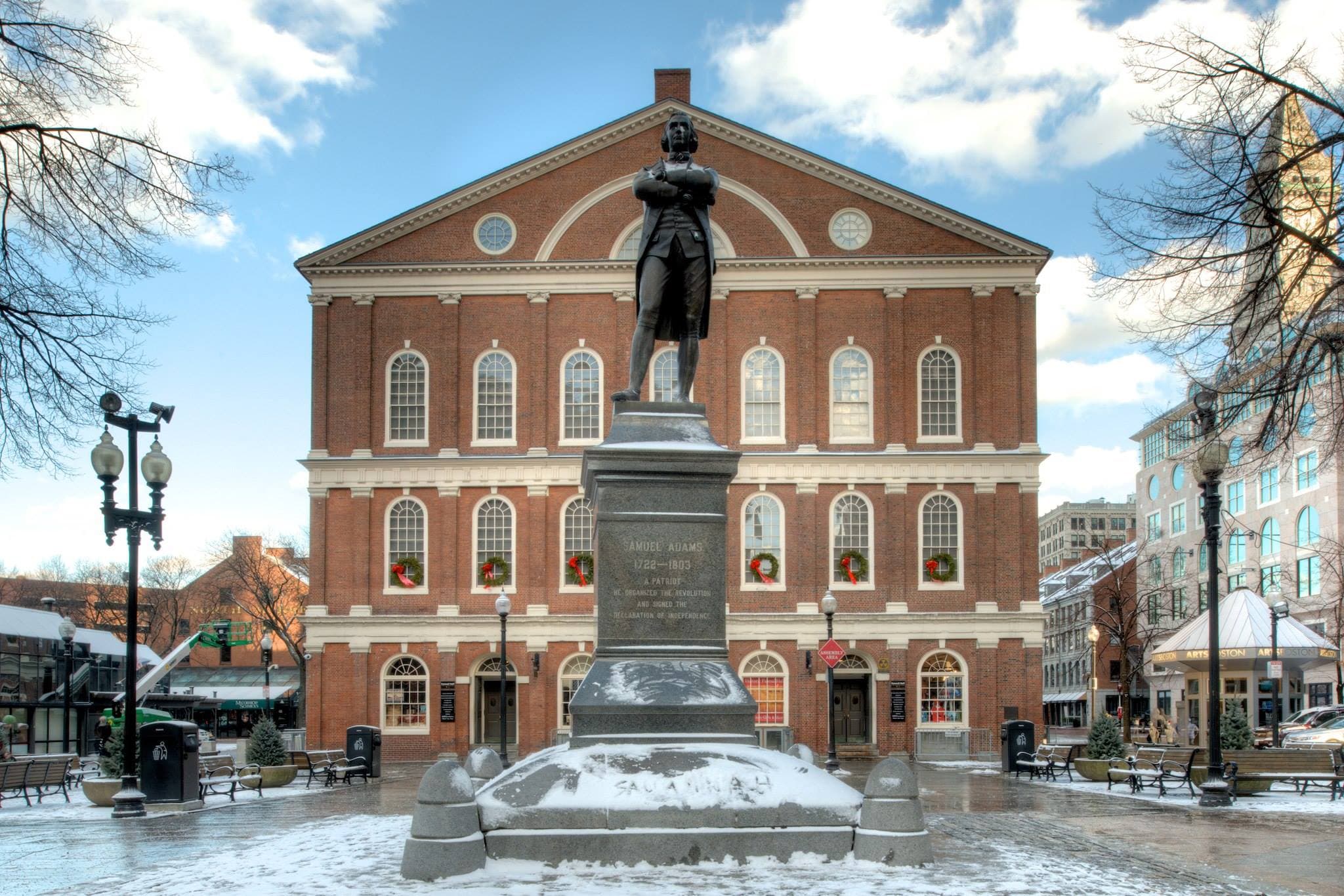
It is also the only private home on the Freedom Trail, the red-brick line that connects sixteen historic sites across downtown Boston. Walk the trail from Faneuil Hall toward the Old North Church and you pass directly through North Square, where the house waits with its dark clapboards and its overhanging upper floor. The effect is startling: a fragment of Puritan Boston, preserved in the middle of a neighborhood that has been rebuilt around it several times over. That survival was not an accident. It took a rescue, a restoration, and more than a century of museum-keeping to get this house from the edge of demolition to the landmark it is today.
A house built on a parsonage's ashes
The ground under the house has a history of its own. The first building on this lot was the parsonage of Boston's Second Church, built by the merchant Anthony Chickley and sold to the church in 1670. Its most famous resident was Increase Mather, the church's minister, who lived there with his family — including his son Cotton Mather — until the house burned in the great Boston fire of November 27, 1676. Mather's library of more than a thousand volumes was largely saved from the flames, but the house itself was gone.
Within a few years, a fashionable new townhouse rose on the same spot. Its earliest known owner was Robert Howard, a wealthy merchant, who purchased the property and its existing dwelling in November 1681. The house Howard owned was large for its time: a timber-frame building with a steep pitched roof, a massive central chimney, and the feature that still defines its face today — a second story that overhangs the street, a Dutch-influenced design that gave the upper rooms extra space without taking more of the lot. A rear wing was added early on, giving the house its L-shaped footprint, and the lot line itself ran at an oblique angle to the street, which is why the building sits slightly askew to the square.
Howard's family held the house for decades, and it passed through a string of owners — a sailor named Andrew Knox, then the speculator John Erving, who took possession when Knox's son defaulted on a mortgage in 1763. By then, wooden houses like this one had fallen out of fashion in Boston, where brick was the material of choice for anyone who could afford it. The house on North Square was old, unfashionable, and, to a casual buyer, unremarkable. That is exactly why it survived: nobody important enough to rebuild it wanted it, until a thirty-five-year-old silversmith did.
The Revere years: a craftsman, sixteen children, and a revolution
Paul Revere bought the house from John Erving on January 13, 1770, for just over 213 Massachusetts pounds. It was a stretch: Revere earned about 85 pounds a year as a craftsman and had roughly 20 pounds in savings, so he took out a mortgage that he would eventually repay in full. He moved in with his first wife, Sarah, their five children, and his mother. More children followed — most of Revere's sixteen children were born in this house — and after Sarah died in 1773, Revere married Rachel Walker later that same year. At no point did more than seven children live under the roof at once; some died young, others moved out as they grew up, but the house was never quiet and never spacious.
Revere was not yet the legend of the schoolbooks. He was a working artisan: a silversmith and engraver, a maker of bells and, later, cannon, a man who also worked as a dentist on the side. His shop was elsewhere, but the house was the center of his family life and his political life. On March 6, 1771, the first anniversary of the Boston Massacre, he hung pictures of the massacre from his windows, and he repeated the display on later anniversaries. He took part in the Boston Tea Party while living here. And as the crisis with Britain deepened, the house became a staging point for the network of riders, signal-keepers, and Sons of Liberty members who would carry the alarm to the countryside.
Inside, the house is arranged as it was in Revere's day: two rooms on each floor, with fireplaces, plasterwork, and woodwork details that survived the centuries, and furniture that belonged to the Revere family. The kitchen sits in the rear wing, where cooking happened over an open hearth. It is a modest interior, and that modesty is the point. This was not the home of a Boston grandee; it was the home of a skilled tradesman who lived close to his work, his neighbors, and the political arguments of his street.
The midnight ride — and what the poem got wrong
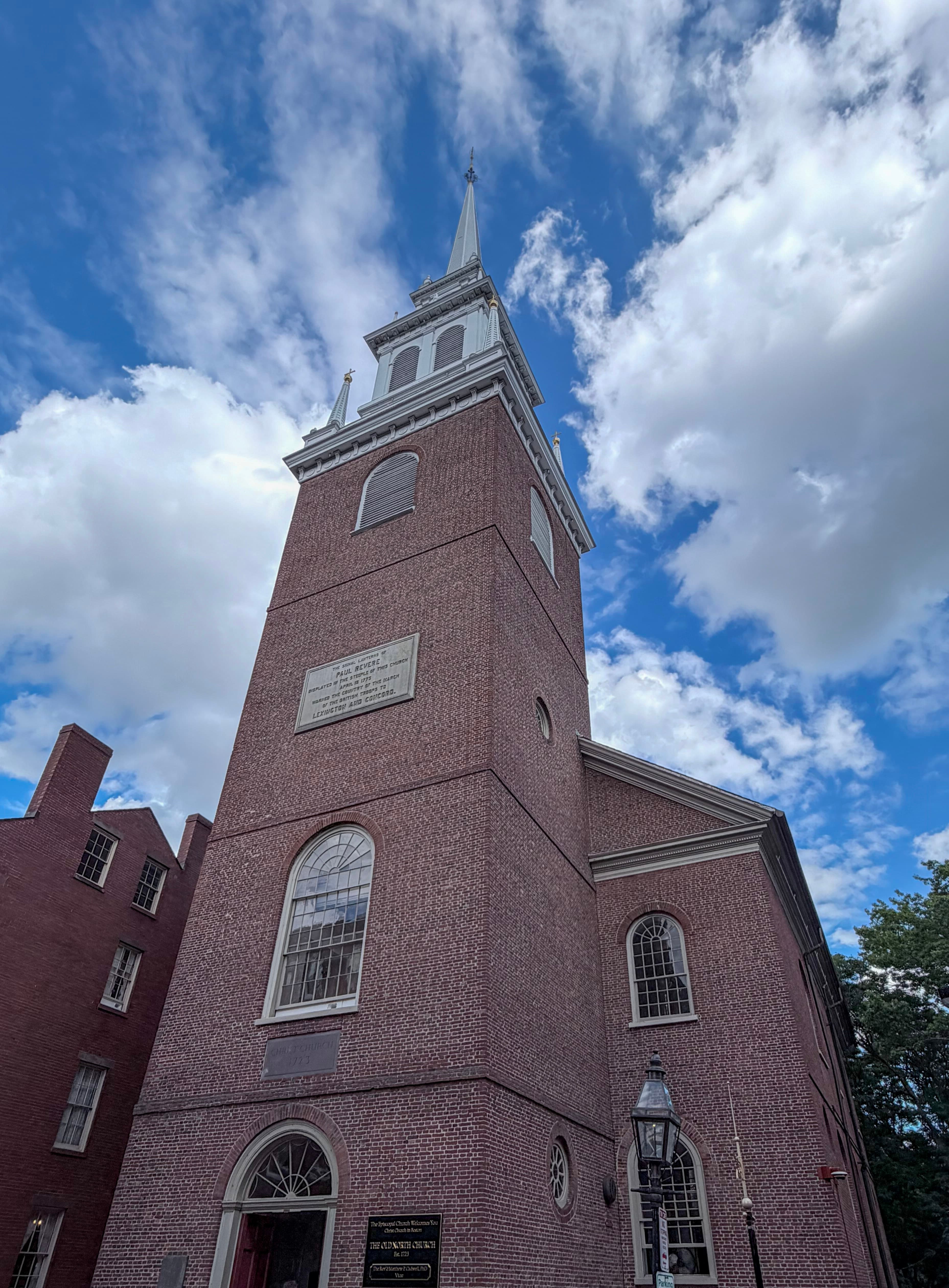
On the night of April 18, 1775, Paul Revere left this house and rode toward Lexington to warn John Hancock, Samuel Adams, and the colonial militia that British troops were marching out of Boston to seize arms stored at Concord. The signal for the route — "one if by land, two if by sea" — had been arranged in advance, and two lanterns hung in the steeple of the Old North Church, a few minutes' walk from North Square, told the riders waiting across the Charles River that the British were crossing by water.
That is the true core of the story, but much of what people remember comes from Henry Wadsworth Longfellow's poem "Paul Revere's Ride," published in 1860, eighty-five years after the event. Longfellow turned a group effort into a solo epic. Revere did not ride alone: William Dawes rode by a different route, and Samuel Prescott, a young doctor from Concord who happened to meet the riders on the road, was the one who actually reached Concord after Revere was captured by a British patrol in Lincoln. Revere never shouted "The British are coming!" — as a secret messenger traveling through countryside patrolled by British soldiers, shouting would have been absurd, and the colonists themselves were British subjects who would have called the soldiers "the Regulars." The poem made Revere a national icon and made his house a place of pilgrimage, but the real story, told in the museum in Revere's own words, is better: a network of ordinary people, moving fast, in the dark, on a plan they had rehearsed.
The family did not stay to see the war's end from North Square. During the British siege of Boston in 1775, the Reveres evacuated the town, taking their belongings with them. Revere moved out of the house for good in May 1780, settling on Charter Street around the corner, and rented the North Square house to tenants. He finally sold it in 1800, to a trader named John Hunting, who owned it for a single day before passing it on. The house that had launched a legend was, once again, just a building.
Tenement, shops, and a rescue
The nineteenth century was hard on the house. The North End filled with immigrants, and the old timber house was carved into a tenement, its upper floors lodging sailors and working families while its ground floor cycled through shops: a candy store, a cigar factory, a bank, a fruit shop. A third floor had been added in the eighteenth century, changing the roofline, and the original seventeenth-century appearance was buried under alterations. By the turn of the twentieth century, the building was run down and slated for demolition.
The rescue came from within the family. In 1902, John P. Reynolds Jr., Paul Revere's great-grandson, bought the house to save it from the wrecking ball. He and a committee of descendants, antiquarians, and civic leaders formed the Paul Revere Memorial Association, which took ownership in 1907 and hired the restoration architect Joseph Chandler. Chandler stripped away the later additions — including the third floor — and restored the house to its seventeenth-century appearance, using the surviving original fabric as his guide. Remarkably, about ninety percent of the structure is original to the 1680 building. When the house opened to the public in April 1908, it was one of the first historic house museums in the United States.
The honors followed. The house was designated a National Historic Landmark in 1961, added to the National Register of Historic Places in 1966, and is today part of Boston National Historical Park. The museum complex has grown around it: the brick Pierce–Hichborn House next door, built around 1711 and once home to Revere's cousin Nathaniel Hichborn, is part of the site, and a visitor and education center opened in 2016 in two neighboring row houses, connected to the main house by an elevated walkway. In the courtyard between the buildings sits a 900-pound bronze bell cast by Revere himself, alongside period plantings that recall the garden the family would have known.
Visiting the house today
A visit begins where Revere's own story begins: in the street, looking up at the overhanging second story and the diamond-paned windows, before stepping into rooms furnished as a colonial craftsman's home would have been. Guides and displays trace the full arc — the Mather parsonage that burned, the merchant's townhouse, the crowded family home, the tenement years, and the restoration — rather than just the night of the ride. The courtyard and the Pierce–Hichborn House extend the story beyond one family to the whole North End block.
Come as part of a Freedom Trail walk, and the house falls naturally between Faneuil Hall and the Old North Church, two stops that bookend the ride's beginning: the hall where Boston argued, the church whose lanterns signaled, and the house where the rider lived. Afterward, the North End itself is the reward — narrow streets, bakeries, and cafés that make this the most walkable historic neighborhood in Boston. The house is small, and a visit does not take long, but it reframes the whole Revolution as something that happened in a real family's rooms, on a real street, in a house you can still walk through.
Key Facts
- The Paul Revere House was built around 1680 on the site of the Second Church of Boston's parsonage, which burned in the great fire of November 27, 1676.
- Its first known owner was the merchant Robert Howard, who purchased the property and its dwelling in November 1681.
- It is the oldest surviving building in downtown Boston and one of the few remaining seventeenth-century houses in a large American city.
- Paul Revere bought the house on January 13, 1770, for just over 213 Massachusetts pounds, and owned it until 1800.
- Revere set out on his midnight ride to Lexington on the night of April 18, 1775, from this house; the "two if by sea" lantern signal came from the nearby Old North Church.
- Most of Revere's sixteen children were born in the house, though no more than seven lived there at any one time.
- After Revere sold it, the house became a tenement and its ground floor housed shops including a candy store, a cigar factory, and a bank.
- In 1902, Revere's great-grandson John P. Reynolds Jr. bought the house to save it from demolition; the Paul Revere Memorial Association restored it under architect Joseph Chandler and opened it as a museum in April 1908, one of the earliest historic house museums in the United States.
- The house was designated a National Historic Landmark on January 20, 1961, and added to the National Register of Historic Places on October 15, 1966.
- The museum complex includes the neighboring Pierce–Hichborn House (built around 1711), a 900-pound bronze bell cast by Revere in the courtyard, and a visitor center opened in 2016.
Location Photography