The museum that taught museums to let children touch
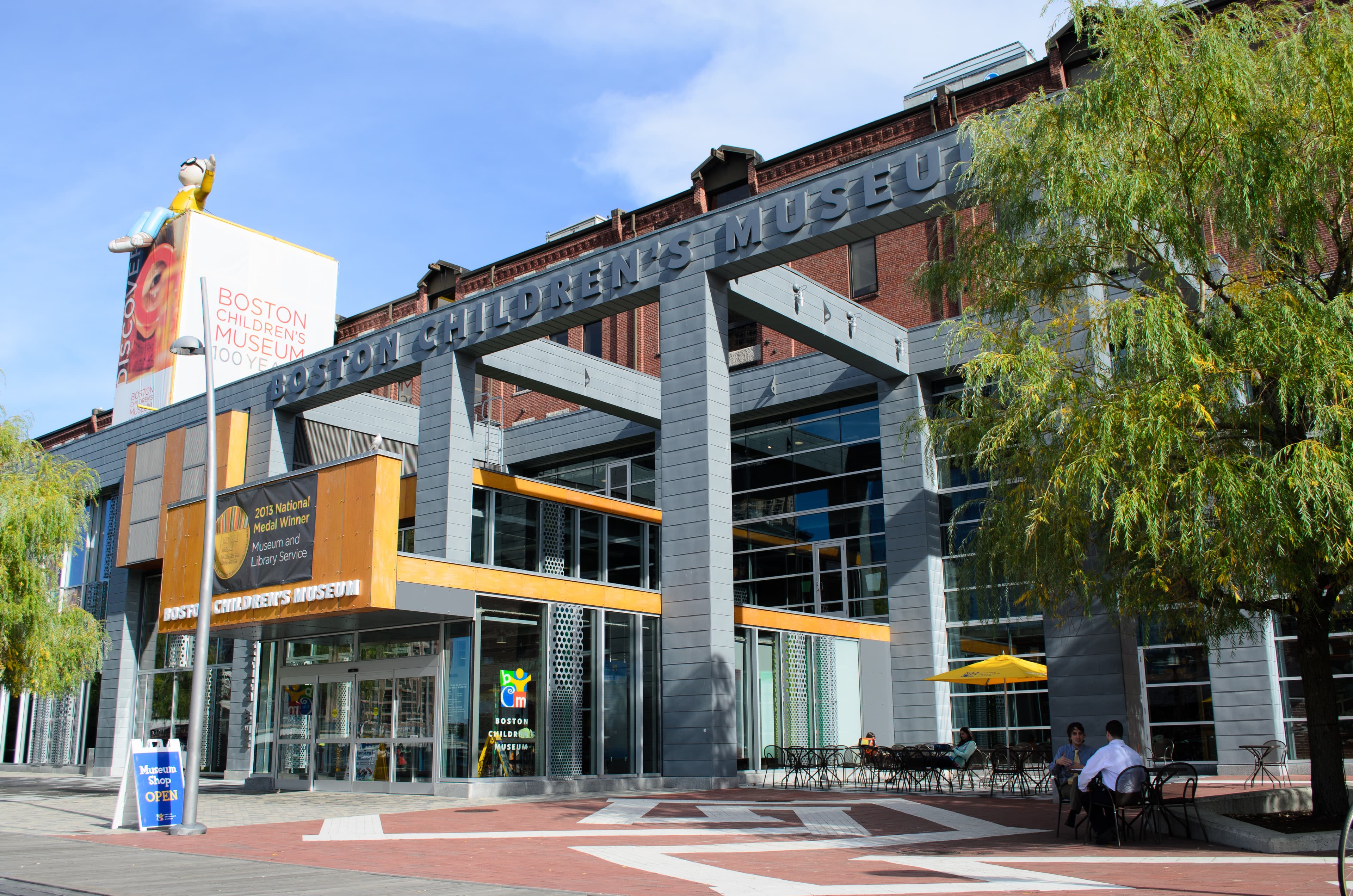
Every children's museum in America owes something to the brick-and-glass building at 308 Congress Street, on Children's Wharf along the Fort Point Channel. Boston Children's Museum is the second-oldest children's museum in the United States, founded in 1913 — and, more importantly, it is the museum that invented the idea every children's museum now runs on: that children learn by touching, climbing, building, and trying, not by standing quietly behind a rope and looking. Long before “hands-on” became a slogan, this museum made it a philosophy, and the building on the channel still runs on it. Step inside and the first thing you meet is not a gallery but a three-story climbing structure; the second is the sound of children being loud, busy, and gloriously unserious about the fact that they are learning.
That is the first thing a first-time visitor should understand about this place. It is not a museum that happens to admit children. It is a museum built, from its founding, around a radical idea about children: that their minds are best trained not by being told things but by handling things. The museum's own early curator put it plainly — the goal was to train children's minds “to observe accurately and think logically” — and the way to do that was to put real objects in their hands. More than a century later, with three floors of exhibits, a collection of more than 50,000 objects, and a landmark milk bottle out front, the museum still works the same way. It is one of Boston's most beloved family destinations, and one of the most influential museums of its kind in the world.
Two cases in a Jamaica Plain mansion
The museum began not with a building but with a bureau. In 1909, several Boston science teachers founded the Science Teachers' Bureau to build a collection of natural history objects that public school classrooms could use — specimens, books, pictures, charts, and lantern slides, anything helpful to science teaching. The Women's Education Association helped with the planning, and after four years of work, The Children's Museum officially opened on August 1, 1913, at the Pinebank Mansion along Jamaica Pond in Olmsted Park, in Boston's Jamaica Plain neighborhood. George Hunt Barton served as its first president, and Delia Isabel Griffin as its first curator.
The first museum was tiny by today's standards: two cases, one devoted to birds and the other to minerals and shells. But the idea was large, and it grew. In 1919 the museum opened a much larger branch in the Barnard Memorial Building on Warrenton Street. In 1935, when its lease on the Pinebank Mansion expired, its leaders bought a property a few blocks away — the Mitton house at 60 Burroughs Street on the Jamaica Way — and the museum opened there on November 18, 1936. For more than four decades the museum lived in Jamaica Plain, growing its collections of Americana, natural history, global culture, Native American material, and dolls and dollhouses, and growing its conviction that a museum for children should be a place of activity, not of quiet.
The decisive turn came in 1962, when Michael Spock became director. Spock argued that children should be encouraged to touch exhibits, to experiment spontaneously, and to learn through their own curiosity rather than through labels and lectures. In 1964 the museum opened What's Inside?, described by the museum as the first fully interactive exhibit of its kind — an exhibit built around opening things up and finding out how they work. It was a landmark in museum history: the hands-on children's museum, as the world now knows it, effectively starts here, and the idea spread from Boston to children's museums everywhere.
The move to the channel
By the late 1970s the museum needed more room and a more accessible home, and it found both in an unlikely place: half of an empty wool warehouse on the Fort Point Channel. In 1979 Boston Children's Museum moved to Museum Wharf — now Children's Wharf — on Congress Street, sharing the building for a time with the Museum of Transportation (later The Computer Museum, which occupied the other half from 1984). The move put the museum on the water, a short walk from South Station across the Congress Street Bridge, and it helped spark the transformation of the surrounding Fort Point and Seaport waterfront long before the neighborhood became the busy district it is today.
The year after the move, Boston's Japanese sister city Kyoto donated a Japanese silk merchant's house to the museum. The house, known as Kyo-no-Machiya, is still one of the museum's landmark exhibits: a real, full-scale merchant's townhouse from Kyoto, rebuilt inside the museum, where children can step into the rooms, handle the objects, and learn how a Japanese family lived and worked. It is the kind of exhibit only a museum with this one's international collections and ambitions could mount — and it remains one of the most quietly remarkable rooms in Boston, a piece of Kyoto on the Fort Point Channel.
The museum kept innovating. During Kenneth Brecher's directorship, beginning in 1986, it opened Kids Bridge, a groundbreaking exhibit on cultural diversity and racism that later moved to the Smithsonian Institution before touring the country. In 2004 The Children's Museum of Boston officially became Boston Children's Museum. And in April 2006 the museum broke ground on a $47 million expansion and renovation, closing for four months at the beginning of 2007 and reopening on April 14, 2007, with a 23,000-square-foot glass-walled enclosure at the front, a new theater, new exhibits, and a newly landscaped park. The renovation was built green — green roofs, storm-water reclamation to reduce runoff into the channel, recycled and local materials — and in early 2008 the museum received LEED Gold certification, the first green museum in Boston. In 2013 it received the National Medal for Museum and Library Service, the nation's highest honor for a museum.
What to do inside: the Climb, the bubbles, and the Japanese House
The museum's exhibits are designed for children roughly 11 and under, with a dedicated space for the youngest visitors, and the best way to visit is to let a child's curiosity set the route. But a first-timer should know the landmarks.
Start with the New Balance Foundation Climb, the three-story climbing structure that greets you near the entrance, designed by Tom Luckey. It is a vertical maze of curved platforms, ramps, and netting — a full-body puzzle that children climb, crawl, and puzzle their way through, learning balance, planning, and physics without ever being told a lesson is happening. It is the museum's signature, and it is visible from the entrance, so children tend to find it before their parents finish buying tickets.
Then head for the Science Playground, where giant soap-bubble tools let children stand inside a bubble or stretch one taller than themselves, and for the Raceways and ramps rooms, where balls roll down wall-hugging hills and children test gravity and momentum by predicting how far a ball will go. The Art Lab (and the STEAM Lab) gives children real materials and real tools to build and make, and the Construction Zone lets them try tunnels, beams, and building toys at construction scale. PlaySpace, for children ages 0 to 3, offers a tree-house climber, a toy train area, and a see-through painting wall, with a soft infant area for the very smallest visitors.
Two exhibits deserve unhurried time. The Japanese House, Kyo-no-Machiya, is a genuine Kyoto merchant's house, donated in 1980, and it rewards slow looking: the tatami rooms, the shop front, the everyday objects of a working household, all of it touchable and explorable. And Boston Black: A City Connects explores Boston's Black community and its history and diversity through play — children can decorate and ride a Carnival float, shop at a Dominican store, learn about hairstyles at a barbershop and a beauty salon, and dance to Cape Verdean beats. It is the museum's hands-on philosophy applied to the city outside its doors, and it is one of the most distinctive exhibits in any American children's museum. Add Arthur & Friends, built around Marc Brown's Arthur books and television series, with the Read Family Kitchen and Mr. Ratburn's Classroom, and the central Common, where light shows, musical chairs, and a gigantic checkers game gather the whole museum together, and you have a visit that easily fills a half day.
The 40-foot milk bottle out front
No account of this museum is complete without the thing standing outside it. The Hood Milk Bottle, on the Hood Milk Bottle Plaza in front of the museum, is 40 feet tall, 18 feet in diameter, and weighs 15,000 pounds — and if it were a real milk bottle, it would hold 58,620 gallons of milk. It was built in 1933 by Arthur Gagner in Taunton, Massachusetts, as a roadside stand to sell his homemade ice cream, one of America's first fast-food drive-in restaurants and a classic example of the novelty architecture known as “Coney Island” style. Gagner sold it to the Sankey family in 1943; it was abandoned in 1967 and stood vacant for a decade.
Its rescue is a Boston story. H.P. Hood and Sons bought the deteriorating structure, refurbished it, and donated it to the Children's Museum. On April 20, 1977, in what Hood called the “Great Bottle Sail,” the bottle was floated up Boston Harbor on a barge escorted by fireboats and craned into place on the wharf beside the museum, which was then preparing to open in its new home. In fall 2006 the bottle was “uncapped” — its original top half sliced off and preserved — so its base could be moved slightly and rebuilt on the new plaza; the renovated bottle was re-dedicated by Mayor Thomas Menino on April 20, 2007, exactly thirty years after it arrived, and it underwent a further major facade renovation in 2020. It still serves as an ice cream stand and snack bar, and it is the museum's beacon: children spot it from the Congress Street Bridge and know they have arrived. Photograph it before you go in — it is one of Boston's most photographed oddities, and it is free.
How to visit, and what to see around it
The museum sits at 308 Congress Street, on Children's Wharf along the Fort Point Channel, in the South Boston Waterfront / Fort Point neighborhood. The easiest approach is on foot from South Station — the MBTA Red Line and Commuter Rail hub — across the Congress Street Bridge; the museum is a short walk from the station, and the bridge itself gives you the classic view of the wharf, the channel, and the milk bottle. The Silver Line also serves the Seaport nearby.
Do not state a ticket price, a fee, or opening hours as fact from this article alone — prices, hours, and special programs change, and the museum's own site is the authority. Check bostonchildrensmuseum.org before visiting for current admission, hours, and any timed-entry or special-program details, and note that Boston's Boston Family Days program has offered free admission on certain Sundays for Boston schoolchildren and their families — check the current program details before counting on it. Plan on a half day, bring a change of clothes for the water-play areas, and expect the museum to be busiest on school holidays and weekends.
Pair the museum with its wharf. The Boston Tea Party Ships & Museum is moored a few steps away on the same stretch of channel, and the two make a natural family day: a morning of hands-on play at the Children's Museum, an afternoon of revolutionary reenactment next door. Afterward, walk the Harborwalk along the channel, or cross back over the Congress Street Bridge toward downtown and the Rose Kennedy Greenway. And if you have time, remember where this museum started: a mansion on Jamaica Pond, two cases of birds and shells, and a group of teachers who believed that children learn with their hands. The building on the channel is much bigger now. The belief is exactly the same.
Key Facts
Boston Children's Museum is at 308 Congress Street, Boston, MA 02210, on Children's Wharf along the Fort Point Channel, in the South Boston Waterfront / Fort Point neighborhood.
The museum was founded in 1913 and is the second-oldest children's museum in the United States; it was founded by the Science Teachers' Bureau (formed 1909) with help from the Women's Education Association.
The Children's Museum officially opened on August 1, 1913, at the Pinebank Mansion along Jamaica Pond in Olmsted Park, Jamaica Plain; George Hunt Barton was its first president and Delia Isabel Griffin its first curator; its first displays were two cases, one of birds and one of minerals and shells.
In 1919 the museum opened a larger branch in the Barnard Memorial Building on Warrenton Street; in 1936 it moved to the Mitton house at 60 Burroughs Street, opening there on November 18, 1936.
Michael Spock became director in 1962 and championed hands-on, interactive exhibits; in 1964 the museum opened What's Inside?, described by the museum as the first fully interactive exhibit of its kind.
In 1979 the museum moved into half of an empty wool warehouse on the Fort Point Channel (Museum Wharf, now Children's Wharf); the other half later housed The Computer Museum.
In 1980 Boston's Japanese sister city Kyoto donated a Japanese silk merchant's house, Kyo-no-Machiya, which remains a landmark exhibit at the museum.
During Kenneth Brecher's directorship (from 1986), the museum opened Kids Bridge, an exhibit on cultural diversity and racism that later moved to the Smithsonian Institution and toured nationally.
In 2004 The Children's Museum of Boston officially became Boston Children's Museum; a $47 million renovation and expansion (23,000-square-foot glass enclosure, new theater, new exhibits) was completed in 2007, reopening April 14, 2007; the museum received LEED Gold certification in early 2008, the first green museum in Boston.
In 2013 the museum received the National Medal for Museum and Library Service.
The museum's collection encompasses more than 50,000 objects, including Americana, natural history, global culture, Native American, and dolls and dollhouse material.
The New Balance Foundation Climb is a three-story climbing structure at the front of the museum, designed by Tom Luckey.
The Hood Milk Bottle stands on the Hood Milk Bottle Plaza in front of the museum: built in 1933 by Arthur Gagner in Taunton as an ice cream stand, sold to the Sankey family in 1943, abandoned in 1967, bought and donated by H.P. Hood and Sons, delivered by barge on April 20, 1977 (the "Great Bottle Sail"), 40 feet tall, 18 feet in diameter, 15,000 pounds, with a hypothetical capacity of 58,620 gallons; uncapped in fall 2006 and re-dedicated by Mayor Thomas Menino on April 20, 2007; facade renovated in 2020; it serves as an ice cream stand and snack bar.
Exhibits are designed principally for children 11 and under, with PlaySpace for ages 0–3; other exhibits include the Science Playground (bubbles), Raceways, Art Lab and STEAM Lab, Construction Zone, Arthur & Friends, Peep's World, Boston Black: A City Connects, and the central Common.
Visitor Details
Address: Boston Children's Museum, 308 Congress Street, Boston, MA 02210 (Children's Wharf, Fort Point Channel, South Boston Waterfront / Fort Point).
Transit: Short walk from South Station (MBTA Red Line and Commuter Rail) across the Congress Street Bridge; MBTA Silver Line serves the nearby Seaport.
Hours/Admission: Admission prices, hours, and special programs change from time to time — check the official source at bostonchildrensmuseum.org before visiting for current admission, hours, and any timed-entry details. No fixed ticket price, fee, or opening hours are stated in this article, since none was verified against the official source in this run. Boston's Boston Family Days program has offered free admission on certain Sundays for Boston schoolchildren and their families — check current program details before visiting.
Best timing: Plan a half day and arrive early on weekends and school holidays, when the museum is busiest. Bring a change of clothes for the water-play areas. Pair the visit with the Boston Tea Party Ships & Museum next door on the same wharf and a Harborwalk stroll along the Fort Point Channel.
Location Photography