

A park that is also a laboratory
The Arnold Arboretum is easy to mistake for simply a beautiful park, and for most visitors that is exactly how it works: winding roads, open meadows, four hills, ponds, and some of the finest trees in New England, all free, all open from dawn to dusk. But the Arboretum is, first, a research institution of Harvard University, and its beauty is a byproduct of its science. Every plant here is accessioned, labeled, and studied. The living collection — more than 17,000 plants across roughly 10,000 accessions, with an emphasis on the woody plants of eastern North America and eastern Asia — is one of the most important temperate plant collections in the world, and it is the reason the Arboretum exists.
The Arboretum was founded in 1872, making it the oldest public arboretum in North America. It was established through land and financial gifts from Benjamin Bussey and James Arnold, with trustee George Barrell Emerson facilitating its creation, and Harvard appointed Charles Sprague Sargent as its first director. Sargent partnered with Frederick Law Olmsted — the landscape architect of Central Park and Boston's Emerald Necklace — to design the grounds, and the result is the second largest link in the Emerald Necklace, the chain of parks that Olmsted designed for Boston. The Arboretum's landscape is Olmsted's work at its most mature: not a formal garden, but a composed landscape of hills, valleys, and plant groupings that looks natural and is, in fact, carefully designed.
The agreement that made it all possible is itself remarkable. Under a 1,000-year lease with the City of Boston, the Arboretum's grounds are public parkland, open to everyone, while Harvard maintains the collections and the science. That lease — a thousand years of free public access to a Harvard research landscape — is one of the great civic bargains in American park history, and it is why a morning walk here costs nothing and feels, somehow, like a privilege.
Sargent, Olmsted, and the plant hunters
The Arboretum's early history is the story of two men and the plant hunters they sent around the world. Sargent, the first director, was a botanist of formidable energy: he published The Silva of North America, launched the journal Garden and Forest, and built the Arboretum's collections and reputation over a directorship that lasted more than fifty years. Olmsted, who designed the grounds, gave the Arboretum its roads, its vistas, and its character — the long, curving Arborway, the meadows that open suddenly between groves, the hills that frame views across Jamaica Plain.
Inspired by his travels to Japan, Sargent launched decades of plant collection in East Asia, led by botanists like Ernest Henry Wilson — "Chinese" Wilson — who traveled through China and Japan in the early twentieth century collecting seeds and specimens that now grow in Boston, including many of the Arboretum's celebrated maples, lilacs, and cherries. Other collectors — William Purdom, Joseph Hers, Joseph Rock — extended the work, and the Arboretum's herbarium, library, and archives, housed in part in the Hunnewell Building at 125 Arborway, preserve the record of those expeditions alongside the living plants themselves.
The Great Depression and the Second World War paused international collecting, and the mid-twentieth century shifted the Arboretum's focus to landscape preservation and public education. The Dana Greenhouses, completed in 1962, supported horticultural research and propagation, and plant exploration resumed in the 1970s, particularly in China, with partnerships like the Sino-American Botanical Expedition. In 2011 the Weld Hill Research Building opened, advancing the Arboretum's scientific work, and during the COVID-19 pandemic the Arboretum remained open as a vital public refuge — a reminder, if one were needed, of what a free, open landscape is for. In 2022 the Arboretum celebrated its 150th anniversary, reaffirming its mission of research, conservation, and free public access.
The landscape, hill by hill
The Arboretum occupies 281 acres in the Jamaica Plain and Roslindale sections of Boston, and its geography is worth learning, because it organizes a visit. Four hills anchor the grounds: Bussey Hill, Peters Hill, Hemlock Hill, and Weld Hill. Peters Hill, at 240 feet, is the tallest, and its summit — open, grassy, with views across the city — is one of the great picnic and sunset spots in Boston, and a favorite of dog walkers, kite flyers, and families.
The collections are organized by plant family and genus, and the great collections repay attention: maples (Acer), beeches (Fagus), hickories (Carya), forsythia, pines (Pinus), magnolias (Magnolia), oaks (Quercus), rhododendrons, lilacs (Syringa), and hemlocks (Tsuga), along with specialized collections such as the Bradley Collection of Rosaceous Plants, the conifer collection, and the Larz Anderson Bonsai Collection, displayed in the bonsai and penjing pavilion in the Dana Greenhouse complex from mid-April to the end of October. Around 500 new accessions are processed each year, so the landscape is always, slowly, changing — a living collection, not a fixed garden.
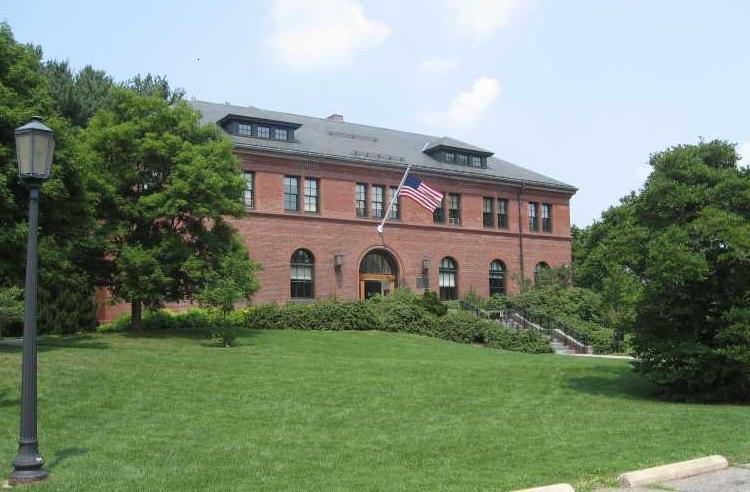
The Hunnewell Building, the Arboretum's administration and visitor center at 125 Arborway, is the place to start. Its visitor center, library, and exhibits introduce the collections and the Arboretum's history, and its staff can point you to what is in flower, in fruit, or in fall color on the day you visit. The building itself, named for the Hunnewell family, is a landmark of the Arboretum's early years, and its grounds — with specimen trees and plantings close at hand — are a compact introduction to the larger landscape.
Lilac Sunday, and the seasons
If there is one day that captures the Arboretum's place in Boston life, it is Lilac Sunday. On the second Sunday in May every year, the Arboretum celebrates its lilac collection — one of the finest in the world — with tours, children's programming, arts programming, and picnicking, rain or shine. On the 100th anniversary of Lilac Sunday in 2008, the Arboretum's own description said it best: of the thousands of flowering plants in the Arboretum, only one, the lilac, is singled out each year for a daylong celebration, and enthusiasts from all over New England gather to picnic and tour the lilac collection. It is a Boston institution, and it is free, like everything else here.
But Lilac Sunday is only one season. Spring brings magnolias, cherries, and forsythia; summer brings the full green canopy and the bonsai pavilion; autumn brings the maples and oaks into color — the Arboretum is one of the great fall-foliage walks in the city, without leaving it; winter brings the conifers, the bark and structure of the trees, and a quiet, almost private landscape. The Arboretum's plant labels — every accessioned plant carries a label with its accession number, botanical name, source, and common name — mean that a walk here can also be a lesson, if you want it to be, in the names and origins of the trees around you.
How to visit
The Arnold Arboretum is in Jamaica Plain and Roslindale, Boston, with its visitor center at the Hunnewell Building, 125 Arborway. It is open year round, from dawn to dusk, and admission is free — that free access, under the Arboretum's lease with the City of Boston, is part of its founding mission, not a promotion. No fixed opening hour beyond dawn-to-dusk is stated in this article, since none was verified against an official source in this run; check the official Arnold Arboretum site before visiting for visitor-center hours, guided-tour schedules, and any event details, especially for Lilac Sunday.
Getting here is part of the Emerald Necklace experience: the Arboretum is reachable by MBTA bus and Orange Line connections through Jamaica Plain, and by car, with parking near the Hunnewell Building and other entrances — though on Lilac Sunday and peak autumn weekends, public transit is the wiser choice. Wear walking shoes, bring water, and plan for hills: the Arboretum's four hills are gentle, but a full loop is several miles. Start at the Hunnewell Building, walk to Peters Hill for the view, loop through the lilac and maple collections, and finish at the bonsai pavilion when it is in season. Pair the visit with the rest of the Emerald Necklace — Jamaica Pond and the Arborway are close by — for a full day in Olmsted's Boston.
Key Facts
- The Arnold Arboretum of Harvard University was founded in 1872 and is the oldest public arboretum in North America.
- It occupies 281 acres in Jamaica Plain and Roslindale, Boston, and is the second largest link in Boston's Emerald Necklace.
- The landscape was designed by Charles Sprague Sargent and Frederick Law Olmsted; Sargent was the first director.
- It was established through gifts from Benjamin Bussey and James Arnold, and operates under a 1,000-year lease with the City of Boston ensuring free public access.
- The living collection holds more than 17,000 plants across roughly 10,000 accessions, emphasizing eastern North American and eastern Asian woody plants.
- Key collections include Acer, Fagus, Carya, Forsythia, Pinus, Magnolia, Quercus, Rhododendron, Syringa, and Tsuga, plus the Bradley Collection of Rosaceous Plants, conifers, and the Larz Anderson Bonsai Collection.
- The four hills are Bussey Hill, Peters Hill (tallest, 240 feet), Hemlock Hill, and Weld Hill.
- The Hunnewell Building at 125 Arborway houses the visitor center; the Dana Greenhouses, completed in 1962, house the bonsai and penjing pavilion (mid-April to end of October).
- Lilac Sunday is held on the second Sunday in May every year; its 100th anniversary was in 2008.
- The Arboretum was added to the National Register of Historic Places on October 15, 1966, designated a National Historic Landmark on January 12, 1965, and celebrated its 150th anniversary in 2022.
- Coordinates: 42.29778, -71.12278.
Visitor Details
Address: Hunnewell Building, 125 Arborway, Jamaica Plain, Boston, MA.
Transit: MBTA bus and Orange Line connections through Jamaica Plain; parking near the Hunnewell Building and other entrances. Public transit is recommended on Lilac Sunday and peak autumn weekends.
Hours/Admission: Open year round, dawn to dusk; admission is free. No visitor-center hour is stated as fact here, since none was verified against an official source in this run — check the official Arnold Arboretum site for visitor-center hours, tour schedules, and Lilac Sunday details.
Best timing: Lilac Sunday (second Sunday in May) for the lilac collection; autumn for maple and oak color; the bonsai pavilion is open mid-April to end of October. Allow several hours and wear walking shoes for the hills.
Location Photography