The theatre where American history turned
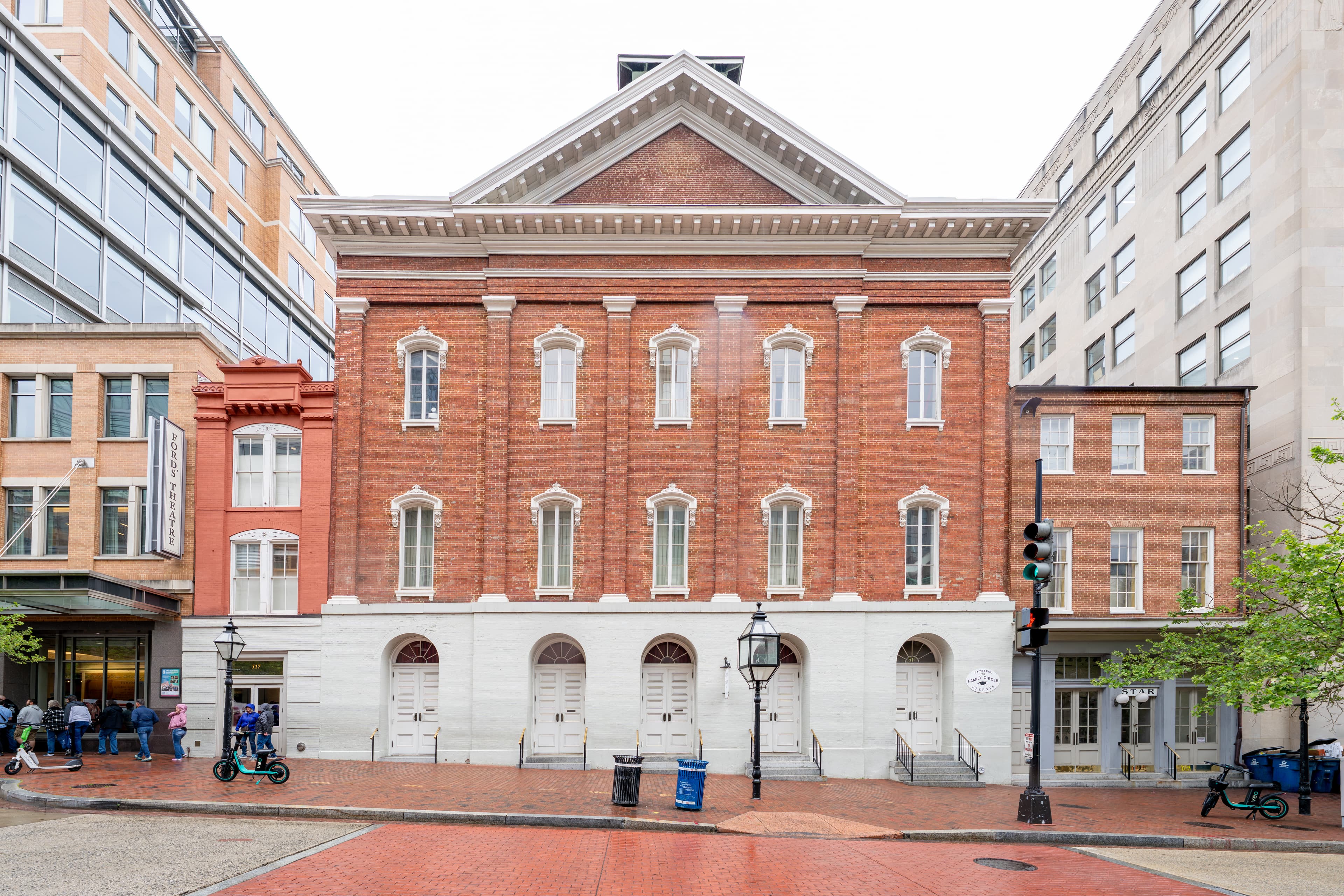
There are places in Washington where history feels abstract — a monument you admire from a distance, a name carved in stone — and then there is Ford's Theatre, where it feels immediate. Stand on 10th Street NW between E and F Streets, look up at the brick facade, and you are standing where a crowd gathered on the night of April 14, 1865, in disbelief, as news spread that the president had been shot inside. Walk through the doors and you are in a theatre that still looks, by deliberate restoration, the way it looked that night: the boxes, the drapery, the stage where a comedy called Our American Cousin was playing when John Wilkes Booth slipped into the presidential box and fired a single shot.
Ford's Theatre is a first-tier Washington sight not because it is grand — it is a modest, mid-19th-century playhouse, not a marble temple — but because what happened here changed the country in a night. Lincoln had been president through four years of Civil War; five days earlier, on April 9, 1865, Robert E. Lee had surrendered at Appomattox, and the war was effectively over. Lincoln came to the theatre that Friday evening in a mood of relief, with his wife Mary Todd Lincoln and their guests Major Henry Rathbone and Clara Harris, to enjoy a popular comedy. Instead, the evening became the first assassination of an American president, a national trauma that still shapes how Americans remember Lincoln — not as a president who finished his work, but as one cut down at the moment of victory.
That is why Ford's Theatre endures as a destination. It is not only a memorial to a murder. It is a place that asks you to stand in the room where it happened, then cross the street to the house where the story ended, and to feel the weight of both. And unusually for a site of tragedy, it is also alive: Ford's Theatre is a working stage again, producing plays in the same auditorium, so the building is not frozen as a crime scene but continues the work it was built for.
From church to playhouse: John T. Ford's theatre
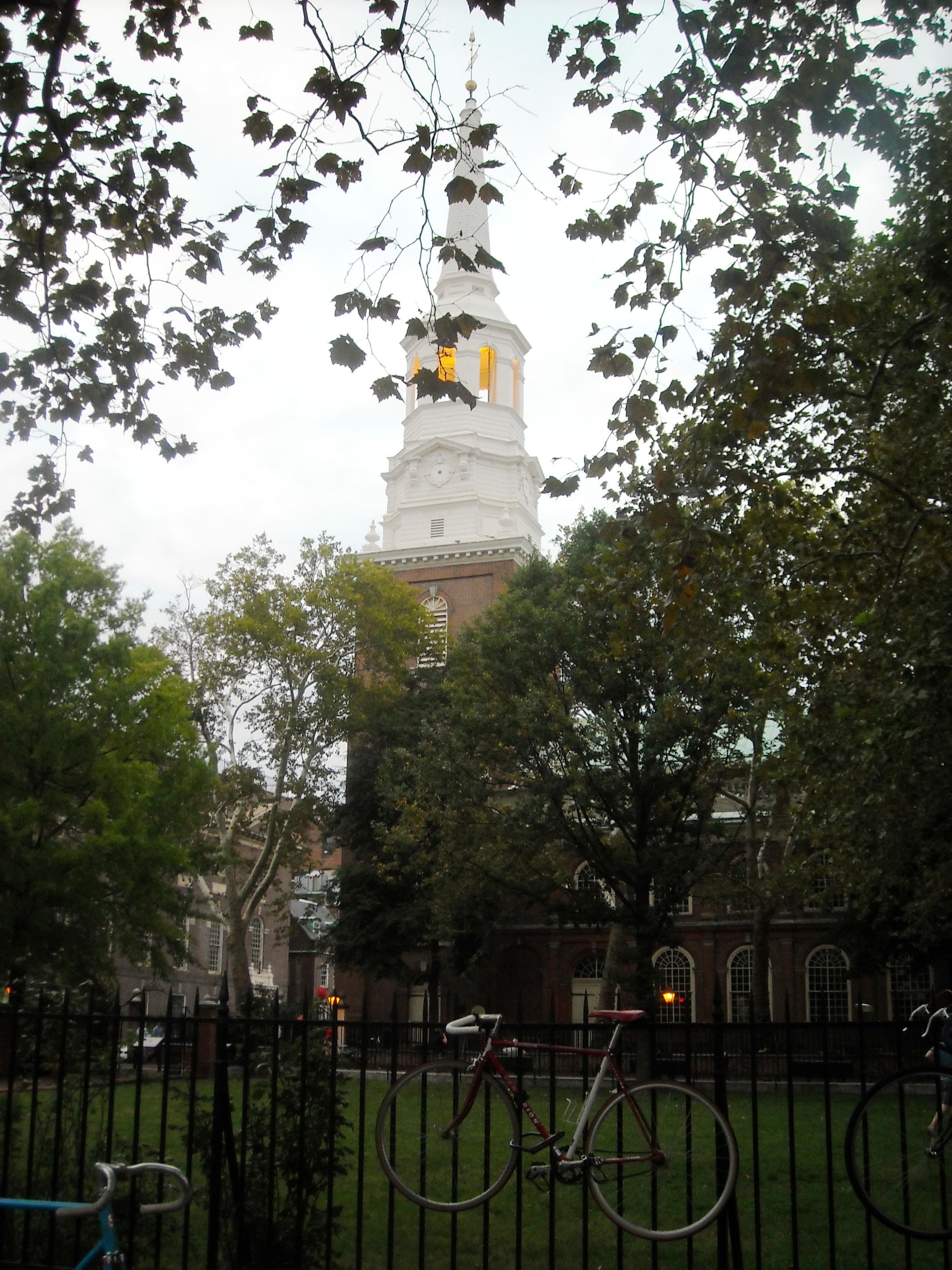
The building's story starts before Lincoln ever entered it. The brick structure was first built in 1833 as the First Baptist Church of Washington. In 1861, the theatrical manager John T. Ford leased the building and converted it into a theatre, which he called Ford's Athenaeum. That first theatre burned down in December 1862. Ford rebuilt it, bigger and better, and the new Ford's Theatre opened to the public on the night of August 27, 1863, a modern playhouse for its day with seating for roughly 1,700 people, four private boxes flanking the stage, and all the latest stage machinery.
Ford was a major figure in American theatre — he operated a chain of theatres, and his Washington house was one of the city's leading stages. The Lincolns were regular theatregoers, and Lincoln had attended Ford's Theatre before, including a performance of Macbeth in October 1863. On the night of April 14, 1865, the playbill was Our American Cousin, a popular comedy by Tom Taylor starring Laura Keene. Lincoln's attendance had been announced in the newspapers that day, which is how Booth, a well-known actor who knew the theatre intimately, knew exactly where the president would be sitting — and how to reach him through the passage behind the boxes.
The building you see today preserves that 1863 exterior. The brick facade is the only part of the original structure that survives intact; the interior was gutted and rebuilt multiple times over the following century. But the restoration completed in 1968 returned the auditorium to its April 1865 appearance, based in part on the photographs Mathew Brady took of the crime scene in the days after the assassination. When you sit in the audience today, the boxes, the ornament, and the drapery are a careful reconstruction of the room Lincoln sat in.
The night of April 14, 1865
The story of that night is told in the theatre's museum, and it is worth knowing before you step into the auditorium, because the room itself tells it silently. At around 10:15 p.m., during the third act of Our American Cousin, John Wilkes Booth — a 26-year-old actor, Confederate sympathizer, and member of a famous theatrical family — entered the presidential box, which was unguarded at that moment, and shot Lincoln in the back of the head with a single-shot Philadelphia Deringer pistol. Major Rathbone, the Lincolns' guest, lunged at Booth and was stabbed in the arm; Booth then leapt from the box to the stage, catching his spur on a flag draped over the box, breaking his leg on landing, and, according to witnesses, crying out "Sic semper tyrannis" — "thus always to tyrants," the motto of Virginia — before escaping through the backstage door to a waiting horse in the alley.
Lincoln never regained consciousness. Doctors in the audience, including Dr. Charles Leale, the first physician to reach the box, examined him in the theatre and concluded he could not survive a move to the White House. The decision was made to carry him across the street, out of the theatre and into the nearest house with a bed available. That house was the Petersen House, and the rest of the night played out there.
Booth fled into Maryland with an accomplice, David Herold, and was tracked to a farm in Virginia, where he was shot by Union soldiers on April 26, 1865, twelve days after the assassination. The conspiracy was wider than Booth alone: the same night, an accomplice attacked Secretary of State William Seward in his home, and another was assigned to Vice President Andrew Johnson. The trial of the conspirators that summer, and the execution of four of them, including Mary Surratt, remain among the most debated episodes of the era — and the museum at Ford's Theatre lays out the conspiracy, the manhunt, and the trial in detail, with artifacts including Booth's pistol, the Deringer, and the flag that tripped him.
The presidential box and the museum
The heart of a visit to Ford's Theatre is the auditorium itself, and in particular the presidential box — the two boxes on the audience's right, draped in flags and bunting, recreated as they appeared on the night of the assassination. You do not sit in the box; you look at it from the auditorium, and the sight is quietly devastating, because it is so ordinary. It is a theatre box, decorated for a night out. The rocking chair Lincoln sat in is not the original — the original chair is in the collection of the Henry Ford Museum in Michigan — but the box's arrangement, the flags, and the portrait of George Washington that hung there are recreated from the record.
Below the auditorium, the theatre's museum tells the fuller story in two parts: Lincoln's presidency and the Civil War, and then the assassination itself, the conspiracy, and its aftermath. The artifacts are the real thing, and they carry the visit: the pistol Booth used, the coat Lincoln wore that night, the contents of Booth's pockets when he was captured, and the bloodstained pillow from the Petersen House. One gallery is devoted to the investigation and trial, and another to how Lincoln's death was mourned across the country — the funeral train, the black-draped cities, the millions who turned out along the route from Washington to Springfield, Illinois.
The museum also follows Lincoln's legacy forward, including the theatre's own later life, which is stranger than most visitors expect. After the assassination, the government seized the building, and it spent decades as government offices — the War Department's Division of Records and Pensions, among others — not as a theatre at all. In 1893, a floor collapse inside the building killed 22 government clerks, a disaster that closed it again. It was not until 1968, after a full restoration, that Ford's Theatre reopened as a working theatre and national historic site. That layered history — church, theatre, crime scene, office building, memorial, stage again — is part of what makes the building feel so alive: it has been reinvented as often as the country around it.
Across the street: the Petersen House
No visit to Ford's Theatre is complete without crossing 10th Street to the Petersen House, the modest brick rowhouse at 516 10th Street NW where Lincoln died. The house was built in 1849 by William A. Petersen, a German immigrant tailor, and his wife Anna; by 1865 it was a boarding house, home to perhaps a dozen lodgers. On the night of the assassination, one of those lodgers, Henry Safford, a young War Department clerk, heard the commotion, stepped onto the front stoop, and called out to the soldiers struggling to carry the wounded president: "Bring him in here!" The soldiers carried Lincoln into the back bedroom on the first floor — the room of another lodger, Willie Clark, who was out celebrating the end of the war that night — and laid him diagonally across the bed, because at six foot four, Lincoln was too tall for it.
Lincoln lay there through the night, unconscious, while his wife Mary waited in the front parlor, his son Robert stood by the bed, and Secretary of War Edwin Stanton effectively ran the government from the back parlor, receiving reports and issuing orders. Doctors worked through the night to relieve the pressure on Lincoln's brain, but the wound was mortal. At 7:22 on the morning of April 15, 1865, Lincoln died, and Stanton is said to have spoken the words that have become his epitaph: "Now he belongs to the ages."
The Petersen House today is preserved as a museum by the National Park Service, part of the same Ford's Theatre National Historic Site as the theatre. You walk through three rooms on the main floor: the front parlor where Mary Lincoln waited, the back parlor where Stanton worked, and the small back bedroom where Lincoln died, furnished as it appeared that night. The bed itself is a replica — the original bed, bought by a Chicago collector after Lincoln's death, is on display at the Chicago History Museum — but the bloodstained pillow and pillowcases are the ones used by Lincoln, and the room's smallness, after the grandeur of the theatre across the street, is what stays with you. The government bought the house in 1896, and the National Park Service has administered it since the 1930s. A plaque by the front door reads, in full: "Abraham Lincoln died in this house April 15, 1865 at 7:22 a.m."
A living theatre, not just a memorial
One of the best reasons to visit Ford's Theatre is that it refuses to be only a memorial. Since its 1968 reopening, the theatre has operated as a professional producing theatre under the Ford's Theatre Society, staging plays and musicals in the same auditorium — including, each year, a production of A Christmas Carol, a tradition that has run for decades. The programming leans into American stories, and the juxtaposition is intentional: a playhouse that once hosted a president's murder now hosts the living theatre Lincoln himself loved.
That duality shapes the visitor experience. A daytime visit is a museum and historic-house tour, quiet and reflective. An evening visit is a night at the theatre, in a room where the past is present but not presiding. If you can, do both: take the daytime tour for the museum and the Petersen House, and come back for a performance, when the auditorium fills with an audience the way it did on the night Lincoln sat in the box. The theatre's location makes pairing easy — it sits in the Penn Quarter, steps from the National Portrait Gallery, the International Spy Museum, and the Gallery Place and Metro Center stations, in the middle of downtown Washington's museum and restaurant district.
How to visit Ford's Theatre well
Start at the theatre, not the house: the museum gives you the story, the auditorium gives you the room, and then the Petersen House gives you the ending. Give the visit at least two hours, and longer if you linger over the museum's conspiracy and trial galleries, which reward a slow read. The Petersen House is small and the route through it is one-way, so it moves quickly even when busy, but the bedroom itself deserves a pause — it is a small room, and the crowd thins if you wait a beat.
Ford's Theatre is a National Park Service site operated in partnership with the Ford's Theatre Society, and entry arrangements — including whether a timed ticket is required for the theatre and the house — change from time to time. Hours, ticket requirements, and performance schedules also change, so check the official sources at nps.gov (Ford's Theatre National Historic Site) and fords.org before visiting to confirm current hours, ticket arrangements, and what's on stage. The site sits on 10th Street NW between E and F Streets in the Penn Quarter, a short walk from the Metro Center and Gallery Place stations, and pairs naturally with the National Portrait Gallery and the rest of downtown.
Why Ford's Theatre endures
Ford's Theatre endures because it holds two truths at once. It is the place where the Civil War's ending curdled into a national tragedy — where a president who had just won the war, and who was already planning a generous peace, was murdered by a man who believed he was striking a blow for a lost cause. And it is also a place that kept going: a church, a theatre, an office building, a memorial, and a theatre again, still putting on plays in the room where Lincoln died. The country did not stop at Appomattox, and neither did this building.
For a first-time visitor to Washington, the monuments on the Mall tell you what America aspires to be. Ford's Theatre tells you what it cost — and, in the Petersen House across the street, how a single night in a boarding-house bedroom became the moment Lincoln passed from president into legend. Stand in the auditorium, look at the box, cross the street, and stand in the small back room. That walk, ten steps across 10th Street, is one of the most moving short walks in America.
Key Facts
- Ford's Theatre is located at 511 10th Street NW, Washington, DC, between E and F Streets, in the Penn Quarter / Downtown neighborhood; the Petersen House stands directly across the street at 516 10th Street NW.
- The building was first constructed in 1833 as the First Baptist Church of Washington; theatrical manager John T. Ford leased it in 1861 and converted it into Ford's Athenaeum, which burned in December 1862.
- The rebuilt Ford's Theatre opened on August 27, 1863, with seating for roughly 1,700 people; Lincoln attended performances there before April 1865.
- On the evening of April 14, 1865, Lincoln, Mary Todd Lincoln, Major Henry Rathbone, and Clara Harris attended Tom Taylor's comedy Our American Cousin, starring Laura Keene.
- At about 10:15 p.m., actor John Wilkes Booth entered the presidential box and shot Lincoln in the back of the head with a single-shot Philadelphia Deringer pistol; Rathbone was stabbed as he tried to stop Booth, who leapt to the stage, broke his leg, and escaped.
- Lincoln was carried across the street to the Petersen House, where boarder Henry Safford had called out "Bring him in here!"; Lincoln was laid in the back bedroom, the room of lodger Willie Clark.
- Lincoln died in the Petersen House at 7:22 a.m. on April 15, 1865, aged 56; Secretary of War Edwin Stanton is credited with the words "Now he belongs to the ages."
- The Petersen House was built in 1849 by William A. Petersen, a German immigrant tailor, and his wife Anna; it was purchased by the United States government in 1896, and has been administered by the National Park Service since the 1930s.
- After the assassination the theatre building was seized by the government and used as offices; a floor collapse in 1893 killed 22 clerks. The theatre was restored to its April 1865 appearance and reopened as a working theatre and national historic site in 1968.
- The original bed Lincoln died in is on display at the Chicago History Museum; the bed in the Petersen House bedroom is a replica, while the bloodstained pillow and pillowcases there are the ones used by Lincoln. The rocking chair Lincoln sat in is in the Henry Ford Museum's collection.
- Booth fled to Virginia and was shot by Union soldiers on April 26, 1865; four conspirators, including Mary Surratt, were executed after a military trial in the summer of 1865.
- Ford's Theatre and the Petersen House are preserved together as Ford's Theatre National Historic Site, operated by the National Park Service in partnership with the Ford's Theatre Society.
Visitor Details
Address: Ford's Theatre, 511 10th Street NW, Washington, DC 20004 (Penn Quarter / Downtown, between E and F Streets); Petersen House, 516 10th Street NW, directly across the street.
Transit: Metro Center station (Red, Orange, Blue, and Silver lines) and Gallery Place station (Red, Green, and Yellow lines) are both a short walk away.
Hours/Admission: Hours, ticket requirements (including whether a timed ticket is needed), and performance schedules change from time to time — check the official sources at nps.gov (Ford's Theatre National Historic Site) and fords.org before visiting to confirm current hours, ticket arrangements, and what's on stage.
Best timing: Allow at least two hours — start at the theatre for the museum and auditorium, then cross the street to the Petersen House. The Petersen House route is one-way and moves steadily; pause in the small back bedroom rather than rushing through. Pair the visit with the National Portrait Gallery, the International Spy Museum, and the Penn Quarter's restaurants.
Location Photography