America's oldest opera house, still on the job
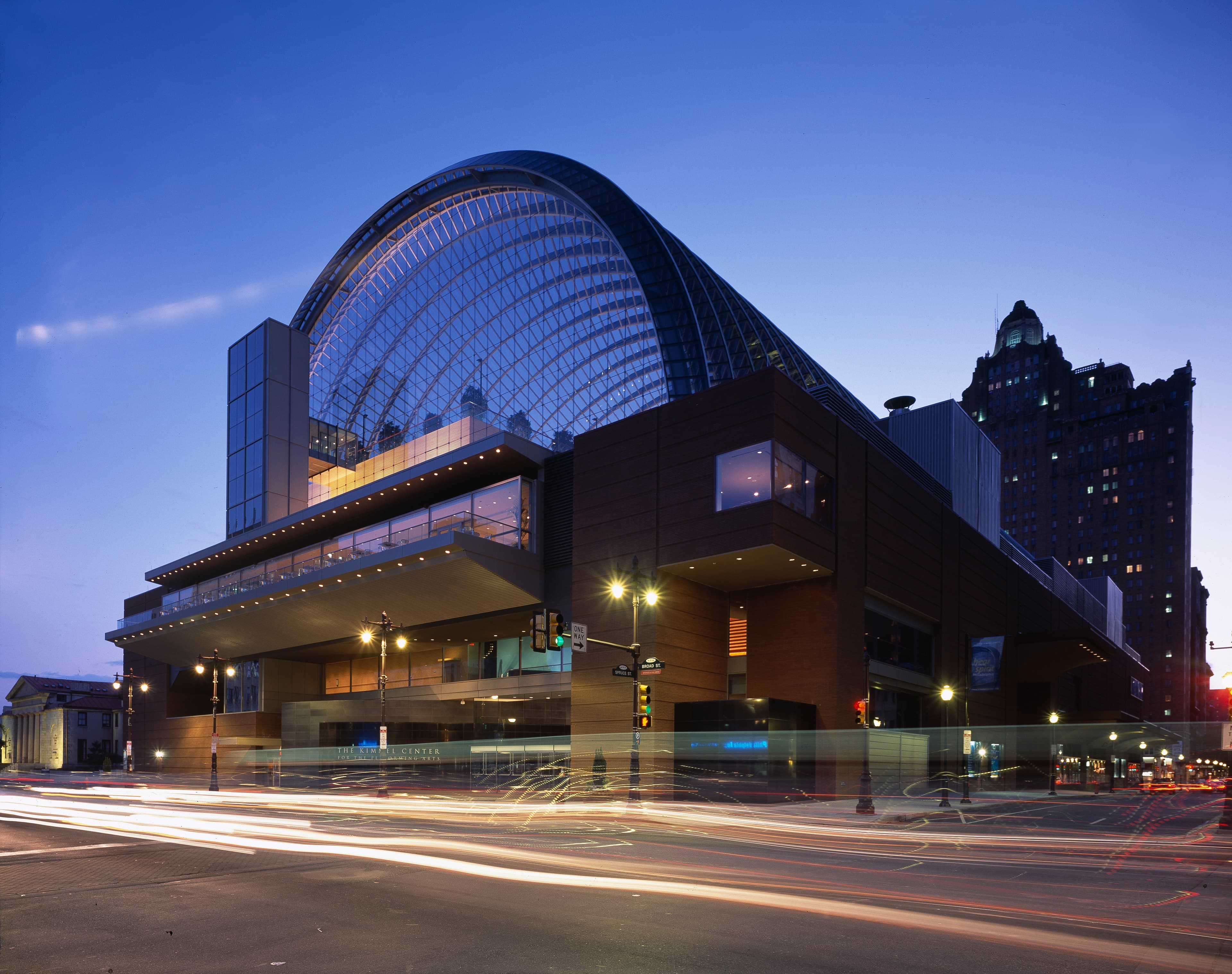
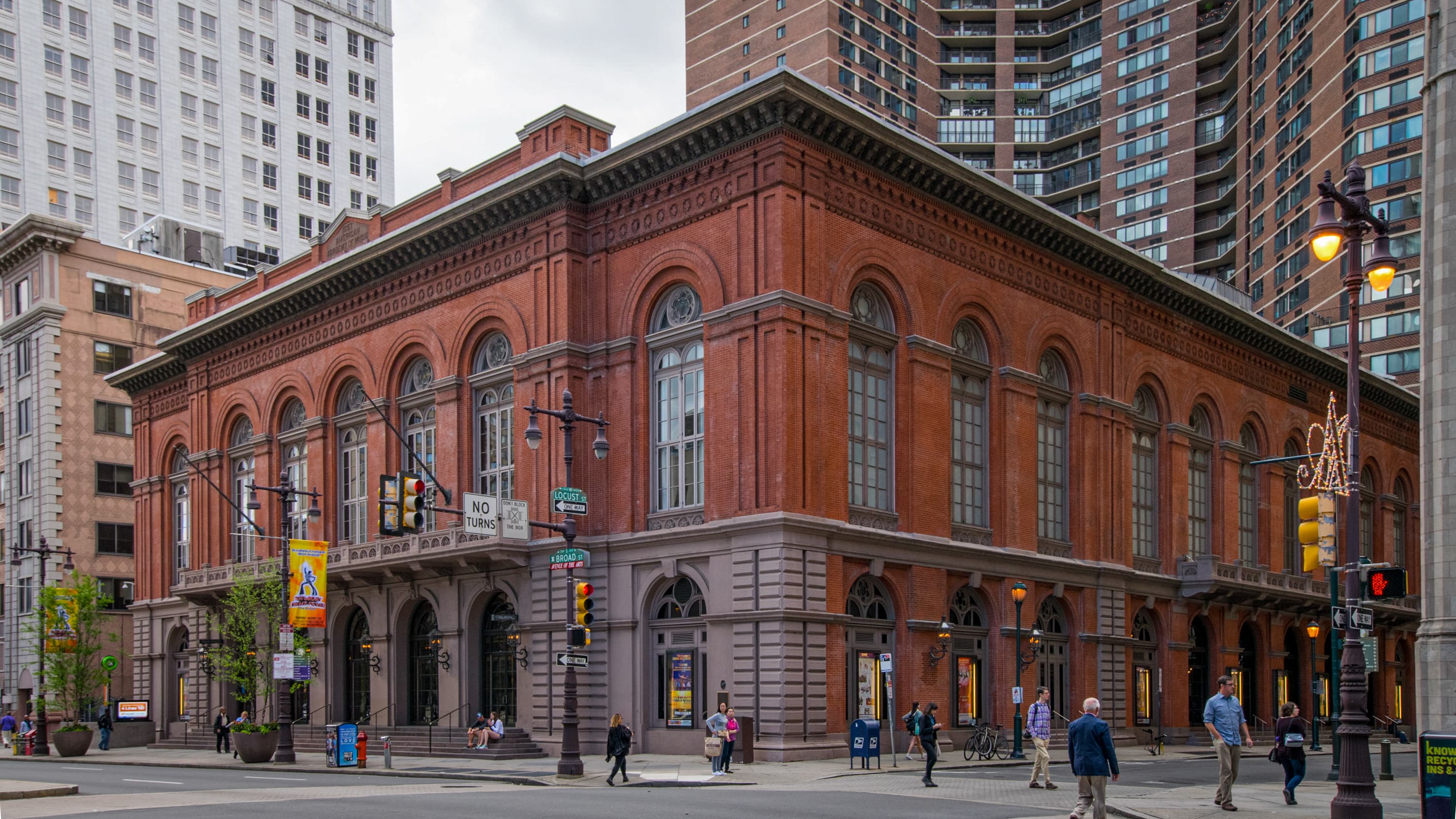
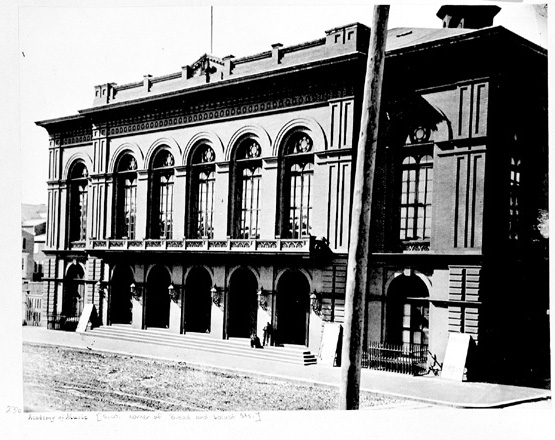
Walk south down Broad Street from City Hall, past the wedding-cake bulk of City Hall itself and the glass vault of the Kimmel Center, and you will come to a building that does not shout. The Academy of Music, at 240 South Broad Street between Locust and Manning Streets, is a restrained brownstone and brick facade in the Rundbogenstil, or round-arch, style — handsome, dignified, and, by Philadelphia standards, almost shy. That modesty was deliberate, and it is the first clue to what makes this building extraordinary. The architects spent the money where it mattered: inside.
The Academy of Music is the oldest opera house in the United States that is still used for its original purpose. It opened in 1857, before the Civil War, and it has been in continuous use as a concert hall and opera house ever since — through the Civil War, two world wars, the Depression, and the long decades when American cities let their grand old theaters crumble. It is a National Historic Landmark, designated in 1962, and it is still, on any given night, exactly what it was built to be: a place where Philadelphians gather in evening dress and jeans alike to hear opera, ballet, Broadway, and orchestral music in one of the great rooms of American architecture.
That is the first thing a first-time visitor should understand about the Academy. It is not a museum of a theater, and it is not a ruin lovingly preserved. It is a working opera house, home to Opera Philadelphia and the Philadelphia Ballet (formerly the Pennsylvania Ballet), host to the touring Broadway series known as Broadway at the Academy, and still owned by the Philadelphia Orchestra, which called this stage home for over a century. The building's nickname, the "Grand Old Lady of Locust Street," is affectionate, but it undersells the place: grand old ladies sit and receive visitors. The Academy works for a living.
A city decides it needs an opera house
Philadelphia in the 1850s was the second city of the United States — wealthy, confident, and acutely aware that it had no opera house worthy of its ambitions. New York had its Academy of Music; Philadelphia's civic leaders wanted one of their own, a house that would put the city on a footing with the great musical capitals of Europe. An architectural competition was announced in October 1854, and it was won by the Philadelphia firm of Napoleon LeBrun and Gustavus Runge. Runge, a German-born architect, brought with him the Rundbogenstil style of his native country — round-arched, brick-and-brownstone, restrained — and the design drew inspiration from Milan's La Scala, the most famous opera house in the world.
The groundbreaking ceremony was held on June 18, 1855, with President Franklin Pierce in attendance — a measure of how seriously the city took the project. Construction took less than two years, and the house opened with a grand ball on January 26, 1857. The New York Times, not a paper given to praising Philadelphia, described the new theater as "magnificently gorgeous, brilliantly lighted, solidly constructed, finely located, beautifully ornamented." The formal operatic opening followed a month later, on February 25, 1857, when Max Maretzek's Italian Opera Company performed the Western Hemisphere premiere of Giuseppe Verdi's Il trovatore, with Marietta Gazzaniga as Leonora.
The choice of site mattered as much as the design. In the 1850s, this stretch of Broad Street was still largely residential, chosen precisely because it was free of the traffic noise that would have ruined an evening's music. That quiet residential street became, over the next century and a half, the Avenue of the Arts — Philadelphia's cultural spine, lined with theaters, the Kimmel Center, and the Wilma and Merriam theaters — and the Academy, the first of them, became its anchor.
The plain facade and the gorgeous room
The Academy's exterior has fooled visitors since 1857, and that is part of its charm. LeBrun and Runge's brownstone facade was intentionally modest — the story goes that after the lavish interior was paid for, there was little left for marble outside, and a planned marble facade was never built. The brick and brownstone you see today are, in essence, the original 1857 exterior, and they have survived every fashion since.
Step through the doors, and the contrast is the point. The auditorium is a horseshoe of boxes and balconies in crimson and gold, with red upholstered seats, gilded woodwork, and a ceiling of allegorical murals. Architectural ornament by Charles Bushor and Joseph A. Bailly frames the proscenium, above which a bust of Mozart looks down on the stage, flanked by statue figures of Poetry and Music on the cornice. And crowning the room is the Academy's most famous object: a crystal chandelier sixteen feet across and weighing 5,000 pounds, hanging over the center of the house like a small frozen firework. It is the single most photographed thing in the building, and the first thing most first-time visitors look for when the house lights are up.
The room was designed for sound as much as for show. The Academy's acoustics were celebrated from the beginning, and they are the reason the house became, for a century, one of the great recording and broadcasting rooms in America. The horseshoe shape, the plaster, the wood — all of it was tuned, in the pre-scientific way of the 1850s, to carry an unamplified voice from the stage to the last row of the balcony. Sit in the back of the house during a performance and you will hear what 1857 engineering could do: a soprano's pianissimo, a ballet orchestra's whisper, arriving intact.
A century of the Philadelphia Orchestra
No institution is more bound up with the Academy than the Philadelphia Orchestra. The Orchestra was founded in 1900, and from its inception it made the Academy its home, remaining there until 2001 — over a century of concerts in a single room. Under Leopold Stokowski (music director 1912–1938) and Eugene Ormandy (1936–1980), the Orchestra rose to international fame, and the Academy was the room where that fame was made. In 1916, Stokowski conducted the Philadelphia Orchestra in the American premiere of Mahler's Eighth Symphony, the "Symphony of a Thousand," at the Academy. The house hosted American premieres of Wagner's The Flying Dutchman, Gounod's Faust, and Strauss's Ariadne auf Naxos, and a roll call of the century's great musicians: Marian Anderson, who first sang at the Academy in 1918 and sang there twelve times with the Orchestra between 1937 and 1957; Maria Callas, Enrico Caruso, Gustav Mahler, Sergei Rachmaninoff, Igor Stravinsky, Arthur Rubinstein, Isaac Stern, Luciano Pavarotti, Itzhak Perlman, and Leontyne Price, among many others.
The Academy's stage also belongs to American history beyond music. In 1872 it hosted the Republican National Convention, where Ulysses S. Grant was nominated for his second term as president. In 1889 it may have hosted America's first indoor football game, a scoreless tie between the University of Pennsylvania and a club from Princeton. And in July 1941, in the Academy's basement, engineers operated the eight optical sound-recording machines that captured the Philadelphia Orchestra's soundtrack for Walt Disney's Fantasia — the film that made Stokowski's silhouette, conducting in the dark, famous around the world.
The Philadelphia Orchestra Association bought the Academy in 1957 and restored it, and when the Orchestra moved to the new Kimmel Center for the Performing Arts in 2001, it retained ownership of the Academy — in partnership today with Ensemble Arts — and returns for its annual Anniversary Concert. The house it left behind did not go quiet. It became the home of Opera Philadelphia and the Philadelphia Ballet, and it began welcoming the popular acts its classical decades had rarely admitted, from Broadway tours to comedians and rock musicians. Parts of Martin Scorsese's 1993 film The Age of Innocence were filmed in the Academy, because no set designer could build a room like it.
How to visit, and what to see around it
The Academy sits at 240 South Broad Street, between Locust and Manning Streets, on the Avenue of the Arts in Center City. The Walnut-Locust station on SEPTA's Broad Street Line is effectively at its doorstep, and the building is an easy walk from Rittenhouse Square, City Hall, and the Kimmel Center, which stands directly across the street — the old house and the new one, facing each other across Broad Street, make a fine pairing for a single evening's walk.
A visit means a performance: an opera, a ballet, a Broadway tour, or a concert, in a room that rewards arriving early. Come when the doors open, take your seat while the house is still lit, and look up — at the chandelier, at the ceiling murals, at the boxes curving around the room. The Academy's interior is the show before the show, and ushers are accustomed to visitors craning their necks. Photography during performances is restricted, as it is in most opera houses, so take your pictures of the room before the curtain, not during it.
Do not state a ticket price, a fee, or a show time as fact from this article alone — programs, prices, and schedules change, and the venue's own site is the authority. Check the official source at academyofmusic.org (or ensembleartsphilly.org, which now manages the venue) before visiting for current shows, tour availability, and ticket information, and book ahead for popular operas, ballets, and Broadway weeks, which sell out.
Pair the Academy with the rest of the Avenue of the Arts. The Kimmel Center across the street, the Merriam Theater and the Wilma Theater nearby, and Rittenhouse Square a few blocks west make this one of the most walkable cultural districts in America. A late afternoon in Rittenhouse Square, dinner on the Avenue of the Arts, and an evening under the Academy's chandelier is one of the great Philadelphia nights — and it is a night that has been available, in essentially the same room, since 1857.
More than a century and a half after a grand ball opened it, the Academy of Music endures because it never stopped being what it was built to be. It is not the biggest hall in Philadelphia, and it is not the newest, and its facade will never stop a passerby the way the Kimmel Center's glass vault does. But walk inside, take your seat, and wait for the chandelier to dim. You are sitting where the Philadelphia Orchestra made its name, where Grant was nominated, where Mahler's Eighth shook the room for the first time in America, and where, on any given night, the oldest opera house in the country still does the job it was built for.
Location Photography


Key Facts
- The Academy of Music is at 240 South Broad Street, between Locust and Manning Streets, in the Avenue of the Arts area of Center City, Philadelphia.
- The hall was built in 1855–57 and is the oldest opera house in the United States still used for its original purpose; it is nicknamed the "Grand Old Lady of Locust Street" (also "of Broad Street").
- An architectural competition announced in October 1854 was won by Napoleon LeBrun and Gustavus Runge; the design is Rundbogenstil (round-arch) / Renaissance Revival, inspired in part by Milan's La Scala, with a deliberately restrained brownstone and brick exterior and a lavish interior.
- The groundbreaking ceremony was held June 18, 1855, with President Franklin Pierce in attendance; the house opened with a grand ball on January 26, 1857, and its first opera, the Western Hemisphere premiere of Verdi's Il trovatore by Max Maretzek's Italian Opera Company, followed on February 25, 1857.
- Despite its name, the Academy has never contained a music school.
- The auditorium seats about 2,509; its crystal chandelier is sixteen feet across and weighs 5,000 pounds; a bust of Mozart sits above the proscenium, with statue figures of Poetry and Music on the cornice and ceiling murals overhead; architectural ornament is by Charles Bushor and Joseph A. Bailly.
- The Philadelphia Orchestra made the Academy its home from its inception in 1900 until 2001, when it moved to the Kimmel Center for the Performing Arts; the Orchestra still retains ownership of the Academy, in partnership with Ensemble Arts, and returns for an annual Anniversary Concert.
- In 1916 Leopold Stokowski conducted the Philadelphia Orchestra in the American premiere of Mahler's Eighth Symphony (the "Symphony of a Thousand") at the Academy; the house also hosted American premieres of Wagner's The Flying Dutchman, Gounod's Faust, and Strauss's Ariadne auf Naxos.
- Marian Anderson first sang at the Academy in 1918 and sang there twelve times with the Philadelphia Orchestra between 1937 and 1957; other performers at the Academy include Maria Callas, Enrico Caruso, Gustav Mahler, Sergei Rachmaninoff, Igor Stravinsky, Arthur Rubinstein, Isaac Stern, Luciano Pavarotti, Itzhak Perlman, and Leontyne Price.
- In 1872 the Academy hosted the Republican National Convention, where Ulysses S. Grant was nominated for his second term as president; in 1889 it may have hosted America's first indoor football game (University of Pennsylvania vs. a Princeton club, 0-0 tie).
- In July 1941 the Philadelphia Orchestra's soundtrack for Walt Disney's Fantasia was recorded at the Academy, with eight optical sound-recording machines operated in the basement.
- The Academy was designated a National Historic Landmark in 1962 and added to the National Register of Historic Places in 1966; the Philadelphia Orchestra Association bought the Academy in 1957.
- The Academy is now home to Opera Philadelphia and the Philadelphia Ballet, hosts the Broadway at the Academy touring series, and is managed by Ensemble Arts Philly; parts of Martin Scorsese's 1993 film The Age of Innocence were filmed there.
Visitor Details
Address: The Academy of Music, 240 S. Broad Street, Philadelphia, PA 19102 (between Locust and Manning Streets, Avenue of the Arts, Center City).
Transit: Walnut-Locust station on SEPTA's Broad Street Line is effectively at the building's doorstep; the Academy is walkable from Rittenhouse Square, City Hall, and the Kimmel Center across Broad Street.
Hours/Admission: Programs, ticket prices, and schedules change from time to time — check the official source at academyofmusic.org (or ensembleartsphilly.org) before visiting for current shows and ticket information, and book ahead for popular operas, ballets, and Broadway weeks, which sell out. No fixed ticket price, fee, or show time is stated in this article, since none was verified against the official source in this run.
Best timing: Come for an evening performance — opera, ballet, or a Broadway tour — and arrive early to see the auditorium, the chandelier, and the ceiling murals while the house is still lit. Pair the visit with the Kimmel Center across Broad Street, the Merriam and Wilma theaters, and Rittenhouse Square.