The Widow Who Bought a Marsh
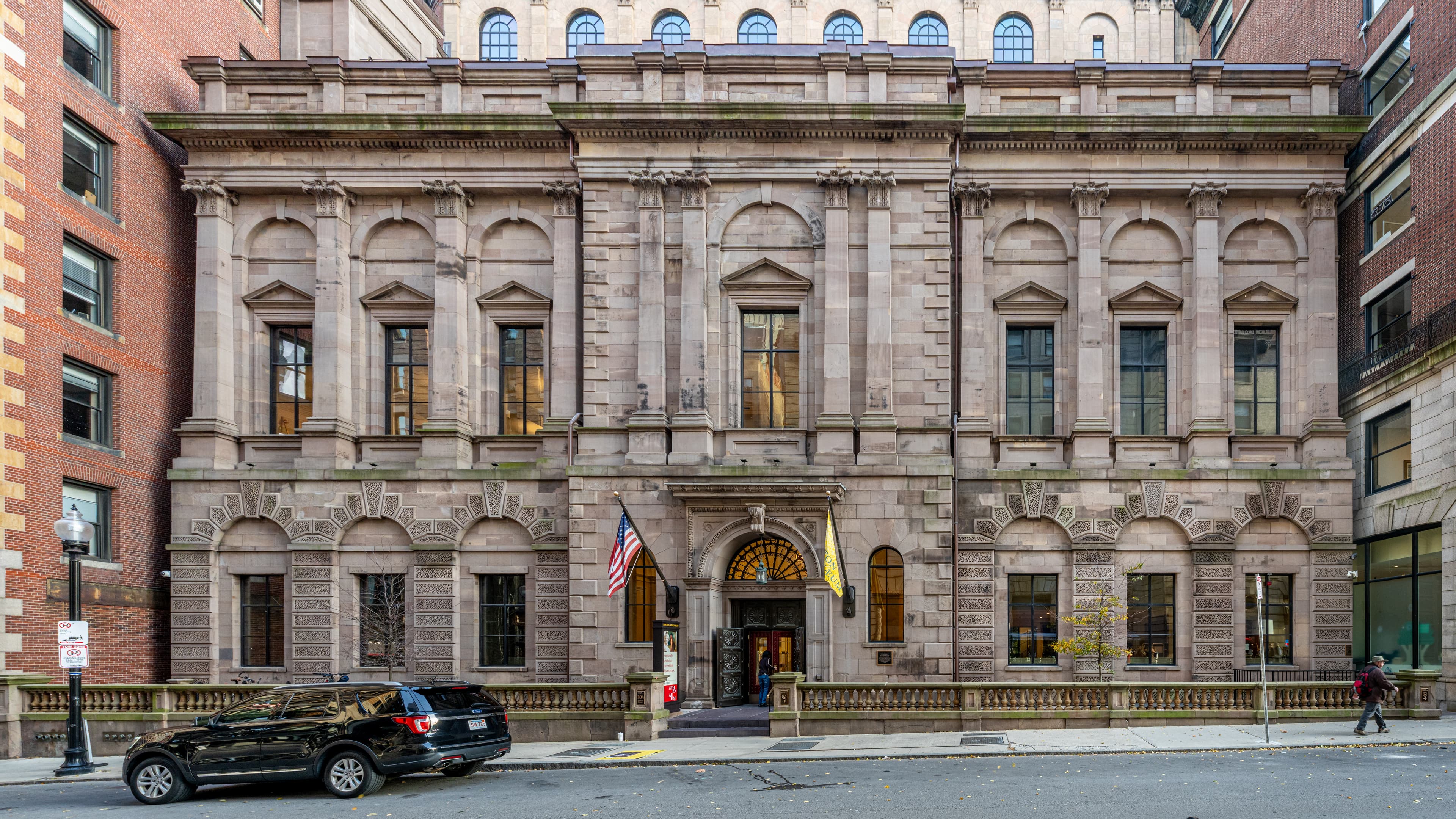
In 1859, the Back Bay was not a neighborhood. It was a project — hundreds of acres of tidal marsh and mudflat being filled, load by load, to make land where Boston's wealthy would one day live. Catherine Hammond Gibson, a recent widow, decided she wanted in early. On September 1, 1859, she and her nephew Samuel Hammond Russell purchased two plots at 135 and 137 Beacon Street. Her share cost $3,696. She was moving away from Beacon Hill, and she hired accordingly. The architect was Edward Clarke Cabot, already famous for designing the Boston Athenaeum; the two Beacon Street houses were his first Back Bay residences, and he would go on to design many more. Construction finished by 1860 in the Italian Renaissance style, its facade a mix of brownstone and red brick. Catherine moved in with her son, Charles Hammond Gibson. The Gibson House was one of the first houses built in the new Back Bay — the second lot developed after the filling began, on what would become 570 acres of new land. Three generations of the family would live at number 137 between 1860 and 1954: Catherine, her son Charles and his wife Rosamond, and their three children Mary Ethel, Charlie, and Rosamond. Dozens of household staff passed through as well. The house watched the marsh become the city's grandest address, and it never moved, never subdivided, never changed its mind about what it was.
Three Generations Under One Roof
Charles Hammond Gibson married Rosamond Warren in 1871 and brought her home to 137 Beacon. Rosamond came from a distinguished Boston family, and after Catherine's death in 1888 she made the house her own in the era's most fashionable idiom: she redecorated with Japanese wallpapers, part of the late-Victorian craze for Asian aesthetics. The foyer's gilded wallpaper, made to look like embossed Japanese leather, dates from her hand, as does the white woodwork of the music room. The interiors accumulated the way family houses do — not as a collection, but as a life. Original wallpapers, imported carpets, furniture, art, and family heirlooms filled the rooms alongside the working machinery of a 19th-century household: the kitchen, the butler's pantry, the scullery, the laundry room, the coal shed. The service areas survived as completely as the parlors, which is rare; most grand houses kept their upstairs and let their kitchens go. At 137 Beacon, both were preserved, and both are on the tour. The family's archive grew alongside the house. The museum now manages some 25 linear feet of original material — daily journals, scrapbooks, correspondence, published and unpublished manuscripts — plus roughly 1,500 photographs from family albums. It is possible, in a way few house museums allow, to match the rooms to the people who lived in them.
Charlie's Time Capsule
The museum exists because of the youngest of the third generation: Charles Hammond Gibson Jr., known as Charlie. Born in 1874, a poet and horticulturist who never married, Charlie was a well-known Boston character — invited to the White House in 1906 for the wedding of Alice Roosevelt Longworth, and the city's parks commissioner from 1914. In 1934, at sixty, Charlie returned to 137 Beacon to care for his aging mother. She died that September, and beginning in 1936 he started doing something unusual: he began preserving the house, deliberately, as a Victorian-era museum and a monument to his family and the Boston of his youth. He was, by the museum's own account, layering his 1930s perspective — as a gay man in a changing city — over his family's 1800s possessions, curating the past he wanted the future to see. Charlie died in November 1954. In his will he specified that the house and its contents be maintained as a museum, and he established the Charles Hammond Gibson Memorial Trust to oversee it. The Gibson House Museum opened to the public in 1957, three years after his death. His Prohibition-era reputation as a party host lives on in the museum's annual Repeal Day Celebration fundraiser, complete with period cocktails, and in "Charlie Gibson's Queer Boston," a tour that traces the city's early-20th-century gay subculture through his eyes.
What You'll See Inside
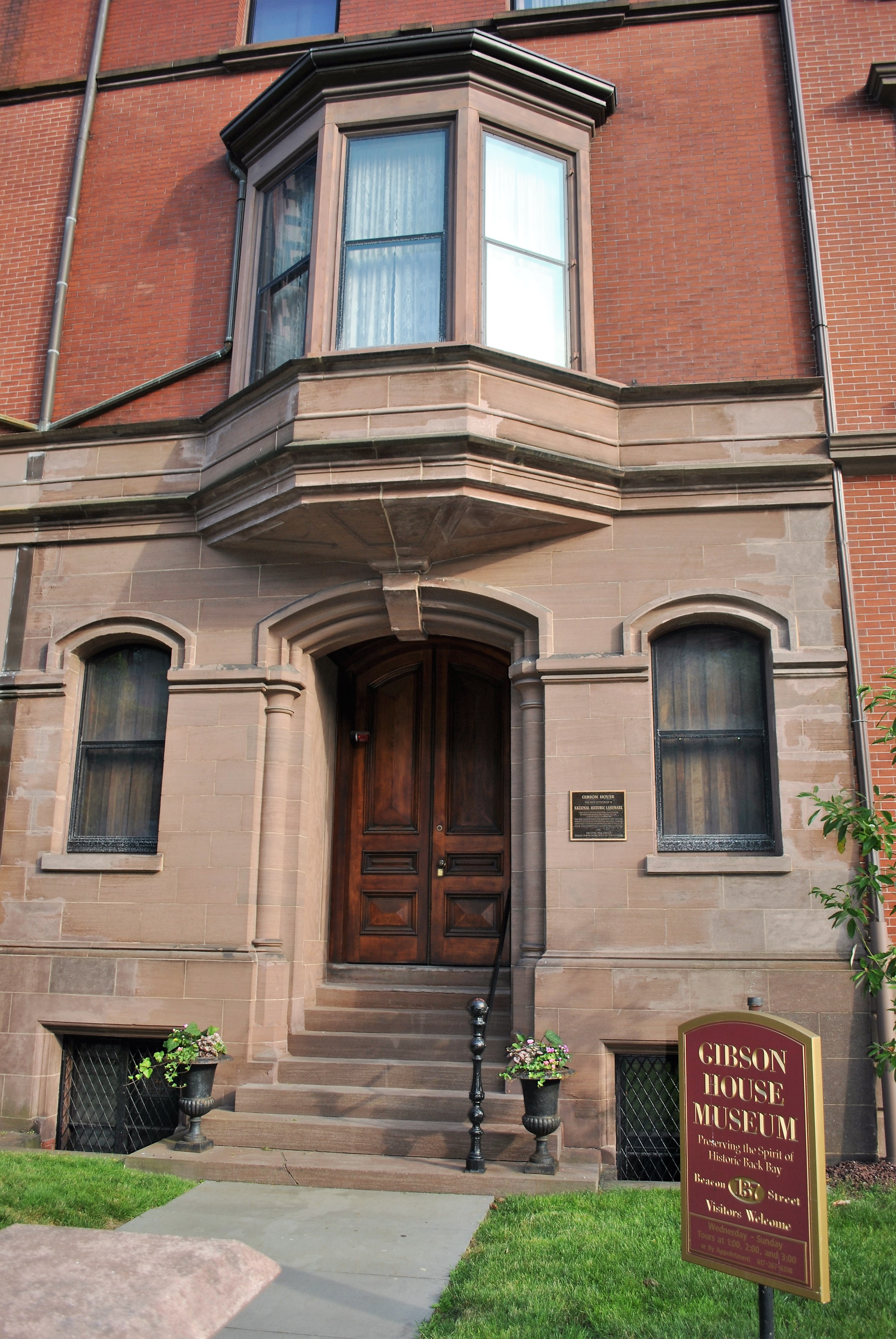
The tour covers four of the house's six floors — the basement through the third floor — and it is the rare house museum where the downstairs is as interesting as the up. The basement kitchen still shows its stove and soapstone sink; the laundry room keeps the stove for heating irons and the tub for boiling laundry; the coal shed out back is the last surviving coal shed in the Back Bay. A three-story glass-windowed ventilation shaft rises over the main staircase, a piece of Victorian climate engineering you have to see to understand. Upstairs: the red study, the music room, the parlor, the entryway with its gilded Japanese leather wallpaper, bedrooms with a fifteen-piece bedroom set, faux-bamboo furniture, and a Worth of Paris velvet gown. Nothing has been altered since 1954, which is why the film industry keeps coming: the 1984 Merchant Ivory film The Bostonians shot in Rosamond's bedroom, the red study, and the grand staircase landing; Greta Gerwig's 2018 Little Women used the museum as Jo March's boarding house, with the library standing in for her publisher's office; a Boston Ballet promotion for The Nutcracker staged Clara in the Music Room. The house's landmark status rests on a specific claim: it is the only Victorian-era rowhouse in the Back Bay to maintain the integral relationship between its exterior architectural shell and its original interior plan, with the decorative schemes to match. It was designated a Boston Landmark in 1992 and a National Historic Landmark in 2001.
Planning Your Visit
The museum is open to the public year-round, but only by guided tour — there is no wandering on your own. The standard "At Home with the Gibsons" tour runs Thursday through Sunday at 1, 2, and 3 p.m., and lasts about 45 minutes. Admission is $15 for adults, $12 for seniors, $10 for students, and $5 for children ages 6 to 12; specialty tours, including the "Upstairs, Downstairs" servants'-life tour and "Charlie Gibson's Queer Boston," run $17. Tours are small and advance purchase is strongly recommended, especially on weekends. Two practical notes: the museum has no elevator and no air conditioning, and tours involve several flights of stairs. On summer days when the temperature tops 90 degrees, tours may be canceled outright. Book ahead, wear comfortable shoes, and give yourself a moment on the sidewalk afterward — 137 Beacon looks like every other brownstone on the block, which is exactly the point.
Key Facts
- The Gibson House at 137 Beacon Street was built 1859–60 for the widowed Catherine Hammond Gibson (land purchased September 1, 1859 for $3,696); architect Edward Clarke Cabot also designed the Boston Athenaeum.
- Three generations of the Gibson family lived there from 1860 to 1954; Charles Hammond Gibson Jr. (1874–1954) preserved it as a Victorian time capsule, and it opened as a museum in 1957.
- The house is a Boston Landmark (1992) and National Historic Landmark (2001) — cited as the only Back Bay Victorian rowhouse retaining its original exterior-interior relationship.
- Film credits include The Bostonians (1984) and Greta Gerwig's Little Women (2019), which used the museum as Jo March's boarding house.
Location Photography


Visitor Note
Address: 137 Beacon Street, Boston, MA 02116 Transit: MBTA Green Line to Arlington; short walk to Beacon Street Hours/Admission: Guided tours only, Thursday–Sunday at 1, 2, and 3pm. $15 adults / $12 seniors (62+) / $10 students / $5 children 6–12; specialty tours $17. Advance booking recommended — check the official site for current schedule. Best timing: Book ahead for weekend slots; note the museum has no elevator or air conditioning, and tours may be canceled when temperatures exceed 90°F.